Author: RDN

TROLL OF THE MONTH: Media coverage of Imane Khelif
September 5, 2024
The Balkan Troll of the Month is an individual, a group of individuals or a media outlet that spreads hate based on gender, ethnicity, religion, or other diversity categories. The Balkan Troll is selected based on hate speech incidents identified across the Western Balkans region.
The Paris Olympic Games, albeit a moment to celebrate diversity, sportsmanship, and healthy competition, have also been marred by troubling instances of transphobia, racism, and discrimination. One of these instances that made headlines in the media across the Western Balkans was the case involving Algerian boxer Imane Khelif and her match against Angela Carini of Italy.
Khelif made headlines when Carini abandoned their match on August 1, which resulted in Khelif advancing in the competition. Carini, who withdrew from the match after 46 seconds, claimed to be in intense pain after being punched in the nose. She furthermore claimed that the fight was “unfair”, alluding to the 2023 World Boxing Championship where Khelif was disqualified by the governing body after failing a test which determined she does not meet the criteria to compete in the women’s category. This started a campaign against Khelif resulting in disinformation, bullying, racism and transphobia being spread across social media platforms.
Some of the most prominent names amongst those taking part included X CEO Elon Musk and the Harry Potter author J.K. Rowling who posted insulting and hateful comments about the boxer. Rowling went as far as to claim that Khelif was “enjoying the distress of a woman he’s just punched in the head”. The smear campaign was reinforced by disinformation used to spread hate not only towards Khelif, but also transphobic, racist and sexist narratives.
The International Olympic Committee (IOC) decision to allow Khelif to participate in the Games sparked significant debate on social media and among sports fans. It accompanied media coverage accusing Khelif of being a biological male and therefore, not qualified to play in a women’s boxing match.
In Montenegro, the public broadcaster, Radio-Television of Montenegro, titled an article about the boxer by calling her a ‘biological male,’ even though she identifies as a woman and was born female.
Similarly, the boxing match sparked debate in Albanian media. Headlines focused on the match as a power struggle between genders alongside a surge of hate speech aimed towards the LGBTIQ+ community and women. Many media outlets reported that the Algerian boxer was transgender, without providing accurate information. Headlines such as “The Olympics allowed a biological man, Imane Khelif, to compete as a woman in Paris” and “Beating a woman is now an Olympic sport. They even give you medals” reflected this trend.
Likewise, in North Macedonia, Imane Khelief was presented as “an apparent male fighting in women’s category”. The media accused her of being transgender, resulting in hate speech in the comments. Furthermore, many church representatives spread the same rhetoric on their Facebook profiles by sharing the same article and commenting.
In North Macedonia, the anti-gender movement has been actively spreading disinformation and attempting to incite hate speech and anti-LGBTIQ+ sentiment among the population for a long time. They seize any event that could amplify these sentiments. The Macedonian Orthodox Church and the Coalition for the Protection of Children often reinforce these narratives.
Likewise, the Serbian media space followed similar patterns in the reporting of the match. Transphobic, sexist and racist narratives quickly spread both in traditional and social media.
Most media used disinformation and unverified information to publish sensational headlines calling Khelif a “proven biological male” and presenting Carini as a victim as opposed to a sportswoman that simply lost a match.
Some portals later modified their headlines, choosing to describe Khelif as a woman with “male hormones” or “male chromosomes,” avoiding an explicit claim that she was a man. However, these minor changes remained rooted in disinformation, bias, and a misunderstanding of human biology. While this somewhat shifted the discourse— as she continued to be addressed as a woman in reports of her subsequent wins leading to the semifinals — most media outlets did not acknowledge these corrections, admit to spreading misinformation, or issue an apology. This failure highlighted their lack of accountability to readers and disregard for professional standards.
Some media, and especially users on social media platforms, used visual imagery to enhance misogynist and racist narratives by intentionally sharing pictures where Khelif appears to have more “masculine” features and doesn’t fit into the unrealistic standard of what a woman “should” look like. This standard is based in patriarchal and Eurocentric views of womanhood. Carini, however, was pictured as smaller, more feminine looking, wearing makeup, putting her closer to this standard. This culminated in a racist image shared online, painting Khelif as a monster and Carini as a small, thin and dainty woman. This image was even shared by one of Khelif’s opponents at the Olympics, Hungarian boxer Luca Anna Hamori, before their match.
Despite the wave of misinformation and transphobia spread online, Khelif did not let it deter her from competing in the Olympics and ultimately winning gold. Alongside this, Khelif filed a criminal complaint to the French authorities over alleged “acts of aggravated cyber harassment“. The lawsuit included names such as Elon Musk and J. K. Rowling.
The truth of the matter is that Imane Kelif identifies as a woman; she was born a woman, and is recognised by the IOC as a woman. Disinformation and transphobia have no place in our societies. Online bullying and harassment are deeply harmful, and the media should not use such instances to perpetuate harmful content. Instead, they should leverage their influence and platforms to call out transphobia and respond in a professional and ethical manner.

Music and Hatred: How a Song Caused Ethnic Tensions at a Student Party in Skopje
August 30, 2024
A student party in Skopje in Spring took an unexpected turn when the playing of an Albanian song towards the end of the event sparked controversy and hate speech on social media. A nationalist group named “Patriotsko drushtvo” (Patriotic Society), self-proclaimed as a “young, ambitious group of patriots filled with enthusiasm,” criticised the inclusion of the song in Albanian, triggering hate speech aimed at the student organisation, with members from diverse ethnic backgrounds, which was behind the party.
How does nationalism disguised as “patriotism” perpetuate ethnic hatred and discrimination?
What actually happened at the student party?
We talked about the event with Aleksandar Ristoski, Vice President of the University Student Assembly (USS) of UKIM (Cyril and Methodius University in Skopje), and student ombudsman Savche Gjosheva – both of whom were involved in organising the event. They recounted what transpired during the evening and raised suspicions about the motives of the individuals who selectively recorded only the Albanian song played among other genres of music at the party.
The several-hour event involved learning Latin dances, and after the official part ended, students played music for their enjoyment.
The following day, the group calling itself “Patriotic Society” posted a video from the party on the social media platform Instagram, where a song in Albanian was heard, accompanied by the caption “This is what’s going on at the University Student Assembly” and an Albanian flag emoji.
“We organised a party where many students were invited together with the Student Assembly. The theme of the night was Latin music, as the idea was to dance and have fun. However, of course, as the evening was coming to a close, we also started playing Macedonian, Serbian, Albanian, even Turkish songs,” Ristoski explains.
“The Student Assembly is not only made up of Macedonians, but also of members from other ethnic communities. So, that happened because we wanted to play every song request and to enjoy ourselves with our friends. I mean, it shouldn’t be condemned because such songs serve purely to lighten the mood and enhance the fun,” clarifies Gjosheva.
The UKIM University Student Assembly released a reaction video condemning the nationalist group’s move, stating that such posts only provoke ethnic intolerance. “As academic citizens, we must denounce this move and anyone else who promotes ethnic intolerance and discrimination. We stand united in the belief that we all live in this country together,” the video stated. It also attracted negative comments and hate speech.
Gjosheva and Ristoski expressed surprise at the reactions to the post from the group on Instagram, as they had not experienced similar incidents before – this being the first such case.
“We haven’t experienced such an incident before, and it is true that the University Student Assembly and the entire academic community comprises diverse ethnic communities, and I believe that such comments and incidents do not contribute to the greater good or facilitate communication between ethnic groups; on the contrary, they only serve to alienate us,” says Gjosheva.
The Vice President of the University Student Assembly, Ristoski, does not expect such problems to occur in the future. He emphasized that they had no ethnic problems within the organisation. In fact, they have only had excellent cooperation. However, he expressed concern about how the incident could impact assembly members from various ethnic communities.
“My main concern is the fact that they feel this way, and I’m sorry about that. We’re doing everything we can to ensure that they (students from various ethnic backgrounds) feel comfortable and understand that we’re here for them as friends. Negative comments do not reflect the overall sentiment; they’re just the views of individuals or exceptions,” says Ristoski.
What impact does hate speech have on the person to whom it is directed?
Prof. Blagica Rizoska Vanikj, a gestalt coach, therapist, supervisor, and professor of practice at the University American College Skopje, argues that the media landscape, particularly the Internet and social media, facilitate the spread of hatred primarily because “keyboard warriors” often lack a sense of accountability for their actions.
“However, on the other side, the one who is on the receiving end of the negative comments experiences them very realistically. That’s where the risk lies. On the one hand, yes, it will go unnoticed by the media, but the one who experiences it, does so very personally, very deeply, and those emotions are very real. Just as if someone had threatened, underestimated, or insulted them in front of an audience and, in a way, the consequences are borne by the victim in that case or the one without a coping mechanism,” says Prof. Vanikj.
Student ombudsman Gjosheva faced a barrage of negative comments on social media, including hate speech, which deeply affected her. She shared the feelings that this attack caused her.
“It didn’t make me feel good; obviously, I felt like a target, as if someone were insulting me without getting to know me and the values I live by. At first, why someone would do that seemed strange to me, but later I realised their aim was to discredit, provoke, and insult,” Gjosheva explains.
Polarisation as a result of hate speech
Prof. Vanikj argues that when we establish and form a relationship with someone from a different nationality or ethnic background we are faced with the decision of whether to rely on our perception and often there’s a conflict between our own perception and the views of our “group”. On one hand, our perception suggests such relationships are indeed possible, while on the other hand, our group may insist that “it is not so”.
In this case, the person experiences internal conflict and polarisation over what is true – whether to trust their own feelings and experiences or to follow the prevailing views of their group.
“I don’t believe anyone hates others based on nationality, religion, or skin colour. Instead, it seems that hatred often arises from certain characteristics of someone, even if their background is different. Most of the time, it boils down to the beliefs we were raised with and our ideas about what good and bad is, and who acts in a good or bad way.
What does “hate speech” mean?
Hate speech is any form of expression that encourages discrimination, hostility, or violence against an individual or group based on characteristics such as race, religion, ethnicity, gender, or other factors. It can be manifested in various forms, including insults, offensive jokes, threats, stereotypes, or dehumanizing language. Hate speech can lead to increased fear, incite violence, and create a climate of discrimination and hostility. However, there is no universally accepted definition of hate speech under International Human Rights Law.
Author: Despina Kovachevskа, media monitor specialist
Troll of the Month: The Radio Television of Republika Srpska
August 9, 2024
The Balkan Troll of the Month is an individual, a group of individuals or a media outlet that spreads hate based on gender, ethnicity, religion, or other diversity categories. The Balkan Troll is selected based on hate speech incidents identified across the Western Balkans region.
July 11th marks the International Day of Commemoration of the Genocide in Srebrenica – the systematic killing of more than 8 thousand Bosniak men and boys in and around the town of Srebrenica between July 11 and July 22, 1995. The genocide occurred during the war in Bosnia and Herzegovina that lasted from 1992 to 1995.
In May this year, the UN General Assembly passed a resolution sponsored by Germany and Rwanda, to designate July 11 as the International Day of Reflection and Commemoration of the 1995 Srebrenica Genocide. This Resolution also served to condemn any denial of the genocide as a historical event and called on ‘Member States to preserve the established facts, including through their educational systems, towards preventing denial and distortion, and any occurrence of genocide in the future’. Alongside this, the Assembly also requested that the Secretary-General establish an outreach program on the Srebrenica genocide in preparation for the 30th Anniversary.
Within Bosnia and Herzegovina, in 2021 the High Representative Valentin Inzko at the time, used his power to amend the country’s criminal code to ban the denial of genocide and glorification of war criminals. The new ban outlaws ‘the public denial, condoning, trivialisation or justification of genocide, crimes against humanity or war crimes when this is done in a way that is” likely to incite violence or hatred”.’ Those who choose to break this ban could face a prison sentence ranging from six months to five years.
This year, on the International Day of Commemoration of the Genocide in Srebrenica, some media in Republika Srpska (including prominent Nezavisne novine and the public service Radio Television of Republika Srpska) relativised the genocide in their media reports, calling it a “crime against Bosniaks”. Refusing to use the term ‘genocide’ and instead calling it a ‘crime’ is extremely problematic, particularly by the media, as it minimises the systematic and intentional nature of the atrocities. This mislabeling can also perpetuate a narrative that downplays the suffering of victims and hinders justice and accountability for the perpetrators.
Furthermore, RTRS additionally portrayed Bosniaks in a negative light – a technique used to deepen the division. In their article about the commemoration, they wrote that Serb councillors in the Srebrenica municipal assembly observed a minute’s silence to honour all the innocent victims of Srebrenica. The article claimed that the Bosniaks boycotted the commemorative session, as they had done in previous years.
Creating this divide between various communities within the country, especially on a day marking a horrific event in Bosniak history, is extremely insensitive and problematic. One cannot dictate how another group commemorates their tragic past. Such narratives only deepen divisions, foster blame, and exacerbate existing tensions, particularly in a region where denial of these events persists.
Although it is true that the media has been revitalising the Srebrenica genocide in previous years, this year is specific due to the UN resolution which was adopted in May. Genocide denial in the Balkans is still very much prevalent and a consistent pattern especially heightened around the time of the commemoration. This year, the tensions have been rising since the discussion on the UN resolution began, culminating in its adoption and resulting in various politicians and members of the public denying the genocide took place and refusing to name it as such.
Genocide denial is profoundly hateful, harmful, and insulting to both the victims and their families. Narratives of denial must be confronted and removed to accept and acknowledge the past. The media has a critical responsibility to avoid perpetuating genocide denial or causing divisions within heterogenous ethno-religious communities like Bosnia, as such actions undermine social cohesion and hinder reconciliation efforts.
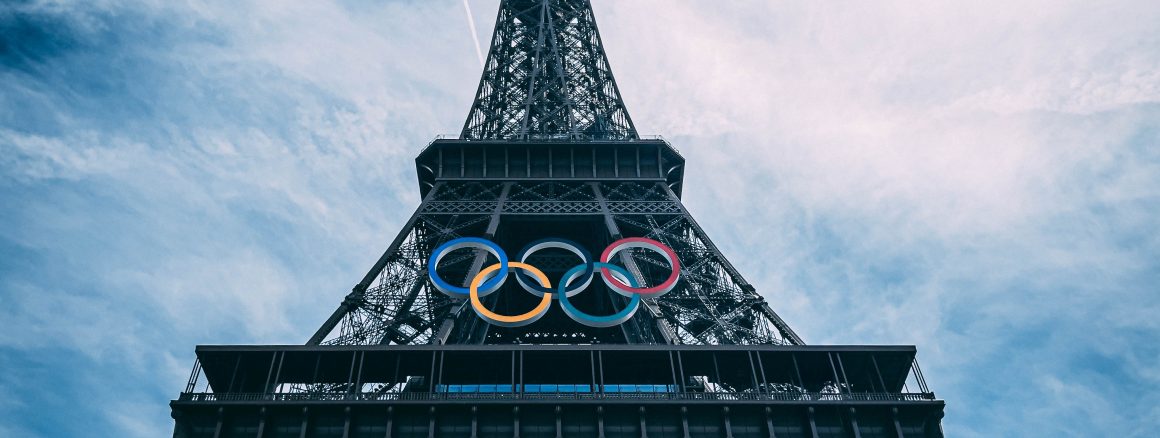
2024 Olympics: The Hijab Ban for French Athletes Tests the Host Nation’s Brand of Secularism
August 6, 2024
The French government’s decision to ban French athletes from wearing hijabs at the 2024 Olympics sparked months of criticism from rights groups. France has chosen to maintain the ban, adhering to a strict interpretation of “laïcité,” viewing French athletes as “public servants” subject to national secularism laws.
On International Women’s Day, the International Olympic Committee (IOC) and Paris Games organizers announced that “France is preparing to host the first Games with full numerical gender parity on the playing field.” Despite this milestone, the host nation has faced harsh criticism from human rights organizations for maintaining a ban on French athletes wearing religious garments during the Games.
Ahead of the Games, Sounkamba Sylla, a member of the French 4x400m relay team, used her Instagram account to protest her exclusion from the opening ceremony due to her hijab. Sylla lamented, “You’ve been selected for the Olympics, which are being held in your country, but you can’t take part in the opening ceremony because you’re wearing a headscarf,” she said, referring ironically to the “land of freedom.”
As a practicing Muslim who wished to cover her hair both in and out of competition, Sylla faced the strict principle of secularism upheld by French sport. She eventually reached an agreement with the French sports authority (CNOSF) to wear a French Olympic cap instead of a hijab to attend the opening ceremony.
French Secularism, or ‘Laïcité’
To justify the ban, the French government emphasizes “laïcité,” a cornerstone of French society since 1905 that separates religion from the state. “Laïcité” compels the government not to favor or discriminate against any religious, philosophical, or political belief, manifesting as a ban on expressing religious or political affiliation in public institutions.
In September 2023, French sports minister Amelie Oudea-Castera confirmed that the French Olympic team, as a publicly funded institution, is bound by “laïcité.” “It means absolute neutrality in public services,” she stated. “The France team will not wear the headscarf.”
In contrast, the IOC clarified that athletes in Paris can represent their faith, with no restrictions on wearing religious or cultural attire. This stance juxtaposes France’s strict secularism with the IOC’s tolerance of religious expression.
Ironically, French athletes, deemed “civil servants,” are banned from expressing religious affiliation, while international athletes are free to wear religious symbols during the Games.
Sports minister Oudea-Castera explained to CNN’s Christiane Amanpour the interpretation of “laïcité.”
“When you’re an athlete representing your country, you need to be exemplary,” she said. “You need to stick to very neutral rules, meaning that you’re not allowed to wear religious or political signs.” “[Sounkamba Sylla] can wear something [on her head], but not something that can be assimilated to a religious symbol.”
Backlash and Condemnation
The host country’s decision has sparked backlash from international human rights groups. “No one should impose on a woman what she needs to wear or not wear,” said UN rights office spokeswoman Marta Hurtado.
Amnesty International and ten other groups wrote to the IOC in June, asking for the ban to be overturned, warning that it discriminates against Muslim athletes. Amnesty International’s Women’s Rights Researcher in Europe, Anna Błuś, stated, “Banning French athletes from competing with sports hijabs at the Olympic and Paralympic Games makes a mockery of claims that Paris 2024 is the first Gender Equal Olympics and lays bare the racist gender discrimination that underpins access to sport in France.”
French media watchdog Arret sur image published a report analyzing the media coverage of the 2024 Paris Olympics on France’s main public television channel, France 2, that holds the rights to broadcast the 2024 Paris Olympic games.
“In the two weeks before the opening ceremony, France 2‘s 1 pm and 8 pm news programs devoted 3 hours 20 minutes of airtime to Paris 2024, of which only 5 minutes were devoted to criticism. In all, out of 103 items devoted to the Games, only 3 were critical.”
The report highlights the broadcaster’s unwillingness in the two-week lead-up to the Games to engage with any of the meaningful social or logistical issues that have been covered in other national and international media, such as “the evacuation of migrant camps in Paris and of homeless people sent to the regions – but also […] damage to natural sites, sponsorships of polluting companies, security measures (such as algorithmic surveillance), the difficulties of access to several hospitals, the price of metro tickets (4 euros, double the usual price), the difficulties of movement for people with reduced mobility in streets lined with barriers.”
The debate over French athletes wearing the hijab was not mentioned on France 2’s flagship news programs in the two weeks leading up to the Games.
‘Abandoning Their Identity’
While France cites noble intentions around “laïcité” to prevent discrimination and encourage equality, the reality for many Muslim women athletes is exclusion. Strict implementation of “laïcité” in sports discourages Muslim women from pursuing competitions, as they often have to “abandon a part of their identity.”
While the French government insists that the ban upholds a long-standing commitment to secularism and neutrality in public institutions, critics argue that it disproportionately impacts Muslim women, forcing them to choose between their faith and their athletic aspirations.
At the 2016 Olympics, Egyptian volleyball player Doaa Elghobashy became the first to play in long pants, sleeves, and a hijab. Elghobashy advocates for “liberté,” another French cornerstone principle, to trump “laïcité,” arguing that allowing hijabs offers “freedom for everyone” and shifts the focus to athletes’ performances rather than their attire.
“The hijab is a part of me. It’s not [that way] for everyone.”
The debate over the hijab ban at the 2024 Paris Olympics encapsulates a broader struggle between France’s strict interpretation of “laïcité” and the principles of individual freedom and expression championed by international bodies like the IOC.
Ultimately, the situation underscores a significant irony: while France aims to present itself as a beacon of equality and neutrality, the rigid application of “laïcité” in the context of the Olympics may, in fact, undermine these very ideals. The international stage of the Olympics, where athletes are celebrated for their diversity and personal journeys, starkly contrasts with the restrictive measures imposed on French athletes.
As the world watches the 2024 Paris Olympics, the hijab ban serves as a poignant reminder of the ongoing challenges in balancing state principles with individual rights. The true test of “liberté, égalité, fraternité” will be whether France can find a way to honor its secular traditions while also embracing the diverse identities of all its citizens.
Author: Jeremy Martin
Feature image: Hethers / Shutterstock.com
This article was originally produced for and published by Get The Trolls Out. It has been re-published here with permission.
EIGHT YEARS IN THE LIGHT (AND SHADOW)
July 31, 2024
VIOLATION AFTER VIOLATION, THE WALL OF SOCIAL INJUSTICE RISES.
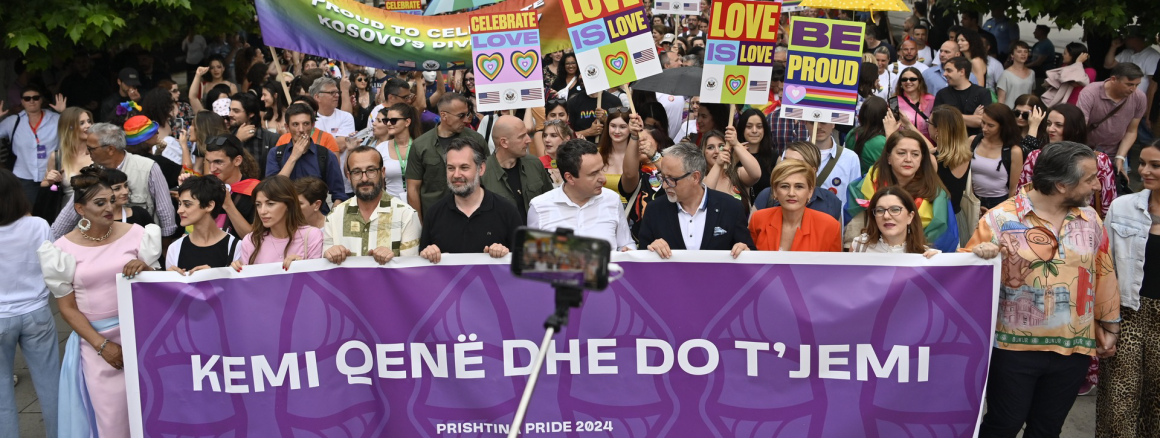
2024 marked the eighth edition of Prishtina’s annual Pride Parade. The week leading up the parade, which took place on June 8, 2024, was filled with diverse artistic and cultural activities, activism and unconventional entertainment. Hundreds participants, including members of the LGBTIQ+ communities, allies and political representatives joined together. In a well-coordinated event, the latter led the colorful crowd at Zahir Pajaziti square, holding the parade’s main banner, which read, “We were here and we will always be here.”
Meanwhile, Qerkica, an icon of the transgender community, playfully danced in front of the marchers, catching them by surprise. These moments continued all the way to the grounds of the National Library where the march concluded. The politicians departed and the party began.
On the surface, it appears to be a joyful celebration of human existence and diversity, marked by solidarity, gratitude and complete coexistence. But if we look a little closer, beyond the flashing cameras, we find the true stories of survival in conditions that are far from favorable.
With each step, the politicians carried the weight and colors of the parade. Others in the march bore the Palestinian flag, calling for freedom and an end to the Israeli government’s genocide against the people of Palestine.
Amid the crowd, structural discrimination remains hidden, revealing the true resistance of marginalized communities. These communities must address systemic gaps themselves, despite facing work overload, mental exhaustion and lack of institutional recognition. Over these past eight years of public demonstrations through parades, the challenge has been not only to confront the widespread discrimination but also to foster educational change from the ground up.
Until the politicians took to the streets in 2024, activists had worked for years to gain public and political support. Until a few years ago, there was still a reluctance to display the LGBTIQ+ flag in the government building in solidarity with the community’s efforts. We must look beyond the brilliant refractions off the rainbow flag to the cracks where shadows gather, into the heart of the crowd.
Beyond the light
He wasn’t late for the meeting, although he told me he had to rush to make it on time after babysitting for a family member. We met at Bubble Pub, which has now been open for two years in Prishtina, a safe harbor for the queer community. With him, even busy conversations felt effortlessly light. Our conversation followed an organic trajectory, discussing the year 2023, language and hate crimes against LGBTIQ+ people, issues in which he himself had been involved.
As a transgender man, Lend Mustafa has experienced episodic violence. He told me about an incident in November 2023, when, after facing hate on social media, he was threatened and almost run over by a car in broad daylight in Prishtina. This event, which he reported to the police, is just one out of several incidents he has reported.
“Not only for ourselves but also for other members of the community, we often went [to the police] with files and facts collected by us. This is because several times after we reported these cases, the prosecution did not pursue them due to a lack of evidence,” he said.
Similarly, the Center for Equality and Liberty (CEL), an organization that works in the field of LGBTIQ+ rights, reported that throughout 2023, dozens of cases of hate speech, privacy violations, violence and discrimination were brought to their attention. Additionally, members of the community sought CEL’s assistance in legally prosecuting pending violations within security and justice institutions, as well as in cases where LGBTIQ+ individuals were denied name and sex marker changes by the Civil Registration Agency.
MID TRAUMATIC EVENTS THAT THREATEN LIFE AND MENTAL WELL-BEING, INDIVIDUALS LIKE MUSTAFA MUST ALSO CONDUCT INVESTIGATIVE WORK TO VALIDATE THEIR EXPERIENCES OF VIOLENCE AND CRIMES AGAINST THEM.
These delays in the justice system experienced by the LGBTIQ+ community create uncertainty and discourage the reporting of violence. This highlights the structural discrimination that strengthens justice institutions’ complicity. To address this, CEL is preparing a study that will shed light on the specific systemic gaps in the treatment of cases involving LGBTIQ+ individuals.
Amid traumatic events that threaten life and mental well-being, individuals like Mustafa must also conduct investigative work to validate their experiences of violence and crimes against them. Only in this way can victims’ reports gain enough “importance” to be pursued further by institutions.
“At first, I thought it was funny, wanting to believe it was a dog. I thought a dog had peed on my doorstep. Or maybe not? Then I remembered that you need an access card to enter the building where we live,” Mustafa said, recounting his experience of persecution.
This time, I noticed the bitterness behind his attempt at a smile, as if to show that he had overcome the magnitude of this experience after these repeated humiliations. As he gestured, as if to dispel the lingering shadows of events that had literally encroached on his doorstep — not when he came out with his gender identity — he explained that these acts had been constant and not sporadic. Since he moved into his current apartment, neighbors he describes as “a group of young men,” have ensured that he never felt comfortable in his own home. They shouted hateful comments from their balcony, left signs on his door and recently even peed on his doorstep.
As if this wasn’t enough, Mustafa and his queer friends have also faced manifestations of hate when establishing Bubble Pub. Mustafa explained that one resident of their building in particular, has repeatedly tried to assert power by sabotaging the bar’s activities. This includes cutting off the water supply and gathering other neighbors to intimidate him.
“Fortunately, at the beginning of Bubble, the Prishtina police unit came within minutes several times when we needed them. This helped tire out [the neighbors] because they had no choice but to leave us alone,” he said. “We were here and we will continue to be here. And we don’t intend to be silent or patient. We truly know that we are stronger because we have endured everything. Just imagine if we had more support and seriousness from the institutions that owe us a guarantee of security for life.” He naturally connects his storytelling to questions about structural oppression, the role of the state in the human rights landscape and imagining a place where he and other marginalized people would feel protected.
Human rights except for the most marginalized
For people like Mustafa, proper state protection remains only a dream. Duda Balje, the head of the legislative commission responsible for human rights and gender equality, uses her right to a different opinion to complain, opposing marriage between same sex individuals, which the Civil Code includes. Ironically, she self-legitimizes her role, actively undermining human rights.
Morina, an activist, transgender man and director of CEL, sharply criticized Balje in a public televised debate. Balje responded disdainfully, dismissing his concerns and stating that the commission she represents is too busy with other matters. This response blatantly contradicts citizens’ rights to dignified treatment and equal access to civil and legal life. In 2023, at least three known cases of LGBTIQ+ individuals sought help through CEL in the process of seeking asylum and leaving the country.
What does this reveal about the climate of diversity, democracy and human rights in Kosovo?
More than two years have passed since the Civil Code was submitted to the Kosovo Assembly, yet it has still not been voted on. Progress has stalled, with the reading of the code in parliament continually delayed. This procrastination is accompanied by derogatory language from both majority and opposition MPs, who often hurl harsh accusations against the LGBTIQ+ communities. The so-called guardians of social morality, who hold decision-making power and strictly adhere to heteronormative principles, oppose Article 1138, which provides a legal framework for same-sex civil unions.
The polarization of public discussion by the Parliament of Kosovo does not occur in isolation. The delay in passing the draft law reveals the prevailing conservative spirit in the highest form of popular representation.
It is contradictory for a parliamentary majority in a democratic system to filter who enjoys rights, simply for the sake of “thinking differently.” By doing so, the parliamentary majority perpetuates outdated patriarchal structures in political and social life, policing existence and restricting fundamental rights at the expense of the most marginalized. Thus, the status quo requires the maintenance of these heteronormative artifices to uphold the privileges of the traditionally powerful majority.
The story continues: lazy people, politicians and homophobes
In these eight years of light and shadow projections, little has changed substantively.
The light brought by public support and solid community organization is still overshadowed by the entrenched political shadows preserving the archaic order. Politicians’ participation in the parade, which has become an attraction for members of the public and photo opportunities, cannot shift attention away from the polarizing online discussions, fueled by a militant homophobic army.
Discriminatory language and practices contribute to the prevalence of hate crimes. Legislative initiatives, the state, and media outlets exacerbate the situation by creating an environment with insufficient public and structural support. These conditions perpetuate the use of language that stirs controversy, incites hostility and directly attacks the LGBTIQ+ community.
Although the physical presence of politicians is important to demonstrate public support, the human rights situation in Kosovo highlights an issue — the ruling class, despite holding power, fails to unify the plurality of wills necessary to form a truly emancipated political movement to ensure substantive change.
MEDIA COVERAGE OF THE PARADE IS NOT ENOUGH WHEN THE REST OF THE YEAR IS MARKED BY NARROW-MINDED AND PREJUDICED DISCOURSE.
The fourth estate, both traditional and social media, play a significant role in this issue. In the name of providing spectacle to the masses and eliciting quick reactions, they cause long-term damage. Media coverage of the parade is not enough when the rest of the year is marked by narrow-minded and prejudiced discourse, including the misuse of subjects for supposed satire and irony, which can lead to bullying and incite violence.
The surge of homophobic online comments during Pride Week, combined with media polarization and lack of institutional support, have paved the way for violent public actions. This was evident last year when both Anibar in Peja and Dokufest in Prizren fell prey to organized homophobic attacks.
This year, just one day before the parade, the street that was symbolically renamed Pride Square and the rainbow-colored lines painted at the beginning of Zahir Pajaziti Square were vandalized. Hate speech graffiti attempted to erase the message that public spaces belong to all citizens, including the LGBTIQ+ community. This act can be seen as a manifestation of the pervasive homophobia perpetuated by public institutions.
WHERE THERE IS RESISTANCE TO PROGRESS, ROOM MUST BE MADE FOR DOUBT AND SUBSTANTIVE CHANGE.
However, the quick mobilization of the queer community, who poured out their love again on the streets, restored the vandalized space, overcoming hatred and coming together proudly.
Where there is resistance to progress, room must be made for doubt and substantive change until homophobia no longer influences state actions and established practices of violence are eliminated. We must learn more about inter-identity solidarity, which involves cooperation among ourselves, and celebrate diversity as a valuable asset rather than an anomaly. Only then can we discuss building a healthier society where everyone can enjoy life with equality, freedom and prosperity according to potential, opportunities and merit.
Just as the rainbow emerged after the rain during the pride march, bringing us joy with what followed, we can imagine a future where every shade in the full constellation of colors is celebrated — a future where there is room for everyone, together.
Feature image: Armend Nimani / Prishtina Pride.
Author: Liri Kuçi
This article was originally produced for and published by Kosovo 2.0. It has been re-published here with permission.
GOOD DAY, BELGRADE!
July 26, 2024
WILL IT EVER GET BETTER IN SERBIA?
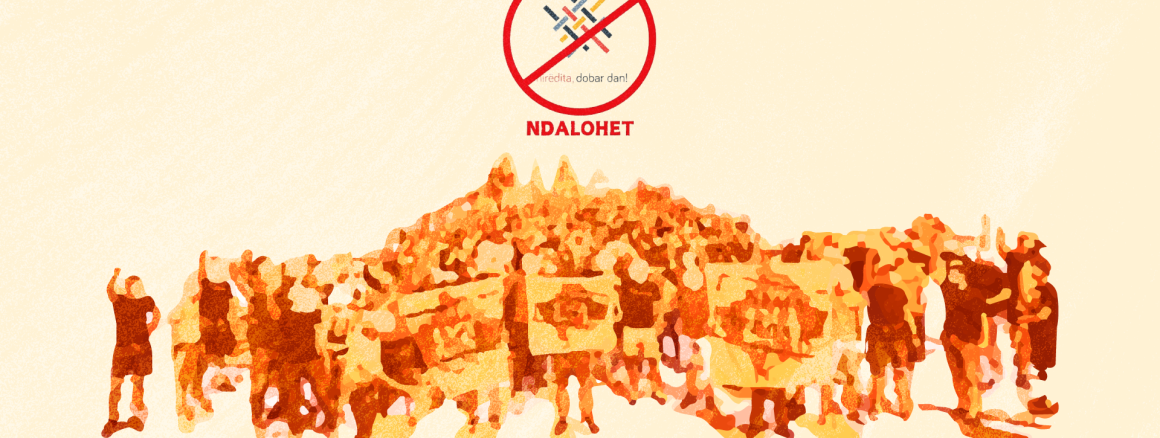
On June 27, 2024, I left Prishtina for Belgrade to participate in this year’s edition of the Mirëdita, Dobar Dan! festival, organized by Integra in Kosovo and the Youth Initiative for Human Rights (YIHR) of Civic Initiatives in Serbia. The festival, now in its tenth edition, serves as a platform for exchange and cooperation between artists, intellectuals and activists from Serbia and Kosovo. It was supposed to open with the play “Father and Father” by Jeton Neziraj, directed by Kushtrim Koliqi. The play follows the life of a family defined by the absence of the father, who, like 1,597 others, is still missing after disappearing during the 1998-1999 war in Kosovo. However, the play was not performed. This edition of the festival did not open. A few hours before it was set to begin, the Ministry of Internal Affairs of Serbia banned it.
This ban was the epilogue of a several-week campaign against the festival. Leading this campaign were, among others, Serbian Minister of Culture Nikola Selaković, Deputy Prime Minister Aleksandar Vulin and Minister of the Internal Affairs Ivica Dačić, who ultimately sealed the ban. On the day of the festival, a bus carrying participants from Kosovo was stopped when entering Belgrade and escorted back to the Kosovo border by the police.
For a long time, successive Serbian governments, especially the one led by Aleksandar Vučić, have made it clear that we are not welcome in Belgrade. But this time, they explicitly banned us. The way it all happened reminded me of my other trips to Belgrade, perhaps because this trip was inseparable from previous ones. Each journey had slowly led to this point.
Belgrade has been building barriers
I first went to Belgrade in 2014 as a participant in a program focused on dealing with the past. Since then, over the past ten years, I have visited Belgrade at least twice a year, mainly for work.
I participated in the Mirëdita, Dobar dan! festival for the first time in May 2022, during its ninth edition in Belgrade. At the festival, we promoted the book I had edited, titled “Hije të shtrembëruara” — Distorted Shadows — published by Integra. The book summarizes accounts of Albanian political prisoners from Kosovo who survived brutal torture in the infamous Goli Otok prison in Croatia during the Socialist Federal Republic of Yugoslavia.
At the opening of that edition we were evacuated from the courtyard of the Center for Cultural Decontamination (CZKD) due to a bomb threat. CZKD was the home of the courageous and inspiring playwright Borka Pavićević, who stood against the nationalism of her country for her entire life. We went from the suspected bomb site out onto the street where we were met by a crowd of men shouting and holding up hateful nationalist slogans and symbols directed towards Albanians.
In June of the same year, I went to Belgrade for a performance of the play “The Handke Project” by Jeton Neziraj, directed by Blerta Neziraj. The play problematizes the decision to award the Nobel Prize for Literature in 2019 to Austrian writer Peter Handke. A little more than ten years before receiving the prize, Handle gave a eulogy at the funeral of Slobodan Milošević, the man who ordered the killing of thousands of people in Kosovo, Bosnia and Herzegovina and Croatia. In his work, Handke also relativized and denied the crimes of the Serbian state in the Yugoslav wars.
IN LESS THAN TWO MONTHS, I WITNESSED A NORMALIZATION OF THINGS THAT SHOULD NEVER BE CONSIDERED NORMAL.
We refused to present “The Handke Project” and other shows in the alternative spaces that welcomed us, such as CZKD. Instead, we insisted on the play being performed in a public institution, so that it could be seen by a larger audience and accomplish its goal of confronting people, especially those who might disagree with its content. The play was clearly anti-genocide and challenged all the Peter Handkes of today. We knew it wasn’t going to be just another show in Belgrade. In 2022, “The Handke Project” was staged at the BITEF public theater. But it was performed under police supervision around the theater building and with an icy atmosphere from the audience, despite the sweltering summer heat.
In less than two months, I witnessed a normalization of things that should never be considered normal. Looking back from today’s perspective, these two visits to Belgrade were clear signs that the Serbian government, both secretly and somewhat covertly, was normalizing the ban. It was sharpening its teeth.
Ultimately, the government banned it
Ironically, the Serbian government, along with the men who usually gather their nationalistic banners and raise their voices to sing hateful songs, always creates a lot of commotion when it comes to cultural exchanges. Thus, this government proves that there is still a need to support culture and art and to ensure its sustainability, especially for an independent cultural scene that is struggling in Serbia. However, the government fears the power of culture and art to unite people, bring them closer together and keep them curious to find and spread the truth. The truth, for the Serbian government, means facing itself and its own faults.
THIS YEAR, ORDINARY MEN, ALONG WITH POLITICAL LEADERS, AMBUSHED THE MIRËDITA, DOBAR DAN! FESTIVAL AGAIN AND EVENTUALLY BANNED IT.
This year, ordinary men, along with political leaders, ambushed the Mirëdita, Dobar Dan! festival again and eventually banned it. The discussion I was invited to participate in, called “Normalization of Ban or Ban of Normalization: Hindering Cultural Exchange,” was also banned. In this discussion, I would have talked about the ways we had found to navigate the hateful and malicious climate installed by the Serbian government. This is the climate that we and our colleagues from Serbia had faced in every attempt at normal cultural exchange. I would have shown how we had proved ourselves resilient and managed to navigate this hostile environment, somehow managing to succeed. I would have talked to some media outlets, academics and a handful of artists in Serbia. Some of them comply with the government and some obey out of fear of this tyranny, which is the same, anyway.
But, maybe it’s better that I didn’t speak and the festival was banned by government decision. Finally, the country’s leaders have to handle the hot potato themselves. They are no longer satisfied with making contradictory statements. Those statements were enough to legitimize the fascist calls on the street and to claim that it made efforts to protect history, but not enough to stop the festival. Their attitude has always been: pull it, but don’t tear it.
Maybe, it’s for the better because I fear that if this hadn’t happened, we would have continued navigating the status quo for a long time. We would have kept on struggling to find difficult paths in an exclusionary environment where bomb threats are normalized and public insults from figures from both Kosovo and Serbia have made normal communication and cooperation a personal and political challenge. Perhaps, by being neither completely forbidden nor completely permitted, we would maintain the illusion that we have accomplished something.
FOR THIS TO HAPPEN, THE SERBIAN STATE MUST FIRST LET GO OF KOSOVO.
Perhaps this decision will be an eye-opener and will mobilize Serbian society against an inherited state structure that becomes more fearful each year, clarifying its position and proving through actions that it remains steadfast in its tyrannical stance. While the people of Kosovo need time to heal from a devastating war, the Serbian state needs to heal from its own government to properly address the past. For this to happen, the Serbian state must first let go of Kosovo.
FESTIVALS LIKE MIRËDITA, DOBAR DAN! DO NOT GO TO BELGRADE TO DENY THE PAST OR TO PRETEND IT NEVER HAPPENED.
Maybe this is how healing will begin. It cannot happen in isolation. Each country needs to communicate honestly and accept their true positions, even if it is uncomfortable.
Mirëdita, Dobar dan! is an example of this healing effort. Festivals like this do not go to Belgrade to deny the past or to pretend it never happened. On the contrary, they create spaces for people to deal with the past, to sift through it, as this is the only path to a less noisy and violent future for this troubled region.
THE SERBIAN GOVERNMENT IS SEEING ITS SELF-MADE MYTH SLIP AWAY BECAUSE PEOPLE INEVITABLY GRAVITATE TOWARD THE TRUTH, EVEN IF THEY DO SO LATE.
If the leaders of the Serbian state are proud of their nation’s past, then why do these platforms threaten them? Herein lies their fear. When people talk, the truth emerges and finds its place. This political class has made it clear that its only consistent mission is to maintain the fiction it has created for itself. Isolating society from the truth is what keeps this fiction alive. Tyrannical systems fear exposing people to the truth or multiple truths because that alone can destabilize their position. When their position is shaken, tyrannical systems become unstable and start micromanaging people’s movements, listening to what they say, controlling who enters the borders and where people sleep. The system becomes increasingly paranoid.
The cancellation of this edition of Mirëdita, Dobar dan! is the clearest manifestation of this paranoia. It indicates the weakening of the propaganda apparatus. The Serbian government is seeing its self-made myth slip away because people inevitably gravitate toward the truth, even if they do so late.
The Serbian government defends itself
This myth is perpetuated both openly and covertly, hidden behind men’s groups or the often state-controlled media. The government does this by watching and even enabling the painting of Belgrade with the face of war criminal and perpetrator of the Srebrenica genocide, Ratko Mladić, arresting anyone who tries to challenge the city’s genocidal appearance. It canceled EuroPride in 2022, turning a blind eye to attacks against civil society organizations that do not align with it. It inflates supporter numbers and wins elections under serious suspicions of malpractice.
THE SERBIAN POLITICAL CLASS URGENTLY NEEDS TO IMPROVE — IF IT TRULY LOVES ITS PEOPLE.
In these circumstances, the Serbian political class urgently needs to improve — if it truly loves its people. Therefore, it must first begin to love its own people and then to finally open up to others: those in Kosovo, Bosnia and Herzegovina, Croatia and the entire region — those who it once tried to destroy. Serbia must understand that it has not exterminated these peoples, that they have survived, that they are there. And in their existence, they will speak, remember and tell their story.
Initiatives like Mirëdita, Dobar dan! enable people to have these conversations, cultivate memories, and tell their own stories. They recognize that societies in the region are interconnected, and whether they like it or not, they influence each other. Unfortunately, the nationalism nurtured by the Serbian state threatens Kosovo and other states in the region, which is a serious concern.
The generations that lived through the wars in Kosovo, Bosnia and Herzegovina and Croatia will do everything possible to avoid such conflicts again. But what about the generations born after the wars? How can we convince them that violent resistance to normal communication and cooperation is not the right path?
After the festival was canceled in Belgrade, we were effectively deported following a strict security protocol. By expelling us from Serbia in this manner, they claimed to be respecting the “will of the people” and “protecting” us from having “violated” that will.
But who exactly are the people in Serbia? Who does the Serbian government recognize as its people? Serbia’s people include individuals such as Sofija Todorović from YIHR in Serbia, who received a severed pig’s head a day after the festival was banned, as if warning her that she is being watched. They include people like Aida Corović, who threw eggs at a mural of Mladić in Belgrade. They also include Andrej Nosov and Biljana Srbljanović from Heartefact and Sasa Ilić from the Polip festival. These activists, artists, friends and colleagues apologized on behalf of their country for this incident.
The road trip I took with a police escort was very different from the one I took when traveling from Prishtina to Belgrade. On that journey, I met people whom Serbia tries to silence — like the policeman in Prokuplje, who wished me a good trip and the gas station attendant who spoke to me in Albanian, saying, “Have a good day, thank you!” I will return to Belgrade for all these people, united with me in the mission for truth. I will return because Serbia also has this side, which, despite being weakened and tired from state violence, exists and will triumph.
On the way to Prishtina, with sirens and armored vehicles escorting a group of artists and activists from Kosovo, the Serbian government did not protect its people. It protected itself from itself.
Author: Aurela Kadriu
Feature image: Dion Krasniqi with photos from Integra.
This article was originally produced for and published by Kosovo 2.0. It has been re-published here with permission.

TELEGRAM GROUPS AS VIRTUAL SAFE HAVENS FOR IMAGE-BASED SEXUAL ABUSE OF WOMEN AND GIRLS IN THE WESTERN BALKANS
July 19, 2024
Mass cases of image-based sexual abuse highlighted the exploitation, intimidation and humiliation of women and girls across the region. Abusers have found a digital safe space to exploit and intimidate women in the comfort of their anonymity and lack of accountability.
The feminist organisation OsnaŽene (Empowered Women), based in Serbia, published an article investigating Telegram groups where photos of girls and women are shared and sexualised. Members of the organisation infiltrated groups where explicit images of women and girls were shared without their consent, and requests were made for pictures of minors, mothers, sisters and aunts of the group members. One of the largest groups had nearly 70,000 members and others had tens of thousands of members. Although Telegram allows anonymity, judging by their usernames, most of these groups were run by a small number of profiles who profited from the exploitation and sexual abuse of women and girls.
Members of OsnaŽene explained how they operate: “With or without financial compensation, they [group administrators] receive photos and videos of mostly underage girls (with the code: -18) who send the material in confidence, then collect as many photos and videos as possible and sell them for a minimum price of 50 euros. When they have made enough money from these victims, they share the material publicly because they cannot profit any more from it as the photos/videos have already circulated enough”.
Other worrying cases mentioned in the article show that men in these groups make requests to share, sexualise and ‘rate’ photos of their mothers, sisters and aunts with other members, as well as countless requests for child pornography.
This is not a new phenomenon in Serbia or the region, there have been many cases reported in the media over the past seven years. Among the most notable cases in Serbia were investigative stories by BIRN journalists Anđela Milivojević and Hristina Cvetičanin Knežević, published in 2021 and 2023, in which dozens of victims disclosed their personal stories, often saying that they shared these photos in confidence with their partners, or that they were secretly filmed by their partners, who later shared them on Telegram and similar platforms, even on pornographic websites. Milivojević’s recent story revealed cases of AI-generated images of “naked” women found on Telegram. The software used to create these images allows anyone to use artificial intelligence to remove clothing from a photo. Users could ask this software to “strip naked” women they know or found on social media, simply by providing a photo of them.
These cases are often referred to as ‘revenge porn’, but experts in the field suggest that this is not the best term to use, as most of this content was not created for pornographic purposes, at least not for widespread distribution. Even if these photos and videos were consensually shared with one person, that does not mean they were shared consensually on social media platforms or in mass online communities.
The problem with the ‘revenge’ part of the term is that although it implies the harm that is intended by sharing this content, it can also implicate that the victim has done something wrong to cause or ‘deserve’ such revenge, reinforcing the victim-blaming narratives that are often present when discussing sexual violence. Therefore, this term can be harmful to victims, as well as simplify diverse experiences of image-based sexual abuse.
The term image-based sexual abuse is considered a more appropriate alternative as it describes more accurately the experiences of victims and the nature of this type of violence, which is a form of digital sexual and gender-based violence. Defined as such, it refers to acts of non-consensual sharing of sexually explicit images and videos.
Many media outlets in Serbia reported on these cases and journalists, together with activists for women’s rights, truly put this important topic on the agenda, as the institutions remain silent. More than a month has passed since OsnaŽene published its findings and relevant authorities have still not taken significant steps to hold perpetrators accountable or to address and prevent this problem.
When it comes to the legal framework in Serbia, this type of abuse is not defined as a specific criminal offence. For the police or prosecutors to get involved, the case needs to have elements of other criminal offences defined under different laws, such as extortion, harassment, stalking or child pornography. This leaves many victims without access to justice and institutional protection. The feminist organisation Autonomous Women’s Centre has been advocating since 2022 for revenge pornography to be recognised as a criminal offence in the Penal Code, but, the government has so far failed to respond to such requests.
“Given that institutions are not interested in addressing the issue of sharing intimate photos/videos of girls and women, we certainly have other ways to fight, in addition to, of course, pressuring institutions to do their job,” says Staša Ivković, a member of OsnaŽene and author of the article on Telegram groups in Serbia targeting women and girls, for Reporting Diversity Network.
“Public campaigns and raising awareness about the issue of revenge pornography can create pressure on institutions to react. Unfortunately, we live in a country where institutional response sometimes only happens under public pressure. Of course, the support of friends, family, and the community can provide the necessary emotional support to victims.” Ivković continues.Apart from the help of their community, many women facing this kind of violence lack the necessary psychological and legal support. Ivković adds that since the publication of their research, OsnaŽene has received many requests for help from women in this situation. They plan to work with women across Serbia, informing them of their rights and how to protect themselves online, as well as what to do if they become victims of this type of violence. They are also in the process of registering to provide free legal assistance to women who are victims of image-based sexual abuse. “This is a big step for us, but we believe it is necessary,” she says.
Some countries in the region have managed to regulate this type of abuse, including Montenegro, which recently introduced the criminal offence of abusing recordings, photographs, portraits, audio recordings and files with sexually explicit content, which carries a prison sentence of up to two years, while Croatia introduced the criminal offence of abusing sexually explicit recordings in 2022.
Although Kosovo’s legal framework does not recognise image-based sexual abuse as a specific criminal offence, similar to Serbia, some of these cases can be prosecuted under other laws. One of the best-known cases of such Telegram groups in Kosovo is the Albkings group, which operates in a similar way to those in Serbia and has been active since January 2023, with over 100 thousand members. After the leak of 20,000 photos and 19,000 videos, the group went private, while the law enforcement crackdown began in February 2024, when an 18-year-old man was arrested after a girl reported him for publishing her photos following her refusal to comply with his demands in an attempt to blackmail her, according to BIRN report. At the end of May, seven more suspects were arrested for distributing personal information, photos and videos of women and girls without their consent, following testimonies of several victims.
Albkings are an example of another harmful practice within these groups, where members intentionally share women’s personal information and contact details, including phone numbers, in order to continue their abuse and harassment. Group administrators encouraged this behaviour with group rules such as “Send numbers, photos/videos, snaps, etc. Only Albanian”. After reporting on the group, two journalists working for Klan Kosova and BIRN, both women, also had their phone numbers and personal information shared on the group. Journalist Ardiana Thaçi Mehmeti was harassed by group members who sent her text messages and called her after she reported on the activities of the Albkings group on the investigative programme KIKS Kosova, which she presents on the Klan Kosova TV channel.
Another pattern within these groups is that they operate across borders, having members throughout the region and the Balkan diaspora, separated only by language. Just as the Albkings group asked for ‘only Albanian’ women, similar requests were made in the groups researched by OsnaŽene in Serbia, with group names such as ‘only domestic’, ‘Balkan sluts’, ‘domestic whores’ and ‘Balkan housewives’. As feminist activist Nikolina Pavićević pointed out, men gather in these groups specifically to target women from the region. In an Instagram post on her platform Kritički, she says: “Pay attention to how they look for local girls, women from the Balkans. This is how they further degrade women and demonstrate control over their territory.“
After her post went viral and received over 80 thousand likes, Pavićević, as well as members of OsnaŽene and the authors of the article exposing the Telegram groups Ana Zdravković, Nikolina Tomašević and Staša Ivković, were targeted by group members on social media and within these groups. The issue of image-based sexual violence in Serbia and Kosovo highlights an obvious gap in our readiness to tackle newer forms of gender-based violence, leaving most victims unable to access justice and safety. Despite the clear rise of this type of violence in the dark corners of the manosphere (made up of online communities that promote misogynistic narratives and target real women) institutions in the region remain unprepared and lack proactive measures to protect victims, hold perpetrators accountable and prevent this type of violence by addressing its root cause – the deeply rooted patriarchy in the societies we live in.
Author: Anja Anđušić
Photo: kovop/Shutterstock.com

Monthly Monitoring Highlights June: Telegram groups, sexism and homophobia
July 15, 2024
Throughout June, the RDN monitoring team has detected a range of hateful narratives and discourse. This month, we have seen hatred based on gender, sexual orientation, ethnicity as well as an incident of image based sexual abuse and genocide denial.
Image based sexual abuse in Serbia
In Serbia, the feminist organisation OsnaŽene (Empowered women) from Subotica published an article that investigated various Telegram groups in which photos of girls and women are shared without their consent.
Staša Ivković from the organisation infiltrated the Telegram groups, where explicit images of women and girls are shared without their consent, and found requests for pictures of minors, mothers, sisters, and aunts of group members. In those groups, she says, more than 10,000 messages are sent daily, and one of the largest groups has almost 70,000 members.
In response, the media outlet Kurir produced several stories on this topic including a front page dedicated to the article by Osnažene and a short interview with the organisation. Nevertheless, Kurir also launched another article highlighting Telegram groups with thousands of members where nonconsensual photos of women and girls are shared. This article, which also featured on the front page, was titled “Sad: Girls on Telegram offer their erotic photographs for 35e a month”. The front page featured a picture of a woman in her underwear.
In this story, Kurir blamed women for this online phenomenon, citing “experts” who support damaging patriarchal narratives unsubstantiated by facts. One of these so-called ‘experts’ was psychologist Marija Milenković, who was quoted saying that “this is an evil age for men. It is very difficult to play roles that are completely deranged. Men no longer know what to do or how to behave. They don’t know if they should buy a woman or try to work hard for her and get her in some other way. There is less and less sacrifice and sincere emotions, and they cannot develop if the girl has a price”. Such stereotypical depictions of a patriarchal society, coming from an alleged expert only further justifies cases of gender-based violence and image based sexual abuse. The sharing of nonconsensual photographs – be it naked or not – is both illegal and highly immoral. By no means should such actions be justified by any individual and any means to do so would be extremely harmful. Kurir, a media outlet with a large readership and platform should, furthermore, be using its influence to call out, name and shame such acts and provide further education to the public on the harms of such incidents rather than upholding and justifying this case and the nature of patriarchal societies.
Sexism in Albania
In Albania, on June 12, Bujar Kapexhiu, a famous Albanian comedian, caricaturist, director, actor and lecturer, was invited to the radio program “Ndryshe”. During the live stream, he made the following statement: “Humour is a privilege of the wise; women do not have the capacity to create it. I doubt that women write screenplays.” The hosts responded to his statement with a variety of reactions. One of the journalists shook hands with the comedian whilst the other laughed but also shared the following opinion – “we need to be cautious because women’s organisations might react to Kapexhiu’s statement, saying “he is discriminating against us”. One of the three radio hosts said that “it’s a joke” but it was clear from the laughter that that statement was not a clear remark to condemn the misogyny. Overall, among these reactions, not a single host took the opportunity to condemn the controversial statement.
Furthermore, after the program, media outlets in Albania widely circulated the story, featuring the controversial statement as the headline. However, despite using sensationalist headlines for clickbait and views, the reports did however, also include references to women who have been part of the Albanian comedy scene and theater. Additionally, some media outlets, for example Tema and Revista Class also labelled the statements as sexist. ZERI (a media outlet) contacted Kapexhiu again to see if he would like to retract his comments, but he responded, “I am sure women can’t write screenplays”. Consequently, ZERI reported the incident to the AMA (Audiovisual Media Authority) and is currently awaiting their response.
Nevertheless, radio shows should not provide the space for the spread of sexist remarks and should immediately address sexism at the time and place of expression. Radio show hosts have a responsibility to avoid discrimination on any ground, and thus to condemn sexism and misogyny from their guests because failing to do so perpetuates harmful stereotypes and undermines the values of respect and equality. By taking a stand against such behaviour, hosts can foster a more inclusive and respectful dialogue, setting a positive example for their audience.
Ethnic hatred and inflammatory speech by politicians in Montenegro
The month of June marked various incidents of hate speech and inflammatory rhetoric along ethnic lines spread by politicians in Montenegro.
At the unveiling of the monument to Predrag Leovac who was a Serbian army member who fought against the Kosovo army during the 1990s war, Dario Vraneš, the mayor of Pljevlja municipality, delivered a speech. In his address, Vraneš made several inflammatory remarks targeting political opponents of Serbs in contemporary Montenegro, as well as past adversaries, such as the Albanians from Kosovo. Although he did not explicitly name these groups, he referred to them as “enemies,” “crows,” and “unmentionables”. He suggested that friendships with other nationalities are impossible and indirectly issued threats by stating that Leovac would serve as a role model for future generations of “Serb knights”.
Alongside this, Marko Kovacevic, the mayor of Niksic, stated during the commemoration of the 166th anniversary of the Battle of Grahovac on June 13th that “if someone doesn’t want us to be brothers, if someone wants to look more like Turks, then in the future we will treat them like we treat Turks”. During the Battle of Grahovac, in 1858, at the time of the Herzegovinian uprising, the Turkish army was defeated by the Montenegrin army. Kovačević called that army “Christian warriors of the Serbian army of Montenegrins and Herzegovians”. Kovačević is an official of the pro-Russian party New Serbian Democracy. Since he became mayor of Niksic, he has made numerous public statements on an ethnic basis that incite hatred and violence.
Furthermore, pro-Serbian politician from Montenegro, Vladislav Dajkovic, indicated in an unfair way that the Deputy Prime Minister and Minister of Economic Development, Nik Djeljosaj, who is ethnic Albanian, sang “Kill the Serb” during the UEFA game between Croats and Albanians. Several online media such as Analitika, IN4S, CDM republished his statement, without any critical outlook, with the headlines indicating that Djeljosaj truly might have sung “Kill the Serb” although there is no proof of this having taken place. Djeljosaj was simply present during the game and supported the country of his ethnic origin.
Montenegro, like many Balkan countries, is distinguished by its rich multi-ethnic composition. Spreading hate along ethnic lines by politicians undermines social cohesion and contributes to polarisation in Montenegrin society.
Homophobia and anti-LGBTIQ+ narratives in North Macedonia and Kosovo
The month of June marked Pride month globally, with Pride marches being held across many European cities including Skopje and Pristina. Despite Pride marking the celebration of the LGBTIQ+ community’s identity and rights, promoting visibility, acceptance, and equality, some media outlets and members of the public seized this opportunity to spread anti-LGBTIQ+ narratives and propagate hate.
In North Macedonia, Portal Vesti.mk posted an article about how governmental organisations in the country have started to count the citizens and, according to their calculations, there are about 200,000 homosexuals in North Macedonia.
As a result of this article and figure, a stream of hateful comments appeared. The climate in North Macedonia against LGBTIQ+ people is generally not welcoming; therefore, such comments did not come as a surprise. Nevertheless, they are unacceptable. There were even some comments claiming that the NGO that had done the research was probably financed by the Bulgarians and that such calculations are not to be taken seriously. Such comments show how intertwined the narratives of divisions are, targeting ‘the others’. Not only is this case an example of the evident anti-LGBTIQ+ rhetoric persistent within the country but also the level of ethnic hatred. Media portals should monitor and moderate their comment sections to ensure that hate does not thrive and grow on their platforms.
In Kosovo, online “Gazeta Insajderi” published a video recording, that is, a survey with two elderly people. The journalist asked them if they supported the Pride Parade (during Pride Week), whether politicians should support this community, and other questions.
When the journalist added that it was important for Kosovo to join the Council of Europe, one of the respondents said that this is why Kosovo should not be a member of the Council of Europe and that “we are of one religion, and they are of another religion. But regardless of religion, no religion should allow that,” said one of the citizens. Another citizen expressed opposition to the LGBTIQ+ community but supported the adoption of the Civil Code, excluding the provisions related to the LGBTIQ+ community.
Subsequently, the same media outlet “Gazeta Insajderi” published relevant information for the public regarding the beginning of the Pride Parade, an event scheduled during Pride Week. The slogan of this year’s Pride Parade was” “Kemi qen dhe do t’jemi” (We were, and we will be). Over 900 people commented on this information on Facebook, spreading hateful, homophobic messages and narratives towards the LGBTIQ+ community.
Every year when Pride Week is held, the media follow and report from the prepared activities, especially the Pride Parade, in which members of the LGBTIQ+ community and their supporters participate. Pride week is an opportunity for the media to talk about the problems faced by the LGBTIQ+ community and facilitate public dialogue. Nevertheless, hate and discrimination from the public often persists.
The media plays a crucial role in transmitting information and educating their audience, while also bearing the responsibility to prevent the spread of hate, including homophobia. Monitoring their comment sections allows them to promptly address instances of hate speech and ensure a constructive and respectful online environment.
Genocide denial in Bosnia and Herzegovina
Genocide denial has been long persistent within the Balkan region including in Bosnia and Herzegovina. This has since been heightened by the recent UN Resolution to mark July 11th as the International Day of Reflection and Commemoration of the 1995 Genocide in Srebrenica. These narratives strengthened during the month of May, when the UN General Assembly adopted the resolution, however they remained in public discourse throughout this month as well.
In June, Portal Nezavisne novine (Independent newspapers) reported that graffiti with the inscription “people who committed genocide” appeared on the Embassy of the Republic of Serbia. Despite the headline clearly stating that the graffiti was written on the embassy itself, they also reported the statement of the spokeswoman for the Ministry of Internal Affairs of the Sarajevo Canton, Mersiha Novalić, who said that the building on which the graffiti was written on was located ten metres away from the Embassy of the Republic of Serbia. Novalić also stated that the act constituted a violation of the equality of humankind and citizens.
Before and after the adoption of the Resolution on the genocide in Srebrenica, the media in Bosnia and Herzegovina reported statements by politicians from the Republika Srpska entity stating that with the adoption of the resolution Serbs will be called a “genocidal nation”. The General Assembly of the United Nations adopted the Resolution on Srebrenica on May 23, and among the countries that voted against it was Serbia.
In the same article, it was also mentioned that graffiti appeared on the same day on the fences of the embassies of Hungary and Slovakia in Sarajevo. Nezavisne reported that vandals had written ‘the alleged number of victims in Srebrenica’ on the fences. The media noted that Hungary voted against the Resolution at the UN General Assembly, while Slovakia abstained.
By noting that the vandals had written the ‘alleged’ number of victims of the genocide in Srebrenica, Nezavisne novine indeed relativized the number of victims of the genocide in Srebrenica. The International Court in The Hague found that Bosnian Serb forces executed between seven and eight thousand captured Bosnian men and boys in Srebrenica in July 1995. According to the amendments to the Criminal Code of Bosnia and Herzegovina imposed by the High Representative Valentin Inzko in 2021, it is banned in Bosnia and Herzegovina to justify or minimise the crimes of genocide, war crimes, and crimes against humanity in a way that could incite violence or hatred directed against a certain group of people. The media outlet’s dismissal of the documented number of people killed in Srebrenica as merely ‘alleged’ is an act of denial that perpetuates injustice against the victims and their families.
TROLL OF THE MONTH: Media outlet Informer.rs
July 3, 2024
The Balkan Troll of the Month is an individual, a group of individuals or a media outlet that spreads hate based on gender, ethnicity, religion, or other diversity categories. The Balkan Troll is selected based on hate speech incidents identified across the Western Balkans region.
The month of June saw the start of the UEFA EURO 2024 – the European Football Championship. Although this month is meant for gathering, celebration, and supporting of one’s teams and countries, it has also been tainted by incidents of hate, discrimination, and xenophobia within the football stands.
Some of these incidents included the match between Albania and Croatia whereby football supporters of both teams, as Serbian media reported, united in singing and chanting “kill, kill, the Serb”. Another incident involved an Albanian journalist from Kosovo who signalled the eagle hand gesture towards Serbian fans – a national symbol representing the eagle from the Albanian flag. However, this gesture is usually perceived as a provocation by part of the Serbian public and media. As a result of the journalist’s gesture, he was banned from the tournament.
Another incident involved a violent clash between fans that went viral on social media and was shared by traditional media outlets. Fans were seen throwing beer glasses and even chairs at each other. Even though this happened before the game between England and Serbia, some media reported that the fight was between Serbs, Albanians, and Bosniaks, which is not confirmed. Some tabloids speculated that “they attacked first” after which “Serbs had to defend themselves” even though there was no verified information supporting such statements.
The media in Serbia reported on these numerous incidents before and during the matches. Although some media reported professionally, a critical approach to this widespread phenomenon, which has accompanied sports events and persisted for years at the European Championship, was lacking, along with the deconstruction of nationalist narratives and a re-examination of their root causes.
Mostly nationalist, but also some sexist narratives moved from the stands to tabloids and online portals, some of which completely unethically and unprofessionally reported on the matches, promoting nationalist messages with sensational headlines and thus fueling hate speech in the comments.
One of the portals which took a lead on this was portal Informer. Referring to the Albanian and Croatian national teams as “Shiptars” and “Ustashas” – two extremely derogatory terms – Informer published several headlines which only served to spread hate and division. One of the headlines read “congratulations Spanish and Italian neighbours! Ustashas and Shiptars “killed Serbs” then perished!”. The case of hateful chanting directed to the majority in Serbia was not reported on in an ethical and professional manner in many media outlets, but rather used as an excuse to strengthen the “us” vs. “them” nationalistic narratives. Indeed, rather than addressing the incident responsibly, the reporting instead seized the opportunity to use hateful and derogatory terms.
Another headline referring to the violence ahead of the England – Serbia match read “Exclusive video! Serbs attacked by the English, Shiptars, Bosniaks and Schalke’s hooligans! And then ours got up…”. Headlines like these serve only to sensationalise and promote hateful narratives, fueling division and spreading animosity among readers. Informer continuously violated the Serbian Journalists’ Code of Ethics that strictly prohibits hate speech, especially the use of derogatory terms. The Press Council has in the past issued a public reprimand to Informer for using the term “Shiptars” for Albanians and yet they have continued to do so despite these warnings. Informer – a media outlet with a large readership and platform – should be held accountable for its actions and reporting including the level of professionality at play. By spreading such narratives and headlines, these only serve to fuel nationalism, hate and division. Combatting hate with hate has never proven successful and in the face of hateful incidents such as that between the match of Croatia and Albania, the media should use their platforms to condemn such incidents, to spread awareness and to educate the public rather than to use such a case to fuel further hate.