Author: RDN

TIMEOUT
August 11, 2023
CHALLENGING THE DOMINANCE OF MEN IN SPORTS JOURNALISM.
Qëndresa Krelani found herself at the center of heated public debate back in 2021.
A sports journalist with two decades of experience, Krelani was part of a panel on Sporti Total, a KTV sports show alongside Llapi Football Club’s coach Tahir Batatina, Drenica Football Club’s former coach Bekim Shotani and commentator Erdin Hashani. The panel was discussing match-ups in Kosovo’s First Football League when Krelani criticized Batatina, saying that supporters had lost faith in him as coach.
Batatina responded, “Ninety-nine percent, if I was your manager, I would only allow you to fold newspapers because you have no knowledge about football,” before adding, “you are not on the level of a journalist, this is evident from your appearance.”
Batatina’s sexist language drew a sharp response. The Association of Journalists of Kosovo reacted by asking the Football Federation of Kosovo to take measures against Batatina, who was also condemned by the Association of Sports Journalists. The Disciplinary Committee of the Football Federation of Kosovo also started proceedings against the coach.
But on social media there was a wave of similar comments to Batatina’s, showing that there is still widespread resistance to women working in the traditionally male-dominated field of sports journalism, among other challenges women in journalism face.
This resistance is being challenged by a number of women. One example is Elvira Dushku, former basketball player, sports journalist and now General Secretary of the Basketball Federation of Kosovo. And a sign of change in the next generation: women make up the majority of the students in the University of Prishtina’s sports journalism course.
Not just a profession
The daughter of Fatlik Krelani, a famous Yugoslav-era footballer who played for the Vëllaznimi and Flamurtari clubs, Qëndresa Krelani, known as Qeqa, grew up in stadiums surrounded by football. She knew from childhood that she wanted to be a sports journalist and started when she was just 16. She was among the first women sports journalists in Kosovo.
Her father encouraged her to pursue the career.
“Dad saw my fighting character, because a parent knows you better than anyone, and he saw my courage,” said Krelani. “I was just a child when he told me ‘you need to become a football journalist.’”
In 2000, immediately after the war, she began working as a journalist for Radio Television of Kosovo (RTK) while she was still a teenager. A result of the devastation of the war, journalists were working without salaries, contracts or legal protection.
Krelani remembers this as one of the most challenging times in her life. She had to commute from Gjakova to Prishtina and was often forced to sleep in the editorial office. She remembers that her colleagues and managers often ignored her, which she thinks happened because she was one of the only women in the field.
“Looking at it now, from this perspective, I don‘t know how I managed to continue,” she said. “When I think of the many sacrifices, I wonder what made me continue and never give up. If you ask me now, I’m not sure.”
Krelani attributes the lack of visibility of women in sports journalism to male-led newsrooms. According to her, women are usually only used for aesthetics, to benefit a certain project, or to be a token member of a team. When she speaks publicly about the insults and hate speech she receives, she has been called “controversial” and “problematic.”
The lack of women in sports journalism is also evident in Elvira Dushku’s story, who was among the first cohort of Kosovar women sports journalists.
A former basketball player, Dushku started working as a journalist for the Bota Sot newspaper in 2004. Although she only stayed there for a few months, she remembers that the transition from athlete to journalist was difficult. Dushku started playing for the Prishtina Basketball Club in the mid-90s where she stayed until 2007. Having been one of the most popular basketball players in Kosovo, she left her sport behind and started working in an office with five men.
The lack of physical activity made this transition difficult for Dushku and she started to doubt whether she should be a journalist or become a coach. Salaries at the time were low and there was a lack of educational opportunities for advancement. In 2007, Dushku overcame her doubts and transitioned into a full-time career as a sports journalist, where she stayed for 10 years.
At the same time, she was studying Communications at AAB College when the Kosova Sot newspaper opened a position for sports columnist. Dushku decided to apply. She ended up competing against 13 men for the job. After an interview she got the job and was asked to cover women’s basketball.
Dushku was the only woman working in the office. Her shift began in the evening when the Champions League matches happened. If the game started at 9:00 p.m., journalists would have to stay until 11:00 p.m. to get everything ready for the next day’s paper.
Dushku had asked her colleagues not to give her special treatment because of her gender. She too would take late-night shifts.
Dushku ended up working at Kosova Sot until 2017. She said that although she faced prejudice, sexist language towards sports journalists was not as widespread as it is today. As the General Secretary of the Basketball Federation in Kosovo, Dushku is now responsible for the smooth management of the sport on a daily basis. She said that she continues to face disparaging comments about how having a woman as General Secretary is damaging to the sport.
Dushku said that the negative comments come mostly from men who hate seeing women in leadership positions. She attributes this to living in a patriarchal society where men are assumed to be in the right.
Bardh Rugova, a lecturer in sports journalism at the University of Prishtina’s Journalism Department, is happy there are women sports journalists. He sees progress over the last 20 years, despite it being slower than in other professional fields.
Through his sports journalism course, Rugova aims to provide students with a basic knowledge about the sector and to enable them to gather information and write sports articles. Sports journalism, as Rugova sees it, is often underestimated. He tries to emphasize to his students that just because sports journalism is entertainment, that does not mean that it should not be objective and professional. He laments that in Kosovo, sports journalists often function more like fans.
Rugova finds the ongoing sexist language directed at women in this field disturbing. He said there has long been a mindset that “since the audience is dominated by men, let’s use male-centric language,” or “look, she’s on television and so I have the right to say anything to her.” He added that men tell women who try to be involved in sports to “go play with dolls, go watch telenovelas, sport belongs to us.”
Rugova and Dushku both commented that a persistent problem is the objectification of women sports journalists.
“I appreciate it when a female moderator asks me a question,” said Dushku. “In Kosovo, football is still considered only for men, and so [people think] Qëndresa should not comment on football, or any other woman.”
Dushku said that the prejudices were even more prevalent during her time as a journalist than they are now.
“At that time, they thought that only men should cover sports events, that only men should go out on the ground, that only men should cover the Champions League and that only men can stay up until 12 a.m.,” said Dushku. “I overcame these prejudices and I believe that consequently other girls have found sports journalism more accessible.”
She calls on newsrooms and sports associations to include more women on their panel shows and that one way to tackle this would be to put more women in leadership roles in the industry.
Author: Fatjona Rudi
Feature Image: Majlinda Hoxha / K2.0.
This article was originally produced for and published by Kosovo 2.0. It has been re-published here with permission.

TROLL OF THE MONTH: Glorification of war criminals
August 4, 2023
The Balkan Troll of the Month is an individual, a group of individuals or a media outlet that spreads hate based on gender, ethnicity, religion, or other diversity categories. The Balkan Troll is selected based on hate speech incidents identified across the Western Balkans region.
July 11th marks the Srebrenica Memorial Day. Ruled as genocide by both the International Criminal Tribunal for the former Yugoslavia (ICTY) and the International Court of Justice (ICJ), the events which took place at Srebrenica led to the systematic killing of more than 8,000 Bosniak men and the deportation of thousands of women and children in July 1995.
This year, on the 28th anniversary of the genocide in Srebrenica, the media reported on two students from the Faculty of Criminology and Security Studies in Sarajevo who used their social media platforms to glorify war criminals and spread inter-ethnic hatred. One of the students posted a photo of General Ratko Mladić of the Republika Srpska Army on social media with the caption “convicted to immortality. You were and will remain our hero”. Mladić was sentenced to life imprisonment for war crimes, crimes against humanity, and genocide by the International Criminal Tribunal for the former Yugoslavia (ICTY). He was deemed responsible for the events which took place in Srebrenica.
The other student published a photo of herself holding up three fingers (a Serbian national sign) and wearing a T-shirt with the image of Mitar Maksimović Mando who was a wartime commander of the special unit of the Army of Republika Srpska, “Mandini lavovi” (Manda’s lions).
The glorification of war crimes that is likely to incite violence or hatred, is prohibited by law in Bosnia and Herzegovina. Therefore, this incident resulted in the Prosecutor’s Office of Bosnia and Herzegovina opening a case against the two students.
Upon hearing about this decision and case, the director of the Security Information Agency of Serbia, Aleksandar Vulin, invited the two young students to continue their education in Belgrade. Serbia awarded them with scholarships and student housing in the capital. The two students have accepted and will continue their education at the National Security Academy.
The invitation extended by Aleksandar Vulin to these two young students to pursue their education in Belgrade raises serious concerns. Vulin is a representative of the government and thereby, of the state. By making this decision, the state is inevitably endorsing and rewarding the dissemination of hate speech and the glorification of war criminals. These actions are deeply worrisome and serve as a significant obstacle to social reconciliation.
Serbian mainstream media mostly overlooked this case, as only a few media outlets reported on it. However, the ones that did, had a critical tone towards the situation, condemning the behaviour of young students and the government for rewarding such behaviour.
Promoting the glorification of war criminals is highly insensitive and insulting to all those who have suffered during the war in Bosnia and Herzegovina, including victims of atrocities and the families of victims.
The genocide at Srebrenica resulted in the systematic killing of thousands of men and boys including the deportation of women and children. However, to this day, there is no universal agreement in the Western Balkans regarding the events that occurred in Srebrenica, leading to divergent accounts and contentious narratives dominating the region. There continues to be many people who deny or diminish the extent of the genocide, which includes public figures and members of the government, despite the verdicts by ICTY and ICJ. These conflicting narratives not only cause offense but they equally impede the process of achieving reconciliation in the region.

Press Council accepted our complaints!
July 15, 2023
The fight for a better media environment is long and difficult, but small wins along the way keep us motivated.
After two mass shootings befell Serbia in just a few days in May, Media Diversity Institute Western Balkans warned of the harmful effects of unprofessional and sensationalist media coverage.
A few hours after the shooting at „Vladislav Ribnikar“ elementary school in Belgrade, with the support of RDN, MDI WB published a statement, as a reminder to the media how to ethically report on crisis events.
Not all media followed this piece of advice.
Due to that, 7 complaints were sent to the Press Council, in cooperation with the Council members and the Lawyers’ Committee for Human Rights (YUCOM), regarding the reporting of the portals Nova.rs and Blic.rs, and the daily newspapers Večernje novosti, Informer, Alo, as well as two complaints to articles of Kurir.
The Press Council of Serbia accepted all of these complaints during their last public session held on 29th of June.
Almost all complaints were related to the chapters of the Code of Journalists of Serbia which speak about the responsibility of journalists and respect for privacy.
Most of the articles for which complaints were filed contained sensitive personal data about mostly minor victims and defendants, as well as extensive and disturbing details about the crime itself, along with the sensitive data from the case.
Although this decision is positive news, we remind that the Press Council is an independent, self regulatory body which doesn’t have the power to sanction the media that breach the Code of Ethics.
It relies on the willingness of the media outlets to report ethically and responsibly and to follow the directions of the Press Council.
That is why we celebrate the small win, but we are also aware of the long way ahead of us towards the responsible and professional media. We need all the support we can get on the way.

Monthly Monitoring Highlights – homophobia and other hateful narratives
July 11, 2023
Throughout the month of June, the RDN monitoring team has detected a range of hateful narratives and discourse. This month, we have seen hatred against LGBTQ+ individuals alongside religious, ethnic and gender discrimination, but also attacks on journalists and media due to ethnic intolerance.
Anti-LGBTQ+ rhetoric in Bosnia and Herzegovina and North Macedonia
This month, both Bosnia and Herzegovina and North Macedonia held Pride parades in Sarajevo and Skopje. Despite Pride being a celebration for equality, freedom and human rights, some individuals took the opportunity to spread hateful rhetoric against the LGBTQ+ community.
In Bosnia and Herzegovina, a day following the Pride parade, political magazine Stav published an extremely problematic article spreading misinformation surrounding the LGBTQ+ community. The article’s headline called for parents to ‘protect’ their children from ‘paedophiles’ on social media platforms for meeting LGBTQ+ individuals. It included screenshots from various problematic profiles in an attempt to make a correlation between the LGBTQ+ community and paedophilia. This article, though presented as a warning piece for the protection of children’s safety, in reality, used disinformation to spread homophobia.
Furthermore, Faruk Kapidžić, an architect from Sarajevo and a member of the Commission for National Monuments as well as Sarajevo’s Canton Assembly, made a post on Facebook where he referred to the amount of money that would be spent on the Pride parade. He went on to say the money was from the “working hands of a large group of disenfranchised, poor, worn-out family citizens”. Kapidžić is a member of the Party of Democratic Action. Similarly, Fadil Novalić, another member of the Party of Democratic Action as well as the ex-Prime Minister of the Federation of Bosnia and Herzegovina, posted a Facebook photo in which he commented that “we are obliged to protect our children from deviants who impose their manifestations” – referring to members of the LGBTQ+ community. A member of parliament and someone of political importance and influence, should not be making comments which undermine the importance of Pride, and which serve to pit people against one another.
In North Macedonia, following the Pride weekend and parade, which was held in Skopje, there was a rise of online hate speech. This occurs every year, whereby information circulating in the media in the country is welcomed with hate speech online. This year, the page of political party VMRO-DPMNE Mavrovo-Rostushe published a Facebook post calling the LGBTQ+ community a “doom for humanity” saying “that’s what happens when you support SDS (Social Democratic Party)”. The fight for human rights and equality should not be used as a pawn for political opposition and confrontations, but it is often misused in that way, and that is the case across the Balkans.
Alongside this, one of the most read online portals in the country – SDK.mk – published information regarding Skopje Pride activities in June, which was shared on Facebook. This resulted in a series of hate speech comments underneath the post. Despite Skopje Pride being a yearly event accompanied with a number of activities, each year the posts about the activities are met with extremely hateful and divisive comments. The Skopje Pride Weekend published an article on their Facebook page recognising the end of their activities accompanied by an interview with Slavco Dimitrov. The Facebook post contained a comment from a private Facebook user that insinuated that straight people should be careful when attending these activities, perpetuating homophobic stereotypes.
The Internet has made the spread of hate speech more prevalent and common on social media platforms such as Facebook and Instagram. The comment section is often used as a means for spreading hateful rhetoric. It is a space that often goes unmonitored and unchecked, resulting in it being a pool of hateful language.
Sexual harassment in Kosovo
In Kosovo, a video emerged which portrays a young girl in a school in Deçan being forcibly kissed by her seventh-grade teacher. The incident was secretly filmed by a student and sent to the director of the school. The director reported this incident to the police, who arrested the teacher. The spokesman of the Prosecutor’s Office, Shkodran Nikçi, stated that the teacher has been requested to be detained for one month on suspicion of having committed two criminal acts: “sexual assault” and “threat”. The teacher has been suspended from work following the investigation, which was launched against him.
When cases of sexual assault and attacks have been confirmed, often the police announce them through a press release. In response, the media is quick and not hesitant to publish information regarding the victims, which includes the person’s identity and personal information. This is especially concerning in cases such as this one, where the victim is underage. Such reporting makes it very difficult for that person to stay where they live. The patriarchal society of Kosovo, on the one hand condemns every form of sexual violence, but on the other hand transfers the blame partly to the victim as well, and is quick to remove themselves and their association with the victim’s family. The sad reality is that often, victims of sexual violence are considered immoral and are thereby forced move away from the community.
The media in Kosovo must adhere to the Journalists’ Code of Ethics when it comes to reporting on gender-based violence. By publishing information that exposes the identity of the victim and using sensationalistic headlines, this can make the lives of the victim and their family difficult to function within the environment they are in. Journalists have a responsibility to handle such topics with care and in adherence to journalistic practices and ethics.
Religious discrimination in Montenegro
In Montenegro, it was recently announced that the Serbian Orthodox Church was planning to build more religious buildings in Podgorica. This was met with serious opposition from the Montenegrin Orthodox Church which protested. This information was picked up by portal IN4S, which used an insulting label aimed at supporters of the Montenegrin Orthodox Church. Indeed, there is constant conflict between pro-Montenegrin and pro-Serbian groups in society and that conflict is obvious too in the religious sphere. Furthermore, this has also spilt into the realm of the media, which chooses sides and are not afraid to show their support for either. For example, IN4S supports the Serbian Orthodox Church and does so openly: in this case, openly labelling and using derogatory terminology towards the Montenegrin Orthodox Church. This can only further contribute to the hatred and division which persists in society.
The media has an obligation to report and provide an unbiased account of current situations. By openly showing support and furthermore by spreading hate towards one side, the media is violating its standards and moral duty. The media has a responsibility for what it publishes and by openly showing a preference for one side and openly criticising the other, this can only contribute to further tension and hate within a multi-ethnic and religious society.
Ethnic discrimination in Serbia
A local portal in southern Serbia known as Jugmedia recently published an announcement about the screening of the film “we are all different and beautiful”. It was produced and directed by young Albanians from Preševo, Vranje and Niš on the occasion marking World Refugee Day, sponsored by the UNHCR. The announcement was published first in Albanian and then in Serbian and posted on their Facebook profile. However, the post in Albanian was met with a large number of hateful comments and even threats of violence against Jugmedia and its editor-in-chief, Milica Ivanović. The hateful comments were instigated by the fact that the text was published in Albanian rather than due to the content itself.
On a separate occasion, a local portal in Vranje known as Info-Vranjske, published a text titled “President Vjosa Osmani told the Albanians in the south of Serbia: we will stand with YOU – you are not ALONE”. This resulted in the City Board of the ruling Serbian Progressive Party (SNS) in Vranje, publishing a statement in which they directly targeted this media by calling them a “newsletter of terrorists” and “an accomplice of a terrorist organisation”. The statement also includes ethnic-based hate speech and hateful discourse aimed at Albanians and government officials of Kosovo. The City Board of SNS furthermore, used a derogatory term of Albanians. Indeed, Portal Info-Vranjske is often targeted for their reporting, frequently by the members of the ruling SNS party.
Both portals and media are located in the south of the country and are the rare portals that aim to provide unbiased information. They do not promote nationalistic narratives and hate towards Albanians and other ethnic minorities living in southern Serbia. Nevertheless, in this instance, both of these incidents were motivated by hatred against Albanians. Despite the media reporting and doing their job and role, the level of ethnic discrimination persistent in society has proven to be a motivating factor for spreading hatred towards both media outlets. Furthermore, having local politicians and public officials directly targeting the media outlets is a breach of their mandate and an attack on media freedom. Using derogatory terms to label Albanians is both insulting and hateful. These individuals should be held accountable for their actions and hold responsibility for their words rather than contributing to existing tensions in society.
Intra-ethnic hatred in Albania
In the context of the recent Kosovo crisis and worsening relations between the Kosovo Prime Minister Albin Kurti and Albanian Prime Minister Edi Rama, there have been undoubted repercussions. Albanian media has focused on the statements of RTK (national broadcaster of Kosovo) board member Albulena Mehmeti, who called for the boycott of the Albanian coast this summer. In response, the media reported on this negatively throughout the country, prompting users on portals and social media platforms to spread hate speech. Anti-Kosovo sentiments have begun to emerge amongst some media outlets, visible also in the comment sections, where not only was Mehmeti attacked personally (and on the basis of her gender), but furthermore, clear anti-Kosovo sentiments were also displayed.
Political polarisation and the spread of accusations towards opposing groups can have extremely negative repercussions. The presence of intra-Albanian hatred as a result of geographical prejudice is present in public discourse. Anti-Kosovo and anti-Albanian hatred spilled from that of hatred against governments to the level of hatred against people. The division and pitting of one group of individuals against another has become more prevalent. The divisive narratives present in the media and comment sections creates and upholds the binary of ‘us’ versus ‘them’ which can prove harmful for society. The media should not be an active force in further spreading hatred within society or be a tool for upholding division. Narratives like these can prove dangerous to the overall harmony and stability of society. Instead of promoting division, the media should focus on upholding inclusivity and diversity in society.
MEDIA DISCOURSE ANALYSIS AROUND PRIDE PARADES
June 27, 2023
Why is the fight for human rights a trigger for hate speech in the Western Balkans?
KOSOVO
The patriarchal society in Kosovo does not accept the LGBTQ+ community, considering them as sick individuals, mentally ill, destroyers of families and humanity, and deeming them unfit to be part of Kosovar society. Comments reflecting these views can be found on social media platforms whenever the LGBTQ+ community is mentioned.
Although media coverage is to a large percent professional, when reporting on this community, media outlets fail to filter the hate speech present in comments on their social media networks. The issue lies in the fact that media outlets only focus on reporting the LGBTQ+ community’s challenges, such as their safety, employment, education, and equal treatment in society, during events like the International Day Against Homophobia, Biphobia, and Transphobia, as well as the Pride Parade and Pride Week. Media outlets make no effort to address the lack of recognition, misunderstandings, and non-acceptance of the LGBTQ+ community, thereby missing the opportunity to challenge the language of hatred.
According to a 2020 survey conducted by the National Democratic Institute of Kosovo (NDI), only three percent of respondents would support their child if they identified as a member of the LGBTQ+ community. The survey further revealed that 97 percent of respondents would not allow their child to remain in the family, resorting to violence or attempting to “cure” them.
The Assembly of Kosovo’s deputies have twice failed to approve the Civil Code, which would enable civil unions between individuals of the same sex. Some MPs cited their voters and religious beliefs as reasons for their opposition to such legislation.
Prime Minister Albin Kurti recently participated in the Pride Parade and voiced his disapproval of the discriminatory attitudes towards the LGBTQ+ community, pledging to take all necessary steps to pass the Civil Code in the Assembly of Kosovo. In response, several commentators on social networks threatened to withdraw their support for him and his party.
Media outlets often, perhaps inadvertently, contribute to the creation of virtual spaces on their social networks that foster intolerance towards any form of diversity in Kosovar society, including the LGBTQ+ community. Unfortunately, such instances are frequently not reported to organisations responsible for upholding media ethics.
NORTH MACEDONIA
The Skopje Pride Weekend, a celebration of diversity and acceptance, has unfortunately become a platform for widespread hate speech against the LGBTQ+ community in North Macedonia. Digital rights violations spiked during this period, with the online discourse often crossing the line from debate into hate speech and incitement to violence.
This hatred is not limited to a single event but reflects the broader societal attitude towards the LGBTQ+ community in the country. Homophobic and transphobic rhetoric often portrays the LGBTQ+ community as a threat to traditional values, spinning a narrative that places this marginalized group as a powerful entity imposing its values on the majority.
In the past years, counter parades were held in Skopje and Bitola in response to the Pride events, which used the pretence of protecting “family values” to harbor and express homophobic, biphobic, and transphobic sentiments. These events, particularly the larger counter parade in Bitola, demonstrate that a significant portion of the society remains unaccepting of the LGBTQ+ community.
The internet has made it easier for hate speech to proliferate. Social media platforms, such as Facebook, are being used by groups like the “Od nas za nas” association to spread homophobic and transphobic misinformation. Notably, the Coalition for the Protection of Children, of which “Od nas za nas” is a part, has been actively disseminating homo/bi/transphobic content, casting the LGBTQ+ community as a threat to children.
In one particularly egregious incident several months ago, Dejan Slamkov, a young LGBTQ+ rights activist, was targeted with hate speech over a bench painted in the colors of the rainbow in his native village. The online abuse escalated to direct threats against Slamkov’s life, showing how deep-seated and personal these prejudices can be.
Despite these challenges, the LGBTQ+ community continues to fight for their rights, pushing back against hate speech and working towards a more inclusive society.
BOSNIA AND HERZEGOVINA
Mainstream media in Bosnia and Herzegovina reported on the upcoming parade mainly in the form of an announcement that the parade will be held in Sarajevo on June 24. The announcement of the organising committee was most often reported, but the media rarely explained what the parade represents and why it is significant.
However, even then there were accidental or deliberate distortions, such as the headline on Klix.ba, which reads:

Although only one part of the traffic was disrupted due to the parade and only during a limited part of the day, this headline spread disinformation, which, of course, caused an avalanche of negative comments.
The rhetoric that the Pride Parade is an act of whim persisted in the media sphere from the previous year.
Another harmful narrative publicly present is the one that portrays the LGTBQ+ community as sexually deviant and pedophilic.
CONCLUSION
Pride parade is a protest for basic human rights, which the LGBTQ+ community doesn’t have guaranteed in most of the Western Balkans’ countries. This event aims to raise awareness and remind general public of the diversity our society needs to be proud of. A pride parade is definitely not a call for hate speech against its participants nor the LGBTQ+ community in general.
According to RDN media monitoring data the third most common targeted groups in the region are sexual minorities. The main triggers of incidents which were detected during the research, are mostly connected to initiatives which aim to improve the rights of LGBTQ+ community in the region.
Nedopustivo objavljivanje medicinskih podataka povređenih u masovnim pucnjavama: apel organizacija civilnog društva
June 22, 2023
Ministarka zdravlja Danica Grujičić u nedavnoj izjavi za medije iznela je poverljive lične podatke o zdravstvenom stanju povređenih u masovnim pucnjavama koje su se dogodile početkom prethodnog meseca u Beogradu i Mladenovcu. Između ostalog, Grujičić je u javnost iznela detalje o trenutnom zdravstvenom stanju povređenog deteta u pucnjavi u OŠ “Vladislav Ribnikar” kao i svoja predviđanja o potencijalnom daljem razvoju njegovog stanja. Pored toga iznela je i medicinske podatke o devojčici preminuloj od posledica povreda u pucnjavi, kao i oporavku devojke povređene u pucnjavi u Mladenovcu.
Izjava ministarke protivna je članu 21. Zakona o pravima pacijenata kojim se garantuje pravo na poverljivost podataka o zdravstvenom stanju pacijenta, a lica koja neovlašćeno raspolažu podacima iz medicinske dokumentacije i iznose ih u javnost odgovorni su za odavanje naročito osetljivih podataka. Kako ministarka nije lekarka nijednog pomenutog pacijenta ona ne sme da ima pristup podacima iz njihove medicinske dokumentacije koji pripadaju grupi veoma osetljivih podataka. Nijedan zdravstveni radnik koji učestvuje u lečenju pacijenta ne sme da objavljuje u javnosti podatke iz medicinske dokumentacije.
U konkretnom slučaju, iznošenje medicinskih podataka u javnost predstavlja ozbiljnu zloupotrebu pozicije u Vladi ministarke zdravlja. Ovo nije prvi put da ministarka Grujičić, kao ni drugi članovi i članice Vlade javno dele lične podatke žrtava i njihovih porodica ili druge osetljive podatke iz slučaja, koje zatim odjeknu u medijima. Detaljno medijsko praćenje zdravstvenog stanja povređenih započelo je odmah nakon tragedija, a traje i dalje. Objavljivanjem ovih podataka državni funkcioneri, kao ni mediji koji su njihove izjave u celini prenosili, nisu radili u javnom interesu, već su zloupotrebljavali osetljive podatke čime su potencijalno dodatno uznemirili žrtve, njihove porodice i sve direktno pogođene ovim zločinom, kao i celokupnu javnost u trenutnoj kriznoj situaciji u zemlji.
Iako su javni funkcioneri od prvog dana u javnost iznosili osetljive podatke o žrtvama i samim zločinima, mediji snose profesionalnu odgovornost za prenošenje ovakvih izjava. Kodeks novinara Srbije nalaže da čak i kada se dogode ovakve greške državnih organa, mediji ne smeju nekritički prenositi takve informacije. Činjenica da predstavnici institucija konstantno narušavaju pravo na privatnost žrtava i njihovih porodica ne podrazumeva pravo medija da krše novinarske principe.
Dole potpisane organizacije apeluju na Poverenika za informacije od javnog značaja i zaštitu podataka o ličnosti da reaguje na kršenje zakona koji štiti prava pacijenata, a koji narušava njihovu privatnost i potencijalno može izazvati štetne posledice. Pozivamo i ministarku Grujičić kao i druge članove i članice Vlade na odgovornost za javno izgovorenu reč. Konstantno iznošenje ličnih podataka žrtava u javnost je nedopustivo. Apelujemo i na medije da se uzdrže od nekritičkog prenošenja izjava predstavnika i predstavnica vlasti, i da imaju na umu odgovornost koju imaju prema javnom interesu, kao i štetne posledice koje neprofesionalno izveštavanje može imati.
Podsećamo da je istog dana kada se desila pucnjava u OŠ “Vladislav Ribnikar” načelnik policijske uprave Beograda Veselin Milić izašao u javnost sa spiskom dece koja su bila meta, što je ugrozilo bezbednost dece koja se i dalje suočavaju sa pretnjama o nastavku nasilja.
Institut za medije i različitosti – Zapadni Balkan
CRTA – Centar za istraživanje, transparentnost i odgovornost
Nezavisno udruženje novinara Srbije
Komitet pravnika za ljudska prava Yucom
Asocijacija nezavisnih lokalnih medija Local Press
Pravni skener
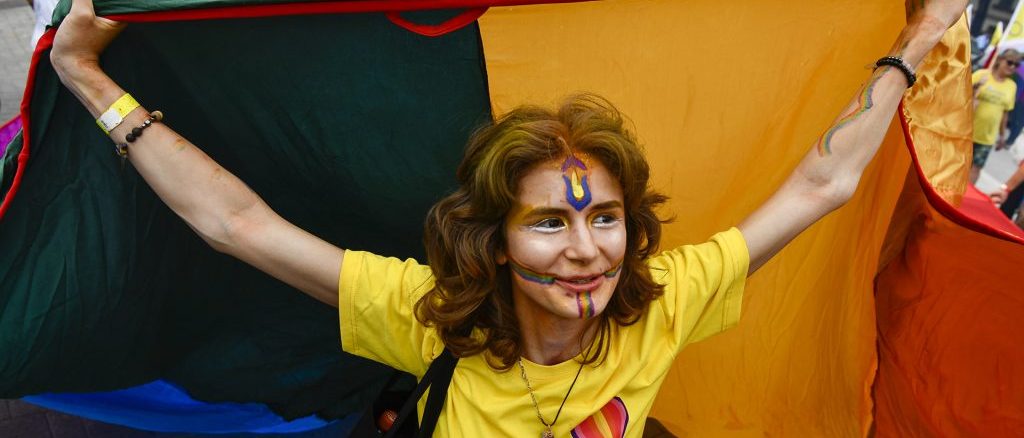
COUNTERING HOMOPHOBIA IN THE MEDIA
June 19, 2023
KOSOVAR MEDIA OUTLETS ARE DISCRIMINATING AGAINST THE LGBTQ+ COMMUNITY.
The Kosovar public, especially lesbian, gay, bisexual, transgender and queer (LGBTQ+) individuals were shocked by the news of the death of Anna Kolukaj, a transgender woman, who ended her life on July 22, 2022.
The sudden death of Anna, who was an activist and drag performer, was spread quickly by local media outlets.
As is often the case when it comes to LGBTQ+ rights, the reporting of this case was unprofessional. Many of them failed to adhere to ethical standards on suicide reporting and reporting on LGBTQ+ people.
To begin with, many media outlets shared details about Anna using sensational headlines, such as: “This is the boy who was found dead” and “Heartbreaking: 22-year-old is found dead.” This misreporting ignored guidelines that call for suicide to be treated as a public health issue rather than an opportunity to get attention, comments and clicks.
Further, many media outlets did not use the name Anna, the name with which she identified. Instead, they used her birth name and reported that she was part of the LGBTQ+ community. Hate speech flooded the comment sections, which were not monitored. As a result, the erasure of Anna’s identity was further reinforced in the comments section.
What does this indicate?
Such reporting speaks to the fact that the media in Kosovo still holds misconceptions when it comes to the use of appropriate pronouns, especially for trans people. Transgender people are underrepresented, and even when they gain public representation, the portrayals are often inaccurate, stereotypical or harmful.
The term transgender is an umbrella term for people whose gender identity and/or gender expression does not align with their assigned sex at birth. Transgender people might choose to undergo hormone treatment, prescribed by doctors, in order to have their body match their gender identity; some might also choose to undergo surgery. However, not all transgender people can or will take such steps. Therefore, transgender identity does not rely merely on physical appearance or medical intervention. A person’s choice to identify with a particular pronoun must be respected.
However, many media outlets did not do this. According to the report “LGBT Movement,” published by the Kosovo-based organization Center for Equality and Liberty (CEL) and other partner organizations in the Balkans, journalists in Kosovo are uninformed on LGBTQ+ issues and more interested in sensationalized personal stories than providing necessary information to the public that would contribute to the awareness and gradual acceptance of LGBTQ+ people.
It turns out that Kosovo is a country where LGBTQ+ rights are a topic of controversy, when what should actually be a source of controversy and outrage is the continuing discrimination against LGBTQ+ people. While there have been some improvements in recent years, media coverage on LGBTQ+ issues in Kosovo remains mixed.
THE PAST HAS PROVEN THAT MISREPORTING OF LGBTQ+ ISSUES HAS THE POWER TO TAKE VIOLENCE BEYOND THE VIRTUAL SPACE.
Similar to the reporting of Anna’s death, media outlets in Kosovo have been criticized for reinforcing negative stereotypes and discrimination against LGBTQ+ people in general. Media reporting about hate speech and discrimination against LGBTQ+ individuals is rare. When reporting does take place, it is often framed as an isolated case and does not focus on the significance of these crimes, what the responsibility of institutions are, or the broader context in which LGBTQ+ people live.
A more recent example is from March 2022, when the draft Civil Code was up for discussion in the Assembly. First, many media outlets chose to report only on one article of the Civil Code, saying that article would recognize same-sex marriages, which was inaccurate. The draft Civil Code consisted of 1,630 other articles and one of them simply paved the path for civil unions between persons of the same sex, which would be regulated through another law.
At the same time, some media outlets repeated prejudicial language used in the Assembly during the session that was full of misconceptions and hate speech about LGBTQ+ people. In order to discuss the Civil Code and the possibility of same-sex civil unions, some media outlets invited individuals, public figures, religious leaders and politicians on their TV shows who have previously expressed homophobic ideas and continue to do so.
How media outlets report on certain issues shapes attitudes and behaviors beyond the media space. Misreporting about Anna’s death, the Civil Code and LGBTQ+ issues in general is nothing new. Instances from the past have proven that this type of reporting has the power to take violence beyond the virtual space.
In December of last year, the K2.0 marked the 10th anniversary of the attack on their team and their efforts to cover LGBTQ+ issues, as well as freedom of expression. In 2012, K2.0 was preparing for the launch event of their magazine edition themed on sex when they were attacked by a group of men. This attack was aided by misreporting by the media, which, by providing inaccurate information about the event, fueled misunderstandings and hatred that transformed into violence.
Instead of reporting about how human rights have been suppressed and freedom of speech has been hindered, media outlets sensationalized the theme of the event.
A counter initiative
Despite the difficulties of this exclusionary media environment, there are also media outlets that are actively working to raise awareness, to promote the rights of LGBTQ+ people and to change this discriminatory paradigm. This is being done by integrating new media formats and bringing the narratives of LGBTQ+ people to the surface.
One of these media initiatives is the institute that I lead, the Sekhmet Institute, which together with the Sbunker blog has led a project that offers new and counter narratives about the wide range of experiences of the LGBTQ+ community in Kosovo.
Through a series of six podcasts, titled “Ylber” (Rainbow), LGBTQ+ lives were put at the center of an essential and well-informed discussion. Through this project, we used the podcast format as a space where LGBTQ+ people can speak and tell their stories — something that is missing in the media sphere in Kosovo. In addition, we included opinions and discussions from experts and activists, trying to counter the prejudices that often come as a result of exploiting LGBTQ+ narratives to create sensationalism and attract readership.
It is critical that media outlets engage in opposing the lack of information, non-representation and hateful content which have led to the normalization of violence. Instead, in our podcasts we talked about legal recognition of same-sex marriage, coming out and gender transition, LGBTQ+ sexual and mental health and homotransphobia in the workplace — structural concerns that LGBTQ+ people face. This also served as a call for institutional protection and the prioritization of anti-discrimination efforts.
Media initiatives like this should not be isolated, but become a daily practice of newsrooms in Kosovo. To have informed discussions about LGBTQ+ issues, it is enough to search the internet for guides on how to report on LGBTQ+ issues or even reach out to organizations working in this field.
We are witnessing the powerful influence that the media has, either to escalate violence against a group, or to reduce it. It’s time to make the right choice.
Author: Dardan Hoti
Feature Image: Atdhe Mulla. / K2.0.
This article was originally produced for and published by Kosovo 2.0. It has been re-published here with permission.
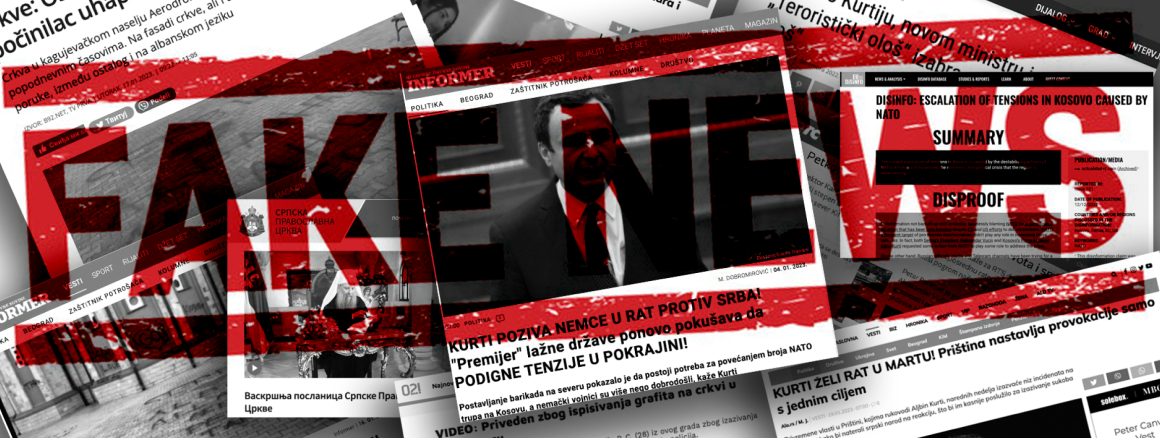
MALICIOUS MEDDLING IN KOSOVO’S MEDIA SPHERE
June 16, 2023
On November 2, 2022, a video from a private care home for the elderly in Peja appeared online. The video showed a young nurse beating an elderly woman, slapping her and pushing her against the wall. The video showed that as the nurse taunted, slapped and humiliated the old woman she was supposed to be caring for, her colleagues were laughing. The old woman cried and begged them to stop.
The video of the mistreatment spread widely on social media and became the news of the week in Kosovo and beyond.
Some media outlets in Serbia picked up the story and falsely reported that the elderly Albanian woman was Serbian and that the attacker was Albanian, transforming an act of elder abuse into an inter-ethnic incident.
This is just one of many instances when the Serbian media has invented an ethnic angle in news stories, either to incite tensions or as a result of republishing unverified information. Considering the often tense relations between Kosovo and Serbia, this happens frequently.
A central narrative that this type of disinformation tries to create is that Kosovo’s Serbs live in unbearable conditions due to Albanians and Kosovar state authorities.
Serbia is not alone in this. The pro-government media of Russia and China, alongside Serbia, are the main disseminators of disinformation in Kosovo and about Kosovo. Serbian-speaking audiences are the main targets of disinformation from Serbian and Russian media outlets, while Chinese media outlets more often focus on Albanian-speaking audiences.
These countries’ disinformation campaigns in Kosovo are part of a broader global information disorder. Disinformation — increasingly defined as “a weapon of intervention” by “malign external forces” — is increasingly being used in the digital information space to undermine democracies around the world or to cause political or social disorder.
Although the purposes of Serbia’s and Russia’s disinformation campaigns in Kosovo differ from China’s, all three demonstrate how easily these campaigns have broken into the Kosovo media sphere.
Multi-dimensional disinformation from Serbia
Since 2011, a dialogue mediated by the European Union has been taking place between Kosovo and Serbia with the aim of normalizing relations. Although more than 30 agreements have emerged from this dialogue, they largely remain unimplemented and relations between Kosovo and Serbia remain tense.
Incendiary reports with baseless assertions, especially about Kosovo Serbs, appear frequently in the Serbian media. The source of this misinformation is often Serbian government officials.
This type of misinformation escalates when there are developments in the north of Kosovo. Political disagreements between Kosovo and Serbia — caused by Kosovo’s efforts to assert its statehood and Serbia’s efforts to maintain its power in four Serb-majority municipalities in northern Kosovo — have often taken the form of tensions.
In June 2022, the government of Kosovo issued a decision to gradually ban Serbian license plates issued for cities in Kosovo. Protesters barricaded the two roads that connect the north of Kosovo with Serbia. In November, Serbs resigned en masse from the public institutions of Kosovo, including police officers, prosecutors, judges, mayors and deputies of Srpska Lista in the Kosovar Assembly. Barricades then went up and remained for weeks and Kosovar police officers on the scene reported being shot at by unknown individuals on multiple occasions.
Around this time the head of the Serbian government’s Office for Kosovo and Metohija, Petar Petković, publicly stated that the tensions in the north represented the government of Kosovo preparing for bloodshed against Serbs.
“We will not allow a pogrom against our people,” he said at the end of last year on Radio Television of Serbia (RTS).
Hibrid.info, an online fact-checking platform, has categorized hundreds of public statements and news reports in the Serbian media as disinformation, unverified and conspiratorial. Since 2020, the platform has been monitoring the penetration of disinformation in Kosovo and the actors behind it.
“The Office for Kosovo in the government of Serbia with its director Petar Petković leads things. From time to time it is also the President Aleksandar Vučić,” said Shkëlzen Osmani, head of Hibrid.info. When the situation in the north of Kosovo becomes tense, Osmani said, the most common disinformation he sees is a narrative that Kosovo’s institutions are planning to expel Serbs from the country.
During the last year, baseless official statements and subsequent reports in the Serbian-language media asserted that Kosovo’s institutions have a list of 230 Serbs they intend to arrest. Other narratives have been that Kosovar Prime Minister Albin Kurti wanted to start a war with Serbia “in March 2022” and that Kurti has requested German troops join KFOR, the NATO military mission in Kosovo, in order to fight Serbs in the north.
President Vučić is known for using hate speech against specific individuals in public.
On December 1, 2022, he called Prime Minister Kurti “terrorist scum.” Vučić was lashing out after Kurti appointed Nenad Rašić, who opposes Vučić, as Minister for Communities and Returns. He also referred to Rašić and an appointment of his, Rada Trajković, as terrorist scum in an interview with the Serbian television channel Pink. He then shared the interview on his YouTube channel.
DISINFORMATION FROM SERBIA LARGELY TARGETS KOSOVO SERBS.
According to Abit Hoxha, media researcher at Adger University in Norway, this is an attempt to normalize the language of hatred against Kosovo.
“The use of hate speech in combination with the accusations that the Serbian state makes about the leadership of Kosovo, such as against Kurti, but also Rašić and Trajković, aims to create a negative perception of these personalities,” said Hoxha.
Disinformation from Serbia also targets Kosovo Serbs. Largely consuming media directly from Serbia or which is influenced by Serbian government preferences, their media environment is dramatically different from Kosovar Albanians’.
Tatjana Lazarević, editor of the Serbian-language Kosovo Sever portal (Kossev) said that Serbs have been the main target of disinformation during the tensions in the north in 2022.
“Citizens were exposed to a propaganda war between the political and institutional structures of Serbia and Kosovo, which was spread through the media and social networks during successive crises in the north throughout 2022. Those who were most affected, the citizens in the north, were most exposed,” said Lazarević.
The influence that this disinformation has among the Serbian-speaking audience in Kosovo is amplified by some of the local Serbian-language media in Kosovo, most of which, according to Lazarević, support the government of Serbia unconditionally. As she wrote in an opinion piece, independent Serbian-language media outlets in Kosovo are small and have a limited market.
When the disinformation surrounding the event at the retirement home in Peja started spreading, one of the more prominent cases in the last year, the Hibrid.info platform went into action.
The online Serbian-language media outlet Alo.rs reported on the case with the title “VIOLENCE IN A HOME FOR THE ELDERLY – Albanian nurse beats and mistreats Serbian elderly woman (VIDEO).” The subtitle was “Incidents in homes for the elderly are increasing.”
The day that the disinformation about the elderly woman being Serbian was spread, Hibrid.info immediately alerted its peer verification organizations in Serbia, Montenegro and Bosnia and Herzegovina.
Alo.rs then added a revised version of the text with the note: “In the original text it was said that the elderly woman was of Serbian nationality, which after the analysis of the fact-checking portals, raskrinkavanje.me and raskrinkavanje.rs, turned out to be fake news. We have changed the title and now it contains the correct information.”
The disinformation campaigns have targets outside the Serbian-language media space. The false reports about the elderly victim being Serbian appeared on Spanish media outlets Telecico.es and Marca.com only a day after the attack. In order to get the Spanish outlets to retract their articles, Osmani sent fact-checking data to Spanish fact-checking organizations Maldita and Neutral. Among other things, he sent interviews that the elderly victim’s family gave to Kosovar media and personal data about the victim provided by the Ministry of Internal Affairs of Kosovo. Osmani exchanged around 30 emails in one week with the Spanish fact-checkers until they were satisfied.
“We had more difficulty with Spanish fact-checkers because they do not know the context of Kosovo or only knew a little. They don’t know that a person with the victim’s last name must necessarily be Albanian,” said Osmani.
Regardless of the labor, he is relieved that the article has been corrected.
“The effect is visible because those media outlets no longer have [the disinformation] and as a result they either [have removed it] or have corrected it. Now when someone searches online for certain issues about Kosovo and suddenly comes across such an article, it is no longer misinforming, but informative,” said Osmani.
Disinformation and the Serbian Orthodox Church
An institution that is often the subject of disinformation from the Serbian media is the Serbian Orthodox Church and Serb religious sites in Kosovo. The Serbian Orthodox Church (SOC) is particularly important in the media because it plays an active political role in the dynamics and power struggles between Kosovo and Serbia.
The SOC has significant political influence in Serbia and among Serbs, and its representatives are vocal about continuing to consider Kosovo as part of Serbia. For years, their representatives in Kosovo have refused to be in direct dialogue with the government of Kosovo as a result of the non-implementation of a Kosovo Constitutional Court verdict calling for the return of lands owned by the SOC’s Visoki Dečani Monastery.
Even after the agreement between Kosovo and Serbia to give the SOC special status and to provide for the protection of Serbian religious and cultural heritage sites in Kosovo in accordance with European models, the Church did not change its stance towards Kosovo. In a 2023 Easter speech in April, Church Patriarch Porfirije said that “the alienation of Kosovo and Metohija by the state of Serbia, directly or indirectly, de facto or de jure, is unacceptable.”
In recent years, there have been disinformation and conspiratorial reports in Serbian media about the vandalization of Serbian religious sites and about the possible extinction of the SOC.
In January 2023, Serbian media outlets such as B92, 21.rs, Informer and Television Prva, reported on Albanian language graffiti painted on the Sveti Sava Church in Kragujevac, Serbia. The reporting claimed that some of the graffiti read “Serbia is the heart of Albania.” The news turned out to be false, as there was no graffiti in Albanian on the wall of the Sveti Sava church.
The graffiti was in English and Serbian with the exception of “Allahu akber” which is similar to “Allahu Akbar” (“God is great” in Arabic).
B92 did not change their false subtitle, though 21.rs revised their post and indicated that there was no graffiti in Albanian. The news was revised in an updated text after the Serbian fact-checking platform, FakeNews Tragač, confirmed that the graffiti was not written in Albanian.
There have also been articles published suggesting that there is a secret plan by Kosovo’s institutions for the erasure of the SOC. This year, on January 25, the government approved a draft law on religious communities that provides the criteria and deadlines for the registration of religious communities in Kosovo.
Despite this, the Serbian portal Alo.rs republished an article from Gazeta Express (which was itself a copy of a Radio Free Europe article) titled “What does the new Draft Law for Religious Freedom in Kosovo entail?” but changed the title to “Kurti’s monstrous plan is published: Albanians want to erase the Serbian Orthodox Church! The draft law that is being prepared in Prishtina!” In no part of the original article is it stated or implied that the draft law would bring about the erasure of the SOC, as the Alo.rs title states.
According to Osmani from Hibrid.info, the distribution of such news about the SOC is not done on a regular basis, but from time to time takes place in pro-government Serbian media.
Nevertheless, disseminators of disinformation from Serbia take advantage of a wide variety of news developments to spread false news about Kosovo.
Russia: Serbia’s ally in disinformation
Russia has engaged in an ongoing effort to produce and spread disinformation that could increase tensions around the world. This includes using social media and online forums to spread false narratives and propaganda and promoting conspiracy theories. Russia’s disinformation campaigns have been linked to several major world events such as the 2016 U.S. election and the war in Syria.
In the Balkans, Russian disinformation campaigns mostly pass through Serbia, which has the closest ties to Russia in the region. Russia’s attempt to influence the information space in the Balkans is widely seen as an attempt to put a wedge between these countries and Euro-Atlantic institutions and to otherwise cause disorder.
Kosovo, whose independence is opposed by Russia, is no exception.
Serbia claims historic friendship with Russia and is the only country in Europe to have vocally opposed sanctions on Russia after the invasion of Ukraine in 2022. These ties are clear in the way the Russian Ministry of Foreign Affairs talks about Serbia and Kosovo.
For example, the earliest press release from the Russian Federation available on their English-language website dates back to September 2001. The press release is a solemn statement grieving for the victims of the September 11 terrorist attacks of the Twin Towers in New York City in which 2,996 people died. But the statement also falsely suggests that Albanians were committing similar terrorist acts in Kosovo and Macedonia.
The KIPRED Director Lulzim Peci said that Serbia and Russia have similar narratives regarding Kosovo.
According to Peci, Russia has four main narratives in their disinformation campaign: presenting Kosovo’s independent as illegal; presenting Kosovo as a criminal entity that oppresses the Serb community and the SOC; manipulating historical narratives about the conflicts in the former Yugoslavia by inflating the number of Serb casualties; and undermining the historical role of the U.S. and EU countries in Kosovo’s state building.
According to Peci, in the context of the war in Ukraine, violent conflict in Kosovo would suit Russia.
“Russia does not aim to protect the Serbs in Kosovo, but to destabilize Kosovo and start a conflict, which would serve them,” said Peci. “It is a distraction because then the West would have to work on two fronts… Russia wants to see conflict and normally nurtures it and on the other hand it presents the West as incapable of managing the situation in Kosovo.”
According to a report by the Democracy Plus organization in Kosovo, the local Serb community is the most vulnerable to disinformation, due to the positive perception of Russia and China. The report concludes that: “Kosovo Serb citizens view Western powers less favorably and the majority would not vote for joining either the EU or NATO. Differing from Kosovo Albanians, Kosovo Serbs’ opinions about Russia and China are positive.”
After Russia’s full-scale invasion of Ukraine in February 2022 and growing concern about pro-war Russian propaganda, Kosovo, like EU member states, banned pro-Kremlin Russian media last year. “Sputnik and Russia Today are essential and instrumental in bringing forward the military aggression against Ukraine through disinformation, information manipulation and distortion of facts,” the European Commission argued at the time.
Initially, the Independent Media Commission (IMC) in Kosovo compelled all distribution operators to stop broadcasting channels of Russian origin such as Russia Today, Russia 24, Planeta RTR and Russia Today Doc. After about a month, the Regulatory Authority of Electronic and Postal Communications (RAEPC) instructed internet operators to block the domains of the portals rt.com, francais.rt.com, sputniknews.com, sputniknewslv.com, sputniknews.gr, sputniknews.cn.
But, according to Osmani, making it difficult for readers in Kosovo to access the propaganda and disinformation media of external powers does not have a major effect. Anyone who has internet access can find ways to access restricted pages such as by using a Virtual Private Network (VPN), which enables an encrypted online connection regardless of location.
The RAEPC did not take additional actions after Russia Today Balkan opened the new portals rt.rs and Sputnikportal.rs.
Sputnik and Russia Today have never had an Albanian language portal or television station.
Since the invasion of Ukraine, the Russian media have increased their output in the Serbian language. Serbia has not imposed sanctions on any Russian media outlets.
“We opened RT in the Balkans. Because Kosovo is Serbia,” Margarita Simonyan, editor-in-chief of Russia Today, wrote on her Twitter account in November 2022, when the new portal was opened in Serbia.
In addition to Serbian-speaking audiences, the Russian media have also targeted audiences of more widely spoken languages with disinformation, such as Spanish and Arabic. For example, during winter tensions in the north of Kosovo, reporting from Russia Today in English and Spanish, supported by political commentators in the studio, blamed NATO and the Kosovo government for igniting the tensions.
In December 2022, around the time of the removal of barricades in the north of Kosovo, Russia Today wrote about the prospects of a repetition of Operation Storm of 1995, during which the Croatian military recaptured Serb-occupied parts of the country and, according to the Helsinki Committee, killed 410 Serb civilians and expelled an estimated 200,000 Croatian Serbs from their homes.
Russian media, even when tensions are low in the north of Kosovo, have asserted without evidence that the role of NATO forces and Western countries is to cause crises in Kosovo and incite violence against the Serb community. NATO countries and the EU have consistently called for the reduction of tensions and have engaged Kosovo and Serbia in a dialogue facilitated by the EU to address the unresolved issues between them.
In December 2022, Kosovo applied for EU membership. In response, five Arabic-language Russian portals misinformed their readers about the legality of Kosovo’s application. An EU project, “EU vs. DISINFO,” has identified news articles that falsely claim that the submission of Kosovo’s application is contrary to the ban on application to international organizations, which was agreed on as part of the Washington Agreement between Kosovo and Serbia at the White House in September 2020.
One of the points of the Washington Agreement, which was signed by President Vučić and former Prime Minister of Kosovo Avdullah Hoti, was that Kosovo would not apply for membership in international organizations until September 4, 2021. In exchange, Serbia would stop pressuring other countries to withdraw recognition of Kosovo. Contrary to what was claimed by Russian online media, the moratorium on the application to international organizations, as it is widely called in the Kosovar media, was not in force in 2022 when Kosovo submitted their application to the EU.
Lulzim Peci from KIPRED said that this is an example of the denigration of the international community’s role in Kosovo. “The war against the West is being carried through Kosovo. The aggressiveness [of Russian disinformation] relates more to the West than to Kosovo,” he said. “Let’s not forget that it also aims to affect global opinion in general.”
According to him, the interests of Serbia and Russia are not the same, but they often go hand in hand when it comes to Kosovo.
“Serbia needs Russia to fight Kosovo, Russia needs Serbia to destabilize the region,” said Peci. “Serbia needs Russia to block Kosovo in international institutions and let’s not forget that Serbia and Russia have lobbied together for the de-recognition of Kosovo. They differ in terms of nuances because Serbia prioritizes fighting Kosovo, while Russia prioritizes fighting the West.”
China sponsors Albanian-language news
A sponsored video subtitled in Albanian created by the Chinese media outlet Radio Ejani presents Europeans’ dissatisfaction with the inflation that has burdened the global economy. The video claims that their economic problems are the result of EU sanctions on Russia.
The description of the video reads: “After the outbreak of the Russian-Ukrainian conflict, the EU imposed sanctions on Russia, but these sanctions have also caused energy shortages and increased inflation in Europe.” The video shows protesters in Germany and Moldova proposing that a diplomatic solution be found with Russia and that the EU stop supporting Ukraine with weapons.
Based in Tirana, with which China established diplomatic relations for the first time seven decades ago, Radio Ejani is a state-owned media outlet that targets Albanian-speakers across the region. China is a fierce opponent of Kosovo’s independence and is represented in Kosovo with a liaison office, just like Russia.
Some of the first sponsored articles posted on the portal’s Facebook page in Albanian promoted the leader Xi Jinping and showed his visits to those affected by Covid-19. While at its beginning in 2019 the content was mostly political, recently it has diversified to include more information about the economy and culture of China and highlighting the official propaganda narratives of the Chinese government.
For example, in February 2022, the outlet promoted their news story about the Xinjiang region through paid advertising and presented the region as a place of “songs and dances.” Chinese government actions in this region, home to around 12 million Uyghurs who are mostly Muslim, has put China at the center of international criticism due to accusations of crimes against humanity and possible genocide against the Uyghurs. The description of the sponsored video includes the text: “Xinjiang is a region of songs and dances. We Uighurs have always been known as a nationality that dances and sings.” From 2019 to the beginning of 2022, Radio Ejani sponsored 40 news articles on this Facebook page for promotion in Kosovo.
Another Chinese state media outlet, CGTN, uses the same method, but only by sponsoring English-language content. From videos with cute pandas and tiger cubs, to content about the war in Ukraine, to Xi Jinping’s speeches and meetings, CGTN pays to reach a Kosovar audience. On the CGTN page there were 440 sponsored posts between May 2019 and February 2022. It is often unclear to the audience that the news comes from Chinese state media.
A report from the U.S.-based National Democratic Institute (NDI) mentions focus groups with Kosovar journalists who say that some media in Kosovo is funded by China. While specific outlets are not mentioned, there are cases where news articles in the Kosovar media were originally sourced from content produced by Chinese state media. However, the involvement of the Chinese state media in Kosovo can be identified on social media through their sponsored posts targeting Kosovo.
Ana Kristinovska, sinologist and director of the Macedonian organization ESTIMA, which gathers experts from the Western Balkans, China and the EU, said that this type of news, such as news that Europeans are dissatisfied with the focus on Ukraine, are part of the official Chinese narrative.
She sees the videos such as the one featuring protesters in Moldova and Germany as a projection of China’s hope that European countries will reverse their support for Ukraine.
“They hope that European governments will reverse their policies as a result of public discontent and the worsening of their internal situation,” said Kristinovska.
The presentation of the U.S. in Chinese state media in European countries, according to her, aims to cultivate European distrust of the U.S. Kristinovska said that China’s goal in the context of the war in Ukraine is to divide the EU and the U.S.
“What they’re trying to do is choose the events and arguments that suit them, that they can spin in a way that supports their narrative: that the U.S. is irresponsible to the rest of the world and that European countries should not follow U.S. policies and that they should understand and negotiate with Russia,” said Kristinovska.
Based on the various sources of disinformation in and around Kosovo, Osmani from Hibrid.info thinks that Kosovo’s institutions should commit much more to comprehensive education in digital media literary and critical thinking.
“Yesterday is too late, we have to develop this immediately,” he said.
NGO reports give a portrait of the different forms of disinformation in and about Kosovo, but there is no comprehensive set of data that shows the full extent of disinformation campaigns by external actors targeting Kosovo and Kosovars.
The lack of data and the lack of commitment from policy makers in this field puts Kosovo in an unfavorable position. There are no mechanisms to help members of the public protect themselves from fake news nor an organized response to the digital disinformation targeting Kosovo.
Author: Ardit Kika
Feature image: Atdhe Mulla / K2.0.
This article was developed in partnership with the regional initiative Western Balkans Anti-Disinformation Hub, implemented by the Metamorphosis Foundation with financial support from the Ministry of Foreign Affairs of the Kingdom of the Netherlands. The contents of the article are the responsibility of Kosovo 2.0 and do not necessarily reflect the positions of the project partners and donor.
This article was originally produced for and published by Kosovo 2.0. It has been re-published here with permission.

Monthly Monitoring Highlights – a range of hateful narratives and discourse
June 14, 2023
Throughout the month of May, the RDN monitoring team has detected a range of hateful narratives and discourse. This month, we have seen hatred against political opponents and individuals as well as gender discrimination.
Hatred against political opponents in Bosnia and Herzegovina, Montenegro, and North Macedonia.
In Bosnia and Herzegovina, to mark the International Day of Victory over Fascism, The Association of Citizens ‘Sloboda’ organised a musical event in the city of Banja Luka. This year, singer Darko Rundek amongst others was set to perform.
In reaction to this, journalist Daniel Simić posted a Tweet in which he added a photo of the concert poster, criticising the use of the Latin alphabet instead of the Cyrillic alphabet. He called out the Association of Citizens ‘Sloboda’ by claiming that ‘fascism finally won in BL (Banja Luka). It is written exclusively in the letters that was prescribed as the only legal one by law in 1941. Ante Pavelić.’ He then went on to claim that if this was not an example of true fascism – which according to him lies in the hatred of the Serbian people – then at least the alphabet used to promote the event would have been written in Cyrillic next to the Latin.
The use of the term ‘fascism’ and labelling the actions of groups such as Sloboda as such is dangerous and contributes to divisions in country whose population is mixed along ethnic and religious lines. Instances like these can only contribute to tensions and division in society based on prejudice and harmful personal ideas, and a journalist should not use his public social media as a means to put those forth.
In Montenegro, Vesna Rajković Nenadić, an influential Montenegrin journalist spread hateful narratives and misinformation. On the 21st of May, the Independence Day of Montenegro, Vesna published a Facebook status. In this post, she expressed her contempt for ecological activists who clean Montenegro on that day, comparing their actions to that of the “cleansing of Montenegrins’” in the country This also served to discredit the work of ecological activists and imply that Serbian people and political parties are overtaking Montenegro and are trying to eradicate Montenegrins – a very harmful and divisive narrative.
Following this, Vesna proceeded to host a show called Crosswords, where she then elaborated on this topic and asked her fellow guests the question “who orders trash cleaning actions on Independence Day?” By posing this question, Vesna tried to present the work of the ecological activists as an action which shows opposition and resistance towards the Independence of Montenegro and also as a means to boycott Independence Day.
Vesna Rajković Nenadić is very open about her Montenegrin ethnicity and frequently tries to present Serbs and the Serbian Orthodox Church as the opponents of the nation of Montenegro. She often spreads similar misconceptions, implying that even ecological activists who traditionally clean trash from the Montenegrin landscapes on Independence Day are in fact in favour of or even working for the Serbian political groups in Montenegro, with the aim of boycotting the holiday.
Narratives like these, which are built on personal prejudice, misinformation or disinformation can create division in society. In a diverse society such as Montenegro, narratives like these can promote ethnic discrimination and further tension between groups within society.
In North Macedonia, portal Nova Makedonija recently published an article by Jani Bojadzi, university professor and the director of TV Alfa. In his column titled ‘Let’s not fool ourselves, I don’t forgive’, Bojadzi calls for revenge against political dissidents, expressing his desire to see the mothers, sisters, and wives of members of the ruling party in the country in tears. Throughout his text, he uses extremely derogatory, insulting, and hateful language including the terms “human freaks”, “devil force”, and “mentally ill”.
Such narratives, when coming from a public individual such as Jani Bojadzi, who has a high profile and influence, are additionally problematic. Everyone has the right to their political opinion, however, to publicly attack, insult and spread hate towards those who are of a different political stance, is extremely problematic and not in line with democratic values. Narratives like these can further spur on individuals of the same political stance to continue such rhetoric which can cause tension and hatred amongst groups of individuals. Bojadzi, as a public figure, should be held accountable for his language and words he shares with the public.
Hatred against opposing political views in Kosovo.
Supporters of Kosovan Prime Minister Albin Kurti and his cabinet do not like any criticism of the work of their government. Most times, those who do criticise the current government and the prime minister are subjected to hatred and insults on social networks.
Sisters Arta and Zana Avdiu recently participated in ta podcast of the online portal ‘Nacionale’ where they discussed the work of the government. One of them is a supporter of the prime minister’s party but nevertheless expressed some criticism.
The other sister, however, said she is convinced the prime minister is leading a completely wrong policy that neither benefits citizens nor Kosovo itself. In response, the two sisters received hateful comments, mostly on the account of their gender.
This is not an unusual practice, as RDN findings show that women are often targeted based on their gender, even when the cause for insults is completely different;in this case political opinion.
Analyst Dafina Demaku, who appears in a TV debate broadcast during the week on KTV, is also known as a critic of Albin Kurti’s politics. Her severe criticism of Kurti’s recent policies and decisions has resulted in hatred aimed towards her. In response, Dafina reported the case to the Association of Journalists of Kosovo and through a press release the journalistic organisation strongly condemned the campaign and hatred she was subjected to.
In a democratic society, individuals should be free to express their opinion and political beliefs without the fear of receiving backlash in the form of hatred and insults.
Hatred following mass shootings in Serbia.
On May 3rd, Serbia faced a mass shooting in a primary school in Belgrade which left nine students and a security worker dead. Two days later, another mass shooting took place in a few villages surrounding Mladenovac, leaving eight, mostly young people, dead. The media reporting that followed completely disregarded all journalistic standards, violating the Code of Journalists of Serbia and relevant media laws. The media failed in reporting ethically on these crimes, endangering the privacy of the victims, the perpetrators, and their families. This continued throughout the month of May.
In response to the mass shootings and social unrest, a series of mass protests began in Belgrade and other locations in Serbia. Titled ‘Serbia Against Violence’, the demonstrations were triggered by the tragic events, which have urged the Serbian public to open a conversation regarding violence, especially focusing on hate and violence present in the media, pervasive tabloids, and television channels with national coverage. The protestors are calling for the dismissal of the Council of the Regulatory Body for Electronic Media, the tabloids that continuously violate the Code of Journalists of Serbia to be shut down, and for the permits granted to TV channels that promote violence to be taken away.
In reaction to social unrest, various MPs and other government officials began to spread hateful narratives and discriminate against political opponents and those who think differently. The President of the Republic of Serbia, Aleksandar Vučić, called the protesters “hyenas” and “vultures” during the daily news segment on TV Pink.
He also accused opposition leaders of misusing the recent tragedies in Serbia for political purposes. Following this, during the parliamentary debate on the Government’s report on the security situation of the country following the mass shootings, Nebojša Bakarec, an MP from the ruling Serbian Progressive Party said that the opposition in Serbia is “armed to the teeth” and that they “oppose the action of disarmament of citizens”.
The President of the National Assembly of Serbia did not react to these words in any way. The Prime Minister, Ana Brnabić, also insulted the opposition in the National Assembly. She finished her response to MP Miroslav Aleksić from the opposition People’s Party with “Shame on you!” after which she turned off her microphone, pushed it away and went on to insult them. President of the National Assembly did not react or sanctioned this neither.
Tragic incidents like these should not provide fuel for various individuals including MPs and powerful political figures to spread hatred in society. In moments like these, which require all individuals to unite in the fight for a safer society, state officials must be held accountable for their actions or lack thereof, as well as for their public statements, especially when they are perpetuating the culture of violent communication.
Disinformation and homophobia in Albania.
In May, the Administrative Court decided to overturn the decision of the Commissioner for Protection from Discrimination who ruled last year that evangelical pastor Akil Pano had used substantial hate speech against the LGBTQ+ community in Albania. The Administrative Court said its decision was based on the grounds of freedom of speech and freedom of faith.
Pano presented this decision as a legal victory of ‘mother and father’ against ‘parent 1 and 2’ and the queer community itself. This in fact was far from reality. The ‘parent 1 and 2’ initiative, which would involve replacing the term mother and father with parent 1 and 2 to make families more gender-neutral and inclusive, was allegedly withdrawn from the legal docket last year. Therefore, there cannot be a victory of ‘mother and father’ over ‘parent 1 and 2’ despite what Pano has claimed. However, this rhetoric was not only shared by Pano but also by the media – mostly pro-opposition media who propagated this idea. Headlines presented this idea by pitting these two binaries against one another and presenting the outcome as a ‘victory’ of sort, thereby, spreading misinformation and false news.
Allowing headlines which spread disinformation and misleading claims is extremely problematic. The media have a moral and ethical duty to present information in a factual and correct way. Spreading misinformation to the public can be dangerous and allow for narratives like these to provide the space for hatred against the LGBTQ+ community to continue.