Author: RDN

TROLL OF THE MONTH: TV Pink
December 25, 2023
December 2023
The Balkan Troll of the Month is an individual, a group of individuals or a media outlet that spreads hate based on gender, ethnicity, religion, or other diversity categories. The Balkan Troll is selected based on hate speech incidents identified across the Western Balkans region.
This month, in the morning show “Novo jutro” on TV Pink in Serbia, a private video of opposition MP Đorđe Miketić was broadcast, where he was shown in sexual intercourse with an unidentified woman. In the early morning hours, the topic was announced, and screenshots from this compromising video were shown several times, after which the video itself was demonstrated live, first on mute and then with audio. The video was broadcast around 9 o’clock in the morning.
The tabloids, online portals, and other media outlets quickly picked up the story. On the same day, they published excerpts from the video with sensational headlines targeting Miketić in an attempt to discredit him as a public official and a candidate for the Assembly of the City of Belgrade. Perhaps the most gruesome was the front page of the daily tabloid Alo, which featured an explicit screenshot from the video.
The faces and intimate parts of bodies shown on TV Pink were blurred. However, the pornographic nature of the video was quite clear from what was shown. Also, the MP was unambiguously named in the show several times. By publishing this video, TV Pink violated the right to privacy of Miketić, as well as several media laws and regulations in Serbia. This includes the Law on Electronic Media, the Rulebook on the Protection of Human Rights in the Field of Media Services, as well as the Rulebook on the Protection of the Rights of Minors in the Field of Media Services, as pornographic content is prohibited due to the protection of minors.
Miketić, coming from the opposition party Zajedno (Together), was active in the election campaign of the main opposition coalition Srbija protiv nasilja (Serbia Against Violence), but withdrew after TV Pink published the video. This took place only two weeks before parliamentary elections in Serbia and local elections in Belgrade, where Miketić was a candidate for the member of the City Assembly.
The video was shared on social media before being broadcast on TV Pink. However, it was quickly removed. A few days before this, Miketić stated he was blackmailed and received threats that this video would be published. At the same time, the president of Serbia, Aleksandar Vučić, called Miketić a “human disgrace” in a show on TV Pink and followed by saying, “He won’t ask me much about what I am saying because he knows what I know. And when I said human disgrace, believe me, that is such a mild phrase… I better not say anything.” Miketić also says this video was stolen together with other old documents when his apartment was broken into about a year ago, and he claims that the Security Intelligence Agency was involved with this.
The Regulatory Body for Electronic Media (REM) reacted promptly and published a statement on the same day when the video was broadcast, saying they initiated proceedings against TV Pink for showing “explicit content in the morning program.” However, since that day, REM did not refer to this case again or inform the public about the outcome of the proceedings. It is important to note that TV Pink’s license for national frequency was recently renewed by REM, despite the fact that Pink made multiple violations of media regulations in Serbia, some of which were even recorded and recognised by REM itself.
The broadcast of this video was the climax of the negative campaign against political opponents, which contained discriminatory language and harmful narratives as recorded by the RDN monitoring team. The campaign intensified as elections held on December 17th approached. This way of dealing with political opponents is not unusual in Serbia, but that does not reduce its damage to the culture of political dialogue or the lack of fair election campaigns.
Fact-checking portal Istinomer, through their media monitoring of the election campaign, recorded over 160 cases of disinformation and manipulation on the front pages of the nine daily newspapers with the largest circulation. In this report, Istinomer also highlighted “the extremely negative propaganda directed at the representatives of the opposition, in which public officials and the media jointly participated”.
Monthly Highlights November: trivialisation of femicide & hatred against political opponents
December 14, 2023
Throughout the month of November, the RDN monitoring team has detected hatred based on ethnicity, gender, race, the trivialisation of femicide and hatred against political opponents.
Racism in Albania and Kosovo
In Albania, an agreement was made between the Albanian and Italian Prime Ministers to relocate thousands of African migrants, currently recognised as asylum seekers in Italy, to Albania.
The media has reported on this agreement in an altogether polarised manner – either being for or against the decision, which has equally been reflected by the public which is divided on the issue. As a result, there has been an increase in racist content, portrayed in the form of humour such as through memes, funny reels, and videos, as well as through articles including racist, insulting headlines. Aside from this there has equally been cases of racist content and rhetoric being upheld and spread by public figures including statements containing elements of dehumanising language towards refugees.
One such article was on syri.net, whose headline reads “Edi Rama’s ‘black’ Albania. Are you ready?”. Hateful, discriminatory, and racist narratives like these are highly problematic and unacceptable. Racism of any form is unacceptable – be it spread from a member of the public, a public figure, or the media itself. Furthermore, it is imperative for the media to uphold both professional and moral standards, refraining from leveraging their platform and influence to disseminate racist and discriminatory headlines and content under any circumstances.
In Kosovo, rapper Loredana Zefi posted several photos on her social media of herself and her partner, German footballer Karim Adeyemi, to showcase their closeness. As a result of this, many individuals in Germany came out expressing their concern that due to their relationship, the footballer is neglecting his career, arguing that his relationship with the rapper is negatively impacting him.
Loredena Zefi was born in Switzerland and is well-known on the international scene. She was previously married to a renowned Kosovar singer whom she also had a child with. Her current relationship with Adeyemi has resulted in various hateful comments aimed towards both individuals on a personal level as well as questioning the choice of Loredana to be in a relationship with Adeyemi. Patriarchal and conservative stances are still very present in Kosovar society, resulting in struggles with accepting differences and diversity. This further results in discriminatory views often being published and shared on social media, including racism and sexism, which is never acceptable.
Sexism in Montenegro
MP Aleksandra Vuković Kuč, member of the opposition Democratic Party of Socialists, fell victim to severe insults and misogynistic speech on various social media networks. Slavica Illinčić, a public official and her political opponent, also released insults on Vuković’s Facebook page following several photos of Vuković circulating on social media. Alongside this, an avalanche of hateful comments, including remarks regarding Vuković’s pregnancy, her looks, her national identity and various other sexist and misogynistic comments were posted.
As a result, the Basic Prosecutor’s Office in Podgorica opened a case with the aim to determine if there are any elements of a criminal offense as a result of the inappropriate comments about Vuković’s private live. The attack on Vuković was furthermore, strongly condemned by the majority of non-governmental organisations, her party, opposition colleagues and civil activists. The Defender of Human Rights and Freedoms called on the authorities to respond to this case, even to dismiss Ilinčić from office.
Alongside online violence and sexist, insulting hate speech, Vuković has also been said to experience attacks on the street. Unfortunately, violence against women and sexist remarks online for women engaged in public life is commonplace and on the rise on social networks. This is in line with the results of the Digital Forensic Centre’s October researcher ‘Sexism in Online Media’.
Online trolling, a manifestation of individuals seeking to inflict harm and spread hatred, is never justified. Cases like these maintain the cycle of violence towards women including upholding misogyny in society. The online space should be one ruled by dignity and respect rather than being used as a means to spread hate and sexism. Furthermore, individuals such as Slavica Illinčić should not be using their online platforms to spread hate speech in any form. Such attitudes by public figures can only justify and trigger further hate online as well as offline.
Trivialisation of femicide in Bosnia and Herzegovina
In Bosnia and Herzegovina, a thirty-year-old woman has been the latest victim of femicide in the country. She endured violence from her ex-partner that culminated in her violent death. The perpetrator then fled and hid in an apartment where he was ultimately arrested.
The following day, the abuser and murderer’s lawyer stated that his client loved his wife and was a caring father, labelling the act of femicide as the end of a tragic love story. This statement and sentiment were reported on by numerous media outlets, without challenging this harmful narrative.
Femicide, a brutal manifestation of gender-based violence, represents the gravest violation of women’s rights and the most extreme consequence of deeply rooted patriarchal structures. Within the Western Balkans, femicide stems from a structure of inequality, patriarchy, and misogyny, which needs to be addressed. The fight against femicide must be addressed at every level of society, from education, policy and law implementation to the mechanism, institutions, and structures in place to prevent, address, and respond to femicide. Furthermore, a serious topic like femicide needs to be addressed in the appropriate manner. Trivialising and undermining the gravity of femicide is not only harmful to those who have fallen victim to such crimes and violence but also to the overall protection of those who are in a vulnerable position.
The media, with a large platform and indeed with an educative and informative role in society, should not spread this kind of rhetoric which only serves to trivialise femicide and undermine its causes. It is imperative to address femicide with the gravity it deserves, ensuring that perpetrators face the appropriate consequences for their actions.
Hate speech against political opponents in North Macedonia and Serbia
Dragan Kovacki, a member of parliament from the VMRO-DPMNE party, was involved in the spread of disinformation. Using a photo from a concert in Sofia and portraying it as an image from the Boris Trajkovski Hall in Skopje, the act was an attempt to misrepresent the setup for the upcoming OSCE summit scheduled to be held at the Hall. The summit, significant to North Macedonia as it chairs the OSCE, was expected to attract over a thousand attendees from around 70 international delegations.
Following the media’s exposure of this act of disinformation, Kovacki acknowledged that the news was indeed false and proceeded to remove the post. However, rather than issuing a public apology, he responded with a Facebook post containing slanderous remarks, hate speech, and criticism of his critics and political opponents.
An individual, such as a member of parliament who thereby holds a position of power and responsibility, should be both accountable and professional. Spreading disinformation is both unprofessional and harmful, whilst furthermore, using social media to spread hate speech and rhetoric aimed towards political opponents is unacceptable. Differences in political opinion should never be a justification for hate speech.
In Serbia, in the morning show “Novo jutro” on Pink TV, a private video of MP Đorđe Miketić was broadcast, where he was shown having sexual intercourse with an unidentified woman. At the beginning of the show, screenshots from this video were shown several times, after which the video itself was broadcasted, first on mute and then with audio.
Regardless of the faces and intimate parts of the bodies of the people shown being blurred, the pornographic nature of the video was quite clear from what was shown. Furthermore, the MP was unambiguously named in the show several times. Moreover, during the morning show, host Jovana Jeremić asked, “Will we see, in a few days, the continuation of the video, which is perhaps far more perverse and has European rainbow colours? Whatever that means.” Her statement can be interpreted as an attempt to threaten further violation of Miketić’s privacy.
By publishing this video TV Pink violated all rights to privacy of Miketić, as well as several media laws and regulations in Serbia. Prior to airing it on a television channel with national frequency without authorisation, the video was initially shared on social media but promptly taken down.
Various tabloid media picked up on the story and shared screenshots with sensationalistic headlines in print and online portals. Indeed, a few days prior to this, Miketić revealed that he had been blackmailed with threats of this video being published. At the same time, the president of Serbia, Aleksandar Vučić, said that Miketić was a “human disgrace” in a show on Pink TV, and that Miketić will not ask him why he is saying that because, as he said, “he knows what I know”.
Miketić himself said that this video was stolen together with other old documents when his apartment was broken into about a year ago and claims that the Security Intelligence Agency was involved with this. In reaction, the Regulatory Authority for Electronic Media (REM) initiated proceedings against TV Pink for showing explicit content in the morning program whereby the Expert Service concluded that the release of such content was indeed a violation of the Law on Electronic Media, the Rulebook on the Protection of Human Rights in the Field of Media Services, and the Rulebook on the Protection of the Rights of Minors in the Field of Media Services.
This case is a clear example of a blatant violation of, as well as an attempt to discredit political opponents by manipulation with such content. Such actions not only breach ethical standards but also inflict serious harm on the individuals involved, undermining the principles of respect, consent, and personal dignity. This furthermore does harm to the overall culture of political debate, replacing it with smear campaigns. TV Pink must face the appropriate consequences and be held accountable for their actions.
Online Violence Against Women in Politics: A Threat to Democracy
December 8, 2023
Online violence against female politicians, which impacts women’s representation in political and other decision-making institutions, has various consequences that harm democracy. The impact of online violence goes against the fundamental tenets of democracy, presenting novel challenges to states and institutions in controlling and holding perpetrators accountable. Although there are outstanding issues in controlling and monitoring such violence, at the same time, there are possible solutions to limit its occurrence in the future. States and institutions must take a decisive and strict approach to these issues in order to protect women from harassment and other dangerous forms of cyberviolence.
In November 2017, Spanish prosecutors opened an investigation into several threats, use of derogatory language, and harassment towards the former mayor of Madrid, who is a woman. These illegal activities all stemmed from one source – an online group chat comprised of local police officers.
The aforementioned case is only one of thousands involving online violence against women in political power. Due to the accessibility and wide reach of cyberspace, the Internet and politics have formed a close and largely co-dependent relationship in the past decades. Some research even indicates a positive correlation between Internet usage and political engagement in Europe. However, and worryingly so, online political discourse has also morphed into a breeding ground for gender-based violence wherein women politicians are subject to constant harassment. The statistics reflect these concerns: Amnesty International reported that women in politics are 27 times more likely to face online abuse than men in equivalent political positions. There are far-reaching and highly detrimental effects of this practice. Online violence against women politicians impairs the functioning of a modern democratic society, and as such must be treated as an issue of great importance in policy-making.
The Chilling Impact of Online Violence on Women in Politics
A major problem caused by online violence is its stifling effect on representative democracy specifically. The essence of the latter lies in the existence of appointed representatives who reflect the demographic of the society, which would of course include women from all walks of life. However, the prevalence of online violence against women has discouraged many from aiming toward and accepting positions of political power. One of the typical examples of this is cyberbullying of women parliamentarians, which consists of the publication of disparaging posts, messages, or other online content. These posts often contain what is termed hate speech: discriminatory language against an individual based on their inherent characteristics, in this case, hatred based on one’s identity as a woman. The proportion of such attacks is worryingly high, with the Inter-Parliamentary Union reporting in a 2019 study that more than half of participating women parliamentarians in Europe and 42 per cent of those in the global study been targeted with “online sexist attacks on social networks”. While politicians are regularly scrutinized publicly by the nature of their position, the gender-based attacks on women politicians often take on a misogynistic undertone, including discriminatory comments on women’s role in decision-making and politics.
In addition to cyberbullying, female politicians face many other forms of online violence such as cyberstalking, doxxing (wherein private information is leaked to the public), and sexual harassment. The impact of these attacks goes even beyond the women targeted, as it creates a societal climate of ‘discrimination, exclusion and insecurity’ for women in politics. In turn, women are often reluctant to take on political responsibility, facing potential reputational damage and the psychological effects of such harassment. This phenomenon is particularly detrimental toward younger generations, as for many the Internet is the first or main platform in which they engage with political issues. Online violence is arguably an antithesis of representative democracy and it hinders the creation of state institutions that are truly representative of the female population.
Navigating the Challenge: Holding Perpetrators Accountable
Online violence against women in politics is problematic not just because of its prevalence, but also its monitoring and control – or lack thereof. A general issue in holding perpetrators of online violence accountable is anonymity, which is precisely the reason behind the high volume of attacks ‘hiding behind the screen’, as users operate behind completely customizable names and private details. In this case, democratic states often deal with conflicting rights, such as the right to free speech on the one hand and protection from discrimination on the other. However, there are specific challenges in the political sphere that women are exposed to, and these will be considered in turn.
In this regard, rapid technological development has led to a series of newer forms of gender-based violence such as deepfakes, hyper-realistic images, or videos of fake events. As they are almost undetectable, they are also more prone to impact the public’s perception of the subject shown in the image or video. This technology is being used at a much higher rate to target women, including those in political power. For example, a deepfake-generated video of U.S. House Speaker Nancy Pelosi depicting her intoxicated was rapidly spread across social media, including by politicians. Understandably, concerns have already been expressed about the staggering effect of these on democracy, particularly with such content being used to humiliate and silence women politicians. Thus, new discoveries must be monitored accordingly to prevent a large-scale democratic backslide in society at the hands of technology.
Another problem with controlling gender-based violence that is especially present in politics is the misinterpretation of harmful online behavior as “exercises of freedom of expression”. On one hand, one of the pillars of democracy is the right to express one’s opinion freely. Even the law on defamation makes certain exceptions from liability where a person speaks on a matter of public interest, even if it concerns politicians themselves. But despite the robust protection of freedom of expression, such interests need to be balanced with the prohibition of other conduct, e.g. hate speech. Furthermore, the right to be free from discrimination is also essential to democracy, and as such, it must take center stage in the fight against online gender-based violence. While constructive criticism of women politicians is important for accountability, online violence such as cyberbullying or doxxing cannot find protection under the umbrella of free speech. This is especially significant considering the gender-based element of the situation, in that women are much more likely to face severe or repeated online violence. Thus, while it remains difficult to draw a precise line between the allowance of free speech and the prohibition of online violence, strict policies must be placed to ensure that one’s right to free speech is not used as an excuse to facilitate harassment and bullying.
Addressing the Menace: A Call for Proactive Measures Against Online Gender-Based Violence
The proliferation of online violence against women is concerning and relentless. While a full analysis of the solutions to these problems is beyond the scope of this article, it can be said that countries and institutions must utilize knowledge from experts in the field and stay in touch with recent developments in order to keep up with the rapid technological advancements. These policies may also include close cooperation with social media websites so that potential and ongoing risks can be identified and eliminated as soon as possible. As far as the dilemma between protecting free speech and fighting cyberviolence is concerned, a precise demarcation of permitted online activity must be set by states and institutions to ensure that free speech is not used as a justification for harassment and other online violence.
Therefore, fighting online gender-based violence requires a hands-on approach, with strict limits placed by the authorities and regular implementation mechanisms that ensure problematic cases are swiftly detected and investigated.
Unmasking the Threat
It is evident that the prevalence of online violence against women has become a significant issue in modern society. In addition to contributing to broad societal regress and reinforcing discriminatory attitudes towards women, this form of violence has a detrimental effect on democracy as well. As aforementioned, the fear generated by online violence has been a discouraging factor for women in regard to applying to or accepting roles involving political power. Consequently, this reduces women’s representation in institutions or political positions. Furthermore, democratic societies are facing the dilemma of balancing the rights deriving from public positions with other competing interests, including the right to free expression.
In summary, online violence against women is extremely harmful to democracy and the fundamental principles it protects. Its psychological impact not only dissuades individual women from engaging in politics, but the absence of regulations in these areas also creates a power vacuum that opens the door to widespread abuse facilitated by technology.
It is imperative that legislators and other politicians place the issue of online violence against women at the top of their agenda, and that they develop robust policies for the sake of protecting women’s fundamental rights and the democratic order.
Author: Lea Meraku
BIBLIOGRAPHY:
- Amnesty International. “Toxic Twitter– the Psychological Harms of Violence and Abuse Against Women Online”, 2018.
- Amnesty International, “Amnesty Reveals Alarming Impact of Online Abuse against Women,” 2017.
- Appel, Markus, The Detection of Political Deepfakes, 2022.
- Congress of Local and Regional Authorities, “Fighting Sexism against Women in Politics at Local and Regional Level”, 2020.
- European Conference of Presidents of Parliament, “Women in Politics and in the Public Discourse What Role Can National Parliaments Play in Combating the Increasing Level of Harassment and Hate Speech towards Female Politicians and Parliamentarians?” 2019.
- Fry, Hedy. “Gender-based violence online is a crisis”- Organization for Security and Cooperation in Europe, 2021.
- Guterres, Antonio. “UN Strategy and Plan of Action on Hate Speech”, 2020.
- Harriman, Nigel. “Youth Exposure to Hate in the Online Space: An Exploratory Analysis,” 2020.
- International Covenant on Civil and Political Rights, 1966. LexisNexis Legal Glossary, “Reynold’s defence.”, n.d.
- No space for violence against women and girls in the digital world 2022, Commissioner for Human Rights at the Council of Europe.
- Oxford Learner’s Dictionaries, “Cyberbullying.”, n.d.
- Pawelec, Maria. Deepfakes and Democracy (Theory): How Synthetic Audio-Visual Media for Disinformation and Hate Speech Threaten Core Democratic Functions, 2022.
- Parliamentary Assembly of the Council of Europe, “Internet and Politics: the Impact of New Information and Communication Technology on Democracy”, 2014.
- Safi, Michael. “Indian Foreign Minister the Latest Victim of Social Media Attacks on Women,” 2018.
- Sample, Ian. “What Are Deepfakes – and How Can You Spot Them?” 2020.
- Telemadrid Es, “Court investigates the insults and threats to Carmena in a local police chat” (translated from Spanish), 2017.
- Turk, Victoria. “Deepfakes are already breaking democracy. Just ask any woman”, 2019. Urbinati, Nadia. “Representative Democracy and Its Critics.”, 2012.
- Zomer, Fleur Lonneke, “The Influence of Using the Internet on Citizens’ Participation in Politics”, 2022.

Unveiling Injustice – Securitizing misogyny in Serbian tabloids from below: The case of I.M.
December 7, 2023
In September 2022, the news about the release of a serial rapist I.M., who spent 15 years in prison, caught headlines in Serbia. Various media outlets disseminated details of his criminal history, and physical appearance, and urged caution to women. The public responded by widely sharing articles and information on social media, intensifying what resembled a ‘witch hunt’. The controversial tabloid, Informer, notorious for sensationalism and disinformation, published an exclusive one-hour interview with the rapist, causing backlash on social media. “Ženska solidarnost,” a feminist organization, organized protests outside Informer’s headquarters, supported by grassroots organizations, activists, and public figures. Protestors called for the interview’s removal, I.M.’s supervision, and sanctions against Informer for spreading misogyny and instilling fear among women. Despite I.M.’s subsequent arrest, the interview has not been removed from YouTube. Informer faced no sanctions, and no proactive measures were taken. This article uses the Copenhagen school’s securitization theory, explores ‘securitization from below’ in non-democratic settings, and employs discourse analysis to chronologically examine media narratives (including media outlets and portals such are Informer, Kurir, Blic, Nova S, Insajder, Biz life), reactions on social media (Instagram, Twitter – now X), and the interview with I.M.
Securitization theory
As a concept in security studies, securitization emerged in the 1990s. It was introduced by Ole Wæver, who further developed it together with Barry Buzan and Jaap de Wilde, all representatives of the Copenhagen school. In their joint work, securitization is an act of presenting an issue as an existential threat thus moving it out of the domain of ‘normal’ political debate into the domain of emergency politics. The essence of the theory lies in the notion that security threats are socially constructed. Furthermore, securitization theory also relies on the Speech Act Theory derived from the field of linguistics proposing that the sole use of the term “security” is an act in itself. Furthermore, by uttering “security” in relation to a certain issue, decision-makers attempt a “securitization move”, i.e., moving an issue on a spectrum from non-politicized to politicized and finally to securitized. However, an issue cannot be completely securitized if there is no audience to accept it and consent to it as such.
Wæver argues that there are, in fact, three ‘felicity conditions’ that are required for a successful securitizing speech act. First, the speech act needs to follow the traditional securitization “plot” which was already outlined above. Second, the actors who attempt to securitize an issue have to possess enough social or political capital to convince the audience of the existential threat in question. Third, the issue needs to be depicted as having been historically threatening because this way, it is more convincing to the audience.
Furthermore, what happens after a speech act is securitized and the issue moves to the realm of emergency politics? As we all know the expression ‘desperate times call for desperate measures’, we can notice the same logic in securitization: When an issue is successfully securitized, then using exceptional, out-of-the-ordinary measures becomes acceptable. Hereinafter, we shall use Mark Salter’s scale for assessing the degrees of success of securitization moves: low success exists when a problem is merely debated about in a security mode; medium-low success exists when the issue is accepted or rejected as security one; medium-high success exists when the use of exceptional measures for eradicating an issue is accepted; high success exists when new emergency powers are granted to the securitizing actor.
Bottom-up securitization
The classical securitization of the Copenhagen School describes the process as top-down and linear. However, when it comes to “securitization from below” citizens and grassroots activists are the ones who try to alert other civilians and eventually convince policy elites that there is an existential threat that requires their attention and exceptional action and/or measures. As already established, the success of a securitization move includes the consent and acceptance of the audience (usually the public in the top-down scheme). Hammerstad argues that in the context of a non-democratic country, this understanding becomes problematic because often “the threat perceptions and needs of the rulers can differ widely from those of the ruled”. In such a context ‘the ruled’ often hold very little power and, therefore, have limited opportunities and capacities to make a successful securitization move. Nonetheless, in bottom-up initiatives, as Buzan et al. noted, on national levels, governments remain the core audience that needs to be convinced since they are the ones who possess the power and authority to decide how to deal with a threat. One does not need much expertise to fathom how difficult this audience may be to convince, especially in non-democratic environments. This is especially important since the context of Serbia will be further discussed, which is, according to Freedom House’s 2023 [TS1] Nations in Transit report, classified as a ‘transitional’ or ‘hybrid regime’.
Unveiling the Dynamics: Analysis of a Media-Driven Saga on Sexual Violence, Protest, and Legal Gaps in Serbia
Chronologically, media and social media narratives can be analyzed in two phases. First, the period between I.M.’s release from prison and the interview with Informer (the initial phase). Second, the period of the protests and I.M.’s rearrest (post-trigger phase). These narratives can help assess whether the securitization moves in both phases followed a classical securitization plot and to which degree they were successful.
Our main securitizing actors are Informer, the feminist organization Ženska solidarnost, and others who joined the protests. As already noted, everything began when the media started massively publishing news pieces about the release of a serial rapist in an alarming manner (Informer; Kurir; Blic). Thus, the media was the first securitizing actor to present the issue as a threat to women’s physical security. The audience (the public, mostly women), accepted this as a security matter and started sharing pictures of I.M. and information about his whereabouts (e.g., Patogeni pudding; Viva La Vida; Gazda Žika) which was dovetailed by the media in the following days (such as Nova S; Blic).
In the post-trigger phase, i.e., after the interview (Youtube) in which I.M. describes in detail when, how, and why he raped women, which tools he used, and even “gave advice” to women on how to protect themselves from a rapist, I.M. was somewhat cast aside as the main threat. The morality of such an interview, under these conditions, conducted by a tabloid journalist, became the main concern of the public. The main questions raised were: how is it possible that a person who sexually assaulted women repeatedly got a spotlight in the media, and what about the victims who are watching? Women were furious and took to the streets led by Ženska solidarnost under the slogan: “Her rape is not your exclusive story” on September 28. The same day, Ženska solidarnost wrote on its Instagram profile: “Releasing a serial rapist and giving him space in the media is yet another dehumanizing and misogynistic practice that we are witnessing in the public arena. The media is lately not only creating an atmosphere of paralyzing fear but also putting the responsibility for defense against potential violence on women who inform each other where they can buy pepper spray, knives or how to learn to physically defend themselves.” The protesters demanded the complete removal of the interview, supervision of I.M. by authorities, as well as sanctions for Informer for publishing misogynistic content, retraumatizing victims of sexual assault while spreading insecurity and fear among women, and breaking the Journalists’ Code of Ethics. In addition, they demanded that the Ministry of Justice proposes, and the Parliament adopts, a law on a register of rapists, based on the existing register of pedophiles, and establish records on violence against women.
Immediately after the first protest, Informer announced that I.M. was arrested “thanks to” their report to the police in which they claimed “the maniac” threatened their journalist during the interview and stated he was ready to attack again without remorse. However, if one listens closely to the whole interview, not only the click-bait intro, I.M. said he would not attack again under any circumstances and that, even in the past, he felt remorse after committing a crime. Nevertheless, Informer announced this as a big win and a successful effort to protect women, dispatching the rapist to a “safe place” before he “strikes again”. Women, however, continued organizing protests weekly as their demands were not met. I.M. was arrested, however, this did not solve the systematic lack of adequate punishment for and supervision of rapists, as well as the problem of tabloids exploiting such news for sensationalist purposes.
At one of the protests, according to Insajder, a representative of Ženska Solidarnost, Anita Marković voiced: “I’m angry because they don’t believe us when we say we suffer violence, when we say we’re afraid. I’m angry because the institutions don’t react when we report violence, and even when they do, the perpetrators don’t get adequate punishment, they get released soon after and often repeat their violent deeds”. In the following months, nothing changed: the Government of Serbia never introduced any new measures, Informer was not sanctioned, and I.M. is still under prosecution for the sexual harassment of Informer’s journalist.
Battling Misogyny: Unpacking the Complex Dynamics of Media Influence and Societal Response in Serbia’s Struggle Against Injustice
Misogyny is a common occurrence in the media (especially in the tabloids) in Serbia. Women are bullied and called out for their behavior, physical appearance, and choices they make almost daily. The case of I.M. is an interesting one as it was the straw that broke the camel’s back which united women into speaking up against this injustice. In the initial phase, referring back to Salter’s scale, the attempt to securitize I.M.’s release achieved a medium-high degree of success because the issue was accepted by the audience as a security one, and the public and media continued monitoring I.M.’s whereabouts as a preventive measure.
Moreover, it can be assessed that the plot did fulfill Wæver’s felicity conditions: there was a traditional securitizing “plot”; the media warned about the threat (I.M.) being “historically threatening”; and some media included segments in the text where “experts” claimed that I.M. would rape again (Informer; Nova S).
In the post-trigger phase, the bottom-up efforts to securitize misogyny, violation of ethics, and the state’s lack of interest to supervise and adequately punish rapists achieved a medium-low degree of success. The issue has been problematized and accepted as a security concern, however, no proactive measures were taken by the state to address the issue.
Two felicity conditions were met: the problem followed the traditional “plot”; misogyny has been always omnipresent in media throughout history; however, the securitizing actors did not have enough social capital to convince the authorities to take action. Informer, on the other hand, as a media known to be affiliated with the leading establishment, had enough formal support to succeed in spinning the situation to their advantage and market themselves as saviors by contributing to the rearrest of I.M.
In the end, the failure to address such systematic societal problems, and the protection of corrupt media are common symptoms of hybrid democracies where the needs of the rulers are often incompatible with those of the ruled.
Author: Katarina Popović
References
- Biz life. (2022). Protest ispred Informera: “Njeno silovanje nije tvoja ekskluziva” [Protest in front of Informer: “Her rape is not your exclusive story”]. 28.09.2022. https://bizlife.rs/protest-ispred-informera-njeno-silovanje-nije-tvoja-ekskluziva-video/ [last visited 28/12/2022]
- Blic. (2022a). Serijski silovatelj pušten iz zatvora! Napadao čim izađe na slobodu! Igor je tamnoput, visok 175 cm, već 30 godina nasrće na žrtve [Serial rapist released from prison! Attacked as soon as he was released! Igor is dark-skinned, 175 cm tall, and has been attacking victims for 30 years]. 22.09.2022. https://www.blic.rs/vesti/hronika/serijski- silovatelj-pusten-iz-zatvora-napadao-cim-izade-na-slobodu-igor-je-tamnoput/5jznyhm [last visited 28/12/2022]
- Blic. (2022b). Blic predlaže pet mera kontrole serijskih silovatelja: Beograđani u strahu nakon puštanja na slobodu Igora Miloševića, stručnjaci traže promenu zakona [Blic proposes five measures to control serial rapists: People in Belgrade are in fear after the release of Igor Milošević, experts demand a change in the law]. 27.09.2022. https://www.blic.rs/vesti/beograd/blic-predlaze-pet-mera-kontrole-serijskih-silovatelja- beogradani-u-strahu-nakon/xdhyjs4 [last visited 28/12/2022]
- Buzan, B., Wæver, O. and de Wilde, J. H. (1998). Security: A new framework for analysis. Lynne Rienner Publishers.
- Ejdus, F. and Rečević, T. (2021). Ontological Insecurity as an Emergent Phenomenon: Bottom- Up Securitization of Migration in Serbia. European Psychologist, 26(1), pp. 29-44. Hogrefe Publishing: https://doi.org/10.1027/1016-9040/a000419
- Ejdus, F. & Božović, M. (2016): Grammar, context and power: securitization of the 2010 Belgrade Pride Parade. Southeast European and Black Sea Studies, pp. 17-34: http://dx.doi.org/10.1080/14683857.2016.1225370
- Freedom House. (2022a). Nations in Transit: Serbia https://freedomhouse.org/country/serbia/nations-transit/2022 [last visited 18/12/2022]
- Gazda Žika. (2022). @koviljka011. Twitter post. 24.09.2022. 11:15 am https://twitter.com/koviljka011/status/1573602068547469318
- Hammerstad, A. (2012). Securitisation from below: The relationship between immigration and foreign policy in South Africa’s approach to the Zimbabwe crisis. Conflict, Security & Development, 12(1), pp. 1-30. https://doi.org/10.1080/14678802.2012.667659
- Informer. (2022a). Serijski silovatelj pušten iz zatvora! Devojke, oprez! Opasni manijak se posle 15 godina našao na slobodi, prvi put silovao sa samo 14 godina [Serial rapist released from prison! Girls, be careful! A dangerous maniac was released after 15 years, having raped him for the first time when he was only 14 years old]. 22.09.2022. https://informer.rs/hronika/vesti/737016/serijski-silovatelj-posle-godina-pusten-zatvora [last visited 28/12/2022]
- Informer. (2022b). Velika pobeda Informera! Manijak sklonjen sa ulice! Na osnovu našeg intervjua uhapšen serijski silovatelj Igor Milošević! [Big victory of Informer! The maniac is off of the streets! Based on our interview, serial rapist Igor Milošević was arrested!] 30.09.2022. v https://informer.rs/hronika/vesti/738771/zahvaljujuci-intervjuu-serijski- silovatelj-igor-milosevic-priveden-sklonjen-ulica [last visited 29/12/2022]
- Informer. (2022c). Serijski silovatelj pred licem pravde!! U Prvom osnovnom sudu počinje suđenje Igoru Miloševiću [Serial rapist facing justice! The trial of Igor Milošević begins in the First Basic Court]. 16.12.2022. https://informer.rs/hronika/vesti/756907/serijski- silovatelj-igor-milosevic-sudjeenje-prvi-osnovni-sud [last visited 29/12/2022]
- Informer. (2022d). On mora da ponovi zločin! Oni su poput životinja, vrebaju plen I po godinu dana ako treba! Boža Spasić o izlasku na slobodu serijskog silovatelja! [He must repeat the crime! They are like animals; they lurk their prey for a year and a half if necessary! Boža Spasić on the release of a serial rapist!]. 23.09.2022. https://informer.rs/hronika/vesti/737138/boza-spasic-izlasku-slobodu-serijskog-silovatelja [last visited 30/12/2022]
- Insajder. (2022). Protest Ženske solidarnosti: Ponovljen zahtev da Informer ukloni intervju sa serijskim silovateljem [Protest of Women’s Solidarity: Repeated request that the Informer remove the interview with the serial rapist]. 14.10.2022. https://insajder.net/prenosimo/protest-zenske-solidarnosti-ponovljen-zahtev-da-informer- ukloni-intervju-sa-serijskim-silovateljem [last visited 28/12/2022]
- Kurir. (2022). Ovde je serijski silovatelj najčešće vrebao žrtve: Panika nakon što je poznati napasnik pušten na slobodu posle 15 godina robije [This is where the serial rapist most often hunted the victims: Panic after the infamous rapist was released after 15 years in prison]. https://www.kurir.rs/crna-hronika/4016427/gde-je-serijski-silovatelj-vrebao- nezasticene-zene-u-beogradu [last visited 28/12/2022]
- Biz life. (2022). Protest ispred Informera: “Njeno silovanje nije tvoja ekskluziva” [Protest in front of Informer: “Her rape is not your exclusive story”] https://bizlife.rs/protest-ispred- informera-njeno-silovanje-nije-tvoja-ekskluziva-video/ 28.09.2022 [last visited 29/12/2022]
- Nova S. (2022a). Mapa, Beograd u panici zbog manijaka: Silovatelj Igor viđen na ovim lokacijama [Map, Belgrade in panic because of the maniac: Rapist Igor seen in these locations]. 26.09.2022. https://nova.rs/vesti/hronika/mapa-beograd-u-panici-zbog-manijaka- silovatelj-igor-vidjen-na-ovim-lokacijama/. [last visited 29/12/2022]
- Nova S. (2022b). Aktivistkinje „zatvorile“ Informer: „Borimo se za svet u kom naše suze i krv neće prodavati novine“ [Activists “closed” Informer: “We are fighting for a world where our tears and blood will not sell newspapers”]. 07.10.2022. https://nova.rs/vesti/drustvo/uzivo-protest-ispred-redakcije-informera-zbog-intervjua-sa- silovateljem-video/ [last visited 28/12/2022]
- Nova S. (2022c). Policajac koji je hapsio silovatelja iz BG: Siguran sam da već vreba novu žrtvu [The policeman who arrested the rapist from BG: I’m sure he’s already looking for a new victim]. 23.09.2022. https://nova.rs/vesti/hronika/policajac-koji-je-hapsio-silovatelja-iz-bg- siguran-sam-da-vec-vreba-novu-zrtvu/ [last visited 29/12/2022]
- Patogeni pudding. (2022). @PatogeniP. Twitter post. 23.09.2022. 12:45pm. https://twitter.com/PatogeniP/status/1573261790061928448
- Peoples, C., and Williams, N. V. (2021). Critical Security Studies: An Introduction, 3rd edition. London: Routledge. pp. 114-131.
- Viva La Vida. (2022). @me_truther. Twitter post. 24.09.2022. 07:45 pm. https://twitter.com/me_truther/status/1573730476916936706
- Youtube. (2022). Megaekskluzivno! Ispovest serijskog silovatelja: Prvi put sam silovao sa 10 godina! [Mega exclusive! Confession of a serial rapist: I was raped for the first time at the age of 10!] https://www.youtube.com/watch?v=quaUSy7_W2g&ab_channel=PortalInformer [last visited 29/12/2022]
- Ženska solidarnost. (2022a). @zenska.solidarnost. Instagram post. 28.09.2022. https://www.instagram.com/p/CjCq4_UshYP/?igshid=YmMyMTA2M2Y= Ženska solidarnost. (2022b). @zenska.solidarnost. Instagram post. 15.10.2022.https://www.instagram.com/p/CjvVLF8KPcn/?igshid=YmMyMTA2M2Y%3D
A ‘transitional’ or ‘hybrid regime’ is a gray zone between a democracy and an authoritarian regime.
[TS1]the 2023 report has same classification, so this is updated
TROLL OF THE MONTH: Serbian Ombudsman Zoran Pašalić
December 6, 2023
The Balkan Troll of the Month is an individual, a group of individuals or a media outlet that spreads hate based on gender, ethnicity, religion, or other diversity categories. The Balkan Troll is selected based on hate speech incidents identified across the Western Balkans region.
On the 24th of November, at the start of the global campaign ’16 Days of Activism Against Gender-Based Violence,’ an event under the name ‘Imagine Life Without Violence‘ was organised by the United Nations in Serbia. The focus of the campaign was on young people as the driving force of change, activism, and their role towards building a society with zero tolerance for violence against women and girls. Alongside this, the Ministry of Human and Minority Rights and Social Dialogue launched a campaign under the name ‘Stop femicide!’ aimed at raising awareness across Serbia of the gravity of the issue at hand. Twenty-seven women have been killed by men this year in Serbia. It was also launched with the intent of mobilising all public institutions, media, local self-governments, civil society organisations and other actors to implement a policy of zero tolerance towards violence..
According to UN Women, femicide is the “intentional killing with a gender-related motivation, femicide may be driven by stereotyped gender roles, discrimination towards women and girls, unequal power relations between women and men, or harmful social norms”. As explained by UN Women, femicide is the most brutal manifestation of violence against women and girls.
Nevertheless, not everyone would agree with this definition. On the first day of the campaign ‘Stop femicide!’ at the conference organised by the Ministry for Human and Minority Rights and Social Dialogue, Serbian Ombudsman Zoran Pašalić made a public statement claiming that femicide is “a wrong term”. In his address, Pašalić stated that it is a wrong term because “men don’t kill women because they are women”, but rather the violence exists because of “disrupted partner, spouse and other relationships”.
Femicide is, unfortunately, a reality. The prevalence of femicide in the Western Balkans reflects a deeply rooted societal issue which demands attention in order to dismantle the systemic gender-based violence. Indeed, “over the past ten years, more than 300 femicides have occurred in Serbia”, and as a recent investigation by the Centre for Investigative Journalism of Serbia (CINS) suggests, many remaining family members of victims of femicide who try to seek justice in court, often do not find it there.
One of the biggest obstacles to achieving justice for victims is the fact that femicide itself is not deemed a criminal offence in the country, and as a result, there is a lack of statistical evidence of such cases. Cases of femicide, instead, are treated as aggravated murder, where the punishment can range from 10 years to life in prison. The sentences for murder or domestic violence resulting in death are a maximum of 15 years behind bars.
Various initiatives around the Western Balkans including in Serbia have aimed at creating awareness through campaigns and reports amongst others, to show the truth and reality of femicide. Organisation FemPlatz, under the hashtag #StopFemicide created an interactive map of femicide in Albania, Montenegro, Croatia, and Serbia from 2020 to today. The cases are mostly collected from the media and are cross-checked with the relevant institutions and reports from other organisations. The aim of this initiative is firstly, to map and show the presence of femicide in the four countries, highlighting the need for more to be done as well as to provide guidance to relevant institutions – both current and future – on how to present the statistics in a transparent, systematic, and accessible manner.
Femicide is a serious topic which requires education, laws, and mechanisms in place to prevent the killing of women on account of them being women and to ensure women’s safety and justice for victims.
An individual such as Serbian Ombudsman Zoran Pašalić, who has a platform and duty to protect his citizens, rather than condemning and addressing the issue of femicide in the country, has instead eroded its gravity. By claiming that women are not killed due to the fact that they are women, is both incorrect and highly insensitive to all those who have fallen victim to such crimes and to all those women who have feared for their lives at the hands of another due to being a woman. Femicide must be tackled on a national, regional, and global level to ensure that woman do not have to fear for their safety and that they know that relevant institutions and laws are in place to offer them protection within society.
The Bitterness of (Coffee and) Domestic Violence
December 5, 2023
Domestic violence is an increasingly discussed issue with global prevalence. However, there is an often-overlooked form of domestic abuse involving mother-in-laws (MILs) perpetrating harm on their daughters-in-law (DILs). This pattern of abuse, witnessed in my family and numerous others, perpetuates trauma across generations. Such violence encompasses emotional, financial, and physical abuse, inflicting lasting and immediate consequences on the women and bystanders. Unfortunately, much of the research concerning this topic does not categorize it as abuse but rather as “negative practices” or “poor communication,” contributing to the normalization and justification of abuse, which is only aided by the DILs who go on to continue the cycle of abuse.
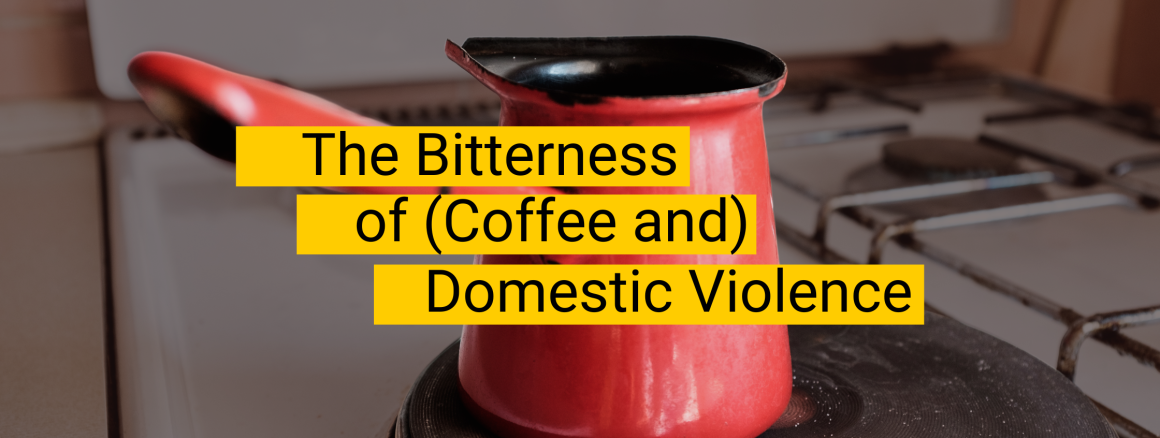
Coffee’s dripping down the walls – black, Turkish, the sort most around here drink. My mother stands a few steps away from it, swollen with child, cezve in hand. I do not know what happened. The memory is hazy around the edges, grasping at me but never reaching my fingers. My uncle – young now, much younger then – leads my sister and me, two tiny, chubby girls, out of the living room. One scene succeeds the previous. I handed my uncle a Barbie doll, clad in a gorgeous green dress, and asked him to tie the pretty pink sash she’s got around her waist into a bow. He does. His hands are shaking terribly. The scene ends. My recollection goes no further and only loops back to coffee stains on a white background. I’ve still got that Barbie.
Years later, I will be older. Older, more often than not, means wiser. At times, I will ask my mother what happened – and other times she will open up without any inquiries from me. Through these conversations, I will come to find she carries heavy burdens, more uncovering as the seasons fly by. I know now – that day, the grandmother from my father’s side had been spouting the most-vile words one could, and my mother, in a state of mental disarray, panic and immeasurable hurt, carrying an unborn child, will throw her arms out, splashing coffee on the pristine walls.
I’ve come to find out that the verbal, merciless attack my mother faced that day, was and would be one of countless. More than a decade has passed since then, old wounds turned to gnarly scars, but such conversations are brought up often and I am to discover that my mother is not the only one to go through such misery. My aunt is, as well. My maternal grandmother. Her sisters. My paternal grandmother. My friends’ mothers and grandmothers. It starts to feel like a pandemic.
When this topic is brought up with my girl friends, we giggle over the fact that we’re never going to live with our parents-in-law. After giggling we sober up, and the mood turns somber as we realize that once again, we have met another person whose family has lived through such trauma.
According to the Merriam-Webster Dictionary, the term “domestic violence” is defined as “of or relating to the household or the family”. However, I’ve noticed that most sources primarily address intimate partner violence, including Mayo Clinic, Psychology Today, the Centers for Disease Control and Prevention and the United States Department of Justice. These sources do not explicitly mention that domestic violence can originate from a variety of individuals, extending from partners and family members to caretakers, roommates, and even landlords, as highlighted by DomesticShelters.org.
This aspect of domestic violence (D.V) has not been researched enough and it is often encompassed within the much too general term “family violence” which in most cases still narrows down to intimate partner violence.
A research article published in 2019 regarding violence against Afghan women by, among others, mothers-in-law, also discusses this, mentioning that while “…(the concept of intimate partner violence) realistically captures women’s primary risk in many global regions, it does not necessarily do so as well in settings where after marriage women often move into their husband’s parent’s home or set up home with their mother in law”.
The lack of research on this type of violence comes as a surprise considering how widespread this phenomenon is.
While lacking official numbers, a simple search on the Internet gives an insight into what some women experience with their mother-in-law. One Reddit subreddit is called Mother in Laws from Hell (r/motherinlawsfromhell), with over 65k members. Another example is from the incredibly famous social media app – TikTok, where the hashtag Mother-in-Law problems (#motherinlawproblems) in the moment of writing this article had over 490 million views.
Consequences
Family violence is linked to many consequences, long-term and short term – affecting the health, social and economic aspects of both the victim and those witnessing it. Negative MIL practices include criticism, threats, accusations, lies, unsolicited advice, failure to provide support, ignoring/ridiculing certain parts of the DIL’s family, direct mistreatment, and more, all in varying degrees. Research also tells us that communication between MIL and DIL tends to be not only dissatisfying, but also hurtful, and such a poor relationship impairs the marriage of the daughter-in-law. “Curse of the Mummy-ji: The Influence of Mothers-in-Law on Women in India” speaks of this, too – showing us that if DIL and MIL live together, the daughter-in-law’s mobility and ability to form social connections in her community is lower. Therefore, more research is needed on violence perpetrated by mothers-in-law (MIL) on their daughters-in-law (DIL), which might enable stakeholders to actively inform people of its existence, as well as identify and prevent it more easily.
To many similar stories
I have previously mentioned that many of my girl friends share similar stories. This fact is supported by Cambridge University psychologist Terri Apter, who claims that three quarters of couples experience conflict with their in-laws, with MIL/DIL relationships being the trickiest. Apter also shares that over 60 percent of women complain of having bad relations with their MIL. We see similar results with Rittenour and Koenig Kellas – lots of women report tension in the relationship they have with their MIL, as well as negativity.
In Afghanistan, out of over 900 women interviewed, 14 percent have been victims of physical violence from their MILs. This research also highlights the fact that emotional and physical abuse by MILs is seen in many settings, from Mexico to India. Another research done in Afghanistan reports that abuse by MILs stands at 23.7 percent. Oftentimes, these so-called “negative practices” spread out further, reaching even the son/spouse and grandchildren. My own example can be taken. My father, siblings, and I also, were often targeted. As I grew older, I consistently refused to tolerate any form of negativity or slander from my grandmother, whoever she might be taking a shot at. This had me ignored and targeted with hurtful and toxic comments.
We have to label it properly
On the other hand, what is common about the research regarding this topic is that it seldom uses the words “violence” or “abuse”. The MIL’s tendencies are labeled as “negative practices,” “poor behavior,” “hurtful messages,” “hurtful behavior,” and often the notions of “poor communication” and “poor relationship” are used. My question is, why are we avoiding labeling these “negative practices” as domestic violence, even if they tick most of the checkmarks used for intimate partner violence? There are most certainly dozens of signs of psychological abuse reported, as well as physical, as seen above. Financial abuse is also a large part of these so-called “negative practices”. For example, in Mumbai, in 77 percent of cases, in-laws were the main perpetrators of financial and emotional abuse. I can confirm this from stories told by family members, as well – financial abuse is another undeniable aspect of MIL violence on DILs.
Additionally, an article in Croatian delves beyond the numbers, sharing directly DILs’ experiences and what they have gone through with their MILs. Some quotes are a harsh wake-up call, and go to further convince that indeed, we can not call this any other name, but abuse. While we can call them daughters-in-law, we can also call them victims.
“I went through hell with my mother-in-law; how much that woman mistreated, insulted and humiliated me…. She would call my relatives and chase them around town in order to insult me.”
“…(because I refused to lift a heavy wardrobe while pregnant) she started banging on my door, cursing, insulting and calling me abusive names, and eventually threw me out of the house when I was six months pregnant.”
“She called me a *hore for six whole years!”
“(MIL) was aggressive, so in addition to verbal abuse, I also received slaps from her many times.”
“I could write a book of pain and sadness because of everything I have experienced, gone through and cried a sea of tears… I have lived through insults I’ve never heard of in my life!”
Again, why is it that we are avoiding proper labels? Is it because we do not see women-on-women violence as just that – violence? Or is it because it has become so normalized that we simply cannot match it up to the concept of “domestic violence”?
The normalization of what must not be normalized
What is worrying is the normalization and justification of such “poor relationships”. MIL abuse towards her DIL is often used for comedic effect, too – predominantly in movies and shows, which further go to desensitize the public towards the dangers of it, so contributing to normalization. One of these movies is Monster-in-Law starring Jennifer Lopez, who goes on to battle her MIL’s attempts to sabotage her wedding, ventures at poisoning her with peanuts (Lopez’ character is highly allergic), attempts at manipulation, and more. Other examples include Marie Barone in Everybody Loves Raymond and Trix Gilmore in Gilmore Girls. While humor has proven to be effective in many instances, these shows and movies have yet to open discourse that is helpful.
Lessons to be learned
Let me end this article the way I started it – with my mother.
She often laments how her mother didn’t teach her better – not to withstand any mistreatment. My mother tells me it is crucial to teach daughters to recognize abuse and show them their worth. She also mentions that oftentimes it is the sons who enable, allow and support this – so, it is crucial to teach your sons to recognize abuse, to condemn it, to stand in its way, and to never be bystanders. After these wise sentences, my mom will let a smile take over her face, as she mentions that the only reason our family is where it is – healthy and happy, is because my father loves her very much. Dad will roll his eyes and try to deny it, as though him loving her abundantly isn’t a secret everyone knows.
Empower the victims and teach them that after healing, the most important thing to do is break the cycle and pattern of abuse. The only difference between my two grandmothers is awareness – one chose to pass on cruel words and abuse, and the other chose to learn from what she has gone through and make sure that no other family member or daughter-in-law goes through such hurt.
My mother, and many other victims of MIL abuse, will never be the same as before. Whether this change will perpetuate violence or not depends upon the awareness of the daughter-in-law and of the people who stand behind her.
Author: Amina Kaja
References
- “Definition of DOMESTIC.” Merriam-Webster.com, 2019, www.merriam- webster.com/dictionary/domestic. Accessed 24 Feb. 2023.
- Mayo Clinic Staff. “Domestic Violence against Women: Recognize Patterns, Seek Help.” Mayo Clinic, 2017, www.mayoclinic.org/healthy-lifestyle/adult-health/in-depth/domestic-violence/art-20048397. Accessed 24 Feb. 2023.
- Psychology Today. “Domestic Violence.” Psychology Today, 2019, www.psychologytoday.com/us/basics/domestic-violence. Accessed 25 Feb. 2023.
- CDC. “#TakeAStand against Domestic Violence.” Centers for Disease Control and Prevention, 1 Nov. 2019, www.cdc.gov/injury/features/intimate-partner-violence/index.html. Accessed 25 Feb. 2023.
- U.S. Department of Justice. “Domestic Violence.” Justice.gov, U.S. Department of Justice, 16 May 2019, www.justice.gov/ovw/domestic-violence. Accessed 26 Feb. 2023.
- Kippert, Amanda. “What Is Domestic Violence?” DomesticShelters.org, 13 Jan. 2021, www.domesticshelters.org/articles/ending-domestic-violence/understanding-domestic-violence. Accessed 22 Feb. 2023.
- Ragavan, Maya, and Kirti Iyengar. “Violence Perpetrated by Mothers-In-Law in Northern India: Perceived Frequency, Acceptability, and Options for Survivors.” Journal of Interpersonal Violence, 15 May 2017, p. 088626051770875, pubmed.ncbi.nlm.nih.gov/29294754/, https://doi.org/10.1177/0886260517708759. Accessed 15 May 2020.
- Ohio University. “Family Violence: Stats, Types, & Prevention.” Ohio University, 13 Sept. 2021, onlinemasters.ohio.edu/blog/family-violence/. Accessed 27 Feb. 2023.
- BetterHealth Channel. “What Is Family Violence?” Vic.gov.au, www.betterhealth.vic.gov.au/health/HealthyLiving/What-is-family-violence. Accessed 26 Feb. 2023.
- WomensLaw.org. “§ 362. Definitions.” WomensLaw.org, 17 Mar. 2022, www.womenslaw.org/laws/la/statutes/ss-362-definitions. Accessed 28 Feb. 2023.
- Jewkes, Rachel, et al. “Violence against Afghan Women by Husbands, Mothers-In-Law and Siblings-In-Law/Siblings: Risk Markers and Health Consequences in an Analysis of the Baseline of a Randomised Controlled Trial.” PLOS ONE, vol. 14, no. 2, 7 Feb. 2019, p. e0211361, pubmed.ncbi.nlm.nih.gov/30730914/, https://doi.org/10.1371/journal.pone.0211361. Accessed 12 Feb. 2019.
- Miller, Kelli. “11 Simple Ways to Deal with a Toxic Mother in Law.” WikiHow, www.wikihow.com/Deal-with-a-Toxic-Mother-in-Law. Accessed 27 Feb. 2023.
- Rube, Tasha. “How to Live with a Mother in Law: 12 Steps (with Pictures).” WikiHow, www.wikihow.com/Live-with-a-Mother-in-Law. Accessed 25 Feb. 2023.
- Diaz, Jesus, and Mellon, Rory. “What Is Reddit and How to Use It: The Definitive Guide.” Tom’s Guide, 27 Oct. 2021, www.tomsguide.com/reference/what-is-reddit. Accessed 23 Feb. 2023.
- “R/Motherinlawsfromhell.” Reddit, www.reddit.com/r/motherinlawsfromhell/. Accessed 21 Feb. 2023.
- D’souza, Deborah. “TikTok: What It Is, How It Works, and Why It’s Popular.” Investopedia, 7 Feb. 2023, www.investopedia.com/what-is-tiktok-4588933. Accessed 24 Feb. 2023.
- “#Motherinlawproblems.” TikTok, www.tiktok.com/tag/motherinlawproblems. Accessed 25 Feb. 2023.
- “Family Violence | Overview.” Office of Justice Programs, 14 Aug. 2020, www.ojp.gov/feature/family- violence/overview#:~:text=Family%20violence%20not%20only%20harms%20the%20victim%2 0but. Accessed 25 Feb. 2023.
- Rittenour, Christine E., and Jody Koenig Kellas. “Making Sense of Hurtful Mother-In-Law Messages: Applying Attribution Theory to the In-Law Triad.” Communication Quarterly, vol. 63, no. 1, Jan. 2015, pp. 62–80,
- www.researchgate.net/publication/273177601_Making_Sense_of_Hurtful_Mother-in- law_Messages_Applying_Attribution_Theory_to_the_In-Law_Triad, https://doi.org/10.1080/01463373.2014.965837. Accessed 19 Feb. 2023.
- https://digitalcommons.unl.edu/cgi/viewcontent.cgi?article=1068&context=commstudiespapers
- Anukriti, S, et al. “Curse of the Mummy‐Ji: The Influence of Mothers‐In‐Law on Women in India†.” American Journal of Agricultural Economics, vol. 102, no. 5, 23 Aug. 2020, pp. 1328–1351, hdl.handle.net/2144/42271, https://doi.org/10.1111/ajae.12114. Accessed 25 Apr. 2021.
- Fulbright, Yvonne. “Have In-Law Issues?” Psychology Today, 14 Oct. 2013, www.psychologytoday.com/us/blog/mate-relate-and-communicate/201310/have-in-law-issues. Accessed 17 Feb. 2023.
- Fugere, Madeleine. “Why Getting along with a Mother-In-Law Is so Difficult.” Psychology Today, 18 Oct. 2016, www.psychologytoday.com/us/blog/dating-andmating/201610/why-getting-along-mother-in-law-is-so-difficult. Accessed 26 Feb. 2023.
- Bentley A. “The role of in-laws as perpetrators of violence against women in Mumbai”. Semantic Scholar, vol.3, nr.1, 2018. Accessed 26 Feb.2023
- Pavičić, Bernarda. “Pitali Smo Žene Zašto Se Ne Slažu Sa Svojim Svekrvama – Evo Odgovora!” Miss7, 10 Nov. 2018, miss7.24sata.hr/zivot/pitali-smo-zene-zasto-se-ne-slazu-sa-svojim-svekrvama-evo-odgovora-22806. Accessed 26 Feb. 2023.
- Adler, Lana. “14 Signs You Have a Toxic Mother-In-Law and How to Deal with Her.” We Have Kids, 8 Mar. 2022, wehavekids.com/family-relationships/9-Signs-You-Have-a-Toxic-Mother-In-Law. Accessed 24 Feb. 2023.
- Ufodiama, Yakkie. “Why Your Mother-In-Law Hates You | How To: Dealing with a Difficult Mother-In-Law | Marriage Advice.” YouTube, 26 May 2020, www.youtube.com/watch?v=CCln2-kfZfA. Accessed 26 Feb. 2023.
- Wong, Brittany. “9 Ways to Deal with a Mother-In-Law Who Feels like a Monster-In- Law.” HuffPost, 21 June 2016, www.huffpost.com/entry/9-ways-to-deal-with-a-mother-in-law-who-feels-like-a-monster-in-law_n_57685fc9e4b015db1bca58c2. Accessed 25 Feb. 2023.
- Lippo, Caralynn. “10 of Pop Culture’s Most Infamous Mothers-In-Law.” Redbook, 19 Apr. 2017, www.redbookmag.com/life/g4314/most-infamous-mothers-in-law-tv-movies/. Accessed 23 Feb. 2023.

WHY HAVING DEBATE TV SHOWS WHEN THERE IS A LACK OF COMMUNICATION CULTURE
November 22, 2023
The use of hate speech is a serious issue and must be seriously taken into account not only by the government authorities but also by civil society, including journalists.
Television news and programs should influence the emancipation of society and combat ethnic, religious, cultural and local barriers and stereotypes. This is especially the case in a multi-ethnic and multicultural country such as the Republic of North Macedonia. Television should not empower and reinforce stereotypes and hatred between citizens who come from different communities. Unfortunately, in our country, it is often television that contributes to the feelings of even greater ethnic divisions among citizens from different ethnic communities and intensifies the hatred between them.
The example that caused stormy reactions in the public recently is the case of professor Ismet Ramadani and the director of Kanal 5 TV, Ivan Mirchevski in the “Samo Vistina” show.
Professor Ismet Ramadani expressed his concern that there is a nationalist narrative and one-sided statements among the Macedonians and their politicians at the exact moment when, in his opinion, that narrative does not exist among the Albanians. He also accused the journalist Aleksandar Vidinovski of not reacting when such statements were made on his show.
This statement was followed by a reaction from the journalist who denied such a thing. The approach of this journalist was professional and he tried to calm the situation.
But Ramadani continued, saying that even in the Macedonian public sphere there is a narrative against Albanians and Albanian political parties, including nationalist statements. He also mentioned to Vidinovski the statement of his previous guest, who said a month ago that “we will trample the Albanians like cockroaches”, and according to Ramadani, the host of the show did not react at all.
The host of the show denied it, saying that whenever he hosts the show, and there are nationalist statements from any party, he reacts accordingly. Ramadani was right when he referred to the last couple of TV shows on Kanal 5 promoting ethnic intolerance. An example of this is the news piece showing the flags in the old Skopje bazaar as well as the show that Ramadani mentioned.
Request to leave the live broadcast
But the problems started when the director of Kanal 5 TV, Ivan Mirchevski, was broadcasted live on the show. He first accused Ramadani of segregating the journalist. After discussions with Ramadani, he asked the host Vidinovski to stop the show and ordered Ramadani to leave the studio. Summoning a guest on a TV show and then kicking him out is neither ethical nor professional.
According to the announcement of the Association of Journalists of Macedonia (ZNM), Mirchevski is the main culprit for the escalation of the situation. They mention that the incident took an undesirable turn when the director of Kanal 5 intervened, demanding that Ramadani leave the studio immediately. The Association expresses serious concern about this intervention, because it directly violates the principle of editorial independence, which is the cornerstone of independent journalism.
According to the code of ethics, journalists must not incite violence and discrimination on any basis (ethnic, religious, racial, gender, social, linguistic, political, sexual orientation, etc…).
The director of the television station is not the one who should be the judge, let alone ‘kicking’ the guests out of a show. The division between the editors and the management must be respected in the media. You may not agree with someone on many issues, but joining the debate and kicking a guest out of a show is a reflection of the lack of democratic and European values.
The Association of Journalists of Macedonia (ZNM) issued a joint statement with the Independent Union of Journalists and Media Workers (SSNM) and the Council for Ethics in the Media in Macedonia (SEMM) that emphasized the importance and the need to adhere to journalistic standards, as well as to guarantee a discourse that respects and protects editorial independence.
“In a society where live television shapes the public discourse, it is of particular importance that all participants maintain a high standard of communication and speak with their interlocutors in a respectful manner, applying the same to the public as well. The behavior of Mr. Ramadani and his comments towards the host of the show, Mr.Vidinovski, were, unfortunately, confrontational in a certain part of the debate, thus creating opportunities for the debate to stray towards unwanted direction”, says the joint statement.
It is also important to mention the position of the Agency for Audio and Audio-Visual Media Services. They indicated that debates related to political-social issues should contribute to the implementation of freedom of expression, to the culture of tolerance, and must never encourage intolerance.
They emphasize that politicians and holders of public positions should, in particular, be aware of the weight of the publicly expressed word and they must refrain from statements, especially given via media that undermine the dialogue between different ethnic groups in society.
“Labeling media outlets and journalists, as it was done in yesterday’s show by Ismet Ramadani, who is the advisor for Euro-Atlantic values of the Prime Minister, has a negative impact on the freedom of the media outlets and violates the dignity of the journalists. They added that “politicians and public office holders have a special responsibility towards the public, should show the highest level of compliance with the journalistic profession, and should make every effort to make it possible for the media outlets to carry out their work in an uninterrupted manner”, they added.
Avoiding sensationalism
On the other hand, the support that Mr. Mirchevski received from the Macedonian Association of Journalists (MAN) is inadequate. MAN should protect freedom of speech and should not take a side, but have an objective position as ZNM does. The statement of MAN said that they are fully backing the director of Kanal 5, the journalist Vidinovski, and the guest Goran Momiroski. According to them, the politician and adviser to the Government, Ismet Ramadani, was accusing others of ethnic intolerance without any grounds.
According to the journalist code of ethics, journalists must be free of sensationalism in the course of their reporting. But when reporting on this case, there were no elements of “avoidance of sensationalism” in some media outlets.
The Zum Portal published a title “Heat in Samo Vistina’ on Kanal 5 – Ismet Ramadani asked not to inflame inter-ethnic tensions, the television was asked to apologize to them.” Although the title was balanced and neutral, the same cannot be said for the comments. There are a number of hate speech comments about Ramadani there. Some of these include: “Why do you accept donkeys in the shows”; “Chase away this kind of shit, they are a shame for the country”; “The Albanians definitely went too far with their arrogance and insolence”; “This type of ‘abdal’ must be obeyed”, “Bastard from the mountains”.
Portals like lider.mk and inbox7.mk also used sensationalist headlines. On the other hand, DW in Macedonian language, in its article about this case, included both sides of the story and their text is written in an objective and professional manner.
The presence of hate speech and similar phenomena is harmful to society and everyone must commit to their reduction. Some the consequences of hate speech include damage to the image of the country, the growth of extremism, obstacles in dialogues, mutual discrimination and polarization of society.
The use of hate speech is a serious issue and must be seriously taken into account not only by government authorities but also by civil society, including journalists. It is important to promote tolerance, dialogue and respect for diversity in society and actively combat this harmful phenomenon in order to build a safe society that will live in harmony.
For those reasons, the owners of television and media outlets should be more restrained and act without emotions, because they exercise a significant influence. A little carelessness can cause significant reactions and encourage ethnic hatred.
Author: Zenel Miftari
Photo: aerogondo2/Shutterstock.com
This article was originally produced for and published by ResPublica. It has been re-published here with permission.

Monthly Monitoring Highlights – problematic narratives all around the Western Balkans
November 15, 2023
Throughout the month of October, the RDN monitoring team has detected a range of hateful narratives and discourse. This month, we have seen hatred based on gender, ethnicity as well as hatred aimed towards journalists and persons with disabilities.
Trivialisation of rape and attacks on a journalist reporting on sexual abuse in Albania
In the last weeks of October, a horrible case of sexual abuse and rape happened in the city of Vlora, where a 26-year-old girl was allegedly encouraged to use narcotics by some citizens, three of whom were then suspected of having violent sexual intercourse with her. The case was reported by local and national media outlets. A local correspondent, Afrovita Hysaj, who was covering and reporting on the event, was threatened by the administrator of a local television “6+1” in Vlora – Albert Deliaj. This came as a reaction to Hysaj, who reported that there were not three but rather four people who had allegedly raped the girl after having drugged her, without ever mentioning the identity of the fourth person. However, the owner of the local television “6+1”, mistakenly understood as if the correspondent was implying that the fourth person involved was his son.
Due to this, Hysaj proceeded to fall victim to a banal, criminal attack by the television owner. This included a derogatory article published on the local television website and on its social networks. The attack and threats were based on what Hysaj says were incorrect claims that she had connected the television owner’s son with the drugging and rape of the 26-year-old girl. Albert Deliaj, the owner and administrator of the local television threatened Hysaj. As a result, Hysaj reported to the police that she had received death threats.
Following this, the police of Vlora announced that they had started a criminal proceeding against Albert Deliaj on the basis of ‘intimidation’. The attack of Hysaj resulted in a harsh reaction from colleagues and media organisation such as the Union of Albanian Journalists. Furthermore, the Safe Journalists’ Network also condemned the event as an unprecedented attack on a journalist from a media outlet, asking 6+1 Vlora channel to publicly apologise.
After the rape case was reported in the media, lawyer Vjollca Pustina made a very shocking and surprising statement. She claimed that cases like these “usually happen after girls drink too much”. This statement resulted in numerous reactions on social media networks, as it was both said and broadcast on national television Vizion +. Furthermore, being a lawyer and so being by profession, someone who should be implementing the law and bringing perpetrators to justice, one should expect someone in such a role to be professional in their attitudes towards serious crimes and not justify abusers and cases of rape. Victims of rape are never responsible for the violence they endured and the only one to blame is the perpetrator(s). Using victim-blaming narratives can have devastating consequences not only towards the person it is directed to, but to all other women who are enduring sexual violence or have so in the past.
Ethnic discrimination in Bosnia and Herzegovina, North Macedonia, Montenegro
Uroš Bjelica, the advisor to the President of Republika Srpska, said Sarajevo is “Unfortunately, today, an ordinary Islamic quarter in the heart of the Balkans, which we can see only in Arab countries”. This remark was made as a response to the protests held in Sarajevo against the killing of civilians in Gaza. Bjelica reiterated that Sarajevo is indeed a monoethnic, Muslim town and that therefore, it is a false narrative from both politicians and the media who highlight the multi-ethnic and cosmopolitan life of the city.
Milorad Dodik, the president of Republika Srpska, often states the same opinion, that Sarajevo is not a multi-ethnic city, that there are no Serbs in it. His advisor equally continues to uphold and spread this rhetoric. Bjelica emphasises how Sarajevo is falsely multi-ethnic when despite having mosques, synagogues, churches, and cathedrals, it is the people who live there that define the city. To him, Sarajevo is now what he defines as ‘an ordinary Islamic quarter in the heart of the Balkans’. His statement has Islamophobic undertones, as by saying this can only be seen in Arab countries may imply that there is no place for Muslims in the Balkans.
Furthermore, Bjelica goes on to claim that unlike Sarajevo and the Federation of Bosnia and Herzegovina, Republika Srpska has a life of openness, cooperation, and dialogue with an aim of building a system which is to the benefit of all in the county. In comparison, according to him, the politicians of the Bosniak people only send poisonous arrows with the ‘clear intention of creating a unitary BiH’.
Within an ethno-religiously diverse society and country such as Bosnia and Herzegovina, spreading narratives of divide can result in further division and tension amongst various groups in society. Holding a protest for the protection of citizens in Gaza is a democratic right of the people of Sarajevo and not something which should be punished nor taken as an attack on the multi-ethnic and religious nature of the city. An individual with a platform such as Uroš Bjelica, should not be using his influence to spread hateful rhetoric and ethnic discrimination.
Following the recent incident in Kosovo where a group of armed Serbs attacked the Kosovo police in the north of the country, the Minister of Foreign Affairs of North Macedonia, Bujar Osmani, came out with a statement that if it was found that Serbia was in some ways involved in the attack on Kosovo soil, then Macedonia should rescind its membership in the Open Balkans initiative. As a result, a private X (formerly Twitter) user published a Tweet saying that the ‘Shi*** Ministers do not give a f*** about the PM Dimitar Kovacevski’ who is a vocal supporter and champion of the Open Balkans initiative. North Macedonian officials of Albanian origin have been criticised in the past that they care more about the interests of the neighbouring Kosovo and Albania than for Macedonia’s democracy, as revealed by the insulting response of this private X (Twitter) user.
Unfortunately, hate speech and insults towards ethnic Albanians persists in other areas of the country such as in a recent statement, where the mayor of Tetovo expressed a viewpoint that if the government is considering the singing of the Macedonian national hymn in schools, it should simultaneously recognize the significance of the Albanian population in regions where they are a majority. Specifically, in cities like Tetovo, where Albanians comprise a significant part of the demography, their cultural and national symbols should be granted equal importance and respect. Following this, a X (Twitter) user similarly published an insult to the mayor, saying that he should “go to Albania” if he wants the Albanian national hymn to be sung in schools. Cases like the recent debate around the singing of national hymns in schools highlight the fragility of the relationship between these two communities therefore, comments such as these are extremely dangerous and can result in heightened tensions.
Furthermore, this month, a heated altercation erupted on an episode of the political talk show “Only the Truth” on one of the most popular media outlets in the country, the national Channel 5 TV, with journalist and host Aleksandar Vidinovski clashing with a guest, the analyst Ismet Ramadani. The dispute escalated to the point where the director of Channel 5 intervened by going live from outside the studio, defending the journalist and the station and ultimately demanding that Ramadani be removed from the program and his appearance be cut short. The confrontation was sparked when Ismet Ramadani, president of the Euro-Atlantic Council, accused the host of biased reporting by only spotlighting Albanian nationalist remarks while ignoring nationalist rhetoric from the largest opposition party, VMRO-DPMNE, the leftist party “Levica,” and other parties within the Macedonian political spectrum. The incident resulted in numerous individuals on X (Twitter) and Facebook, labelling Ismet Ramadani using a derogatory, insulting label applied to Albanians. This term has been historically used in a disparaging manner and reflects underlying ethnic tensions within the region. In no instance is the use of hateful, derogatory labelling and language justified.
In Montenegro, the citizens received a message from the patriarch of the Serbian Orthodox Church who, two weeks before the initially planned start of the population census, called on the citizens of Montenegro to claim themselves to be Serbs, believers of the Serbian Orthodox Church and speakers of the Serbian language. This message can be viewed as a form of pressure and intimidation towards other ethnicities in Montenegro. Montenegro is a multi-ethnic society and existing tensions are being heightened due to the upcoming census. Divisions along ethnic lines are being amplified with the preparation for the census, which focuses on the citizens ethnic, religious and language choice of identification. Throughout the preparation there was a lot of division and messages being sent out from pro-Serb and pro-Russian influences in Montenegro calling for citizens to declare themselves as Serbs, as well as the pressure and messages coming from the patriarch of the Serbian Orthodox Church. The media was equally divided on this topic, with pro-Montenegrin outlets offering criticism and pro-Serbian outlets supporting such campaigns and narratives. It is the duty of the media to report in a responsible manner and not cause division amongst the public. Likewise, it is important for political and religious leaders and representatives to refrain from using their influence and platform to create and deepen existing ethnic divisions within multi-ethnic countries such as Montenegro.
Transphobia in Kosovo
During a talk show ‘Big Talk’ on TV Klan Kosova, journalist Edona Gashi stated that she has many friends who belong to the LGBTIQ + community. However, she made a point to note that she does not support transgender people, that is, to be more specific, “sex change”. According to her, it is something which goes against God’s will. The term “sex change” is often used by the media in the Western Balkans – however, it is outdated and harmful to the transgender community. It is also inadequate and inaccurate since it refers to a process of adapting or adjusting one’s sex to their gender identity. It is used in different ways, however, mostly when talking about gender-affirming surgeries, which is a much more fitting and accurate term. This statement was also reported on by the online media Insajderi. Although there was not a wide reaction on the social media network Facebook, all the commenters nevertheless supported the position of the journalist Gashi.
Within Kosovo, conservative views often dominate when it comes to the LGBTIQ+ community. Personal religious views and beliefs are often used as arguments against LGBTIQ+ rights. However, it is not anyone’s religious freedom to deny a person their human rights. It is important to note that every individual has the choice and right to express their gender identity freely and to have access to quality health care. Transphobia, as well as homophobia, should never be accepted – narratives like these promoted by journalist Gashi, only serve to promote anti-LGBTIQ+ rhetoric. Furthermore, the media should refrain from spreading these messages to their audiences, which can promote homophobia and transphobia, especially without providing a critical viewpoint to such attitudes.
Discrimination against persons with disabilities in Serbia
Influencer Milica Popadić, in an online show on Hype TV, commented on how persons with disabilities should not get exposure or influence on social media. Popadić justified this by explaining that she believes they will face discrimination, and therefore, they shouldn’t expose themselves “at all costs”. She also said it is okay for persons with disabilities to get exposure on social media if this is a way for “someone to help them”. However, when referring to persons with disabilities, Popadić used harmful terminology such as “physical and mental defects”. She continued talking about this topic and used influencers Julija and Natalija Đukić or Fitness Bliznakinje (the Fitness Twins) as an example, mocking them, even though they have never identified as persons with disability, nor has this information ever been shared before. She mocked the way they speak, their tone of voice and similarities, implying this is a disability. Using someone who does not have disability but only has a slightly different manner of speech as an example may indicate there is little room provided for any kind of diversity on the Serbian and Balkan online space.
Individuals with disabilities are individuals – they should be treated with equal respect as anyone and everyone else. Using harmful and stigmatising terminology to describe and attribute characteristics to individuals with disabilities is extremely hateful and ignorant. An influencer such as Popadić who is making a public appearance, and has over 500k followers on TikTok, should be aware and responsible for her words. She should not use her platform to promote harmful and stigmatising rhetoric towards individuals with disabilities. Furthermore, commenting that individuals with disabilities should refrain from getting exposure due to possible discrimination says more about the society and the population’s attitude towards persons with disabilities than anything else – no one should be treated differently, be discriminated against, or excluded from public life for any reason.
TROLL OF THE MONTH: Aktuelno.me
November 10, 2023
The Balkan Troll of the Month is an individual, a group of individuals or a media outlet that spreads hate based on gender, ethnicity, religion, or other diversity categories. The Balkan Troll is selected based on hate speech incidents identified across the Western Balkans region.
Vanja Ćalović has recently been openly exposed and attacked by Aktuelno.me – an online media portal in Montenegro with a wide readership, known for being supported by the Democratic Party of Socialists (DPS), led by Milo Đukanović, until recently. Ćalović is an economist, executive director of the Network for the Affirmation of the Non-Governmental Sector (MANS) and is focusing on fighting corruption and organised crime in her work.
In two articles published by the media portal Aktuelno.me, Ćalović was named the “starlet of the grants”, or in other words, the “NGO starlet”. This term is used to describe a young woman in the entertainment industry whose main asset is her appearance, rather than talent or work, and is usually used in quite a derogatory tone. The intention behind this message was to discredit and undermine Ćalović as a professional by using sexist insults.
The articles explain how she is “compromised and burdened by various affairs”, claiming that no one can take her seriously anymore. What they are referencing is a so-called “zoo sex affair”, or more precisely, a media campaign against Ćalović, which started in 2014 when she was accused of ‘having sexual relations with her two dogs’. This story was published on the front pages of tabloids in Montenegro and even made it to Serbian media. The campaign was launched almost 10 years ago to discredit the work Ćalović was doing on the deconstruction of the former government’s (led by DPS) involvement in corruption and criminal activity and was a constructed affair with the aim of destroying the credibility and reputation of Ćalović.
The direct attack and hatred, including negative labelling by the online portal Aktuelno, is clearly unprofessional and unethical. Two articles dedicated to undermining the credibility and work of Ćalović as well as to attack her on a personal level is a complete breach of professional journalism standards. Furthermore, articles are harmful also due to the use of sexist language and for targeting Ćalović based on her gender as a woman.
The media have a moral and legal obligation to report on events and issues in a professional and ethical manner, and it is not uncommon for the government-controlled media in the Western Balkan region to try to discredit and attack journalists, activists, and political opponents in similar media campaigns, especially when they deal with topics such as corruption and organised crime.
However, regardless of their political affiliation, Aktuelno and other media outlets should not use their platform and influence over their readership to spread hatred, sexist remarks, and negative sentiments towards individuals, such as in the case of Vanja Ćalović. Manipulating personal attacks can infiltrate into the private life of Ćalović, who may as a result, become a victim of hate both online and offline. This is a reality for many journalists and activists, and being a woman adds the sexist layer to the hate speech these individuals are exposed to. Aktuelno.me and other media who take part in similar campaigns, should bear the responsibility and accountability for their role in spreading hate and sexism through personalised attacks.