Author: RDN
WOMEN AND NATIONAL MINORITIES STILL THE MOST FREQUENT TARGETS OF HATE SPEECH – Results of media monitoring in the Western Balkans
February 22, 2024
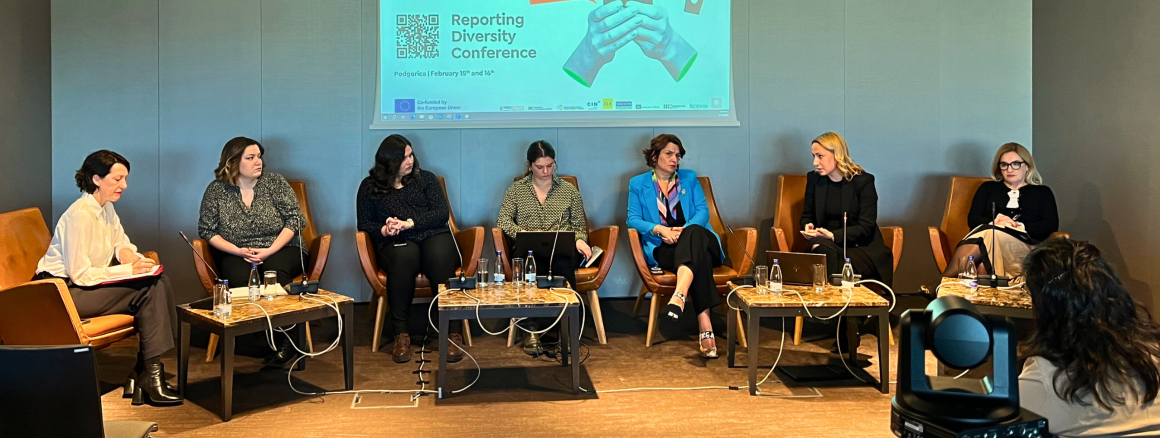
Reporting Diversity Conference 15-16 February 2024
Podgorica, Montenegro
Reporting Diversity Network organised a two-day conference on hateful and harmful narratives in the Western Balkans where the Network presented preliminary results of the media monitoring reports, which will be published in March.
The conference brought together over 40 media experts, activists, civil society representatives from the Western Balkans, as well as many others who had a chance to follow the conference online.
“Societies in the Western Balkans are still very divided on various levels, from inter-ethnic relations to how society treats women and important social issues such as gender-based violence. Violent communication is normalised, and that is the ‘culture’ of public speech which often comes from political figures, even religious leaders, and it strongly affects human and civil rights and the well-being of citizens throughout the Balkans,” said Ivana Jelača, coordinator of the Network.
The monitoring reports gave a strong impression that social divisions in the Western Balkans are still very present in the media and public discourse, which affect relations between neighbours in the region, as well as the position of certain social groups, starting with women, but also affecting ethnic minorities and the LGBTIQ+ community.
The research in North Macedonia showed that a large number of cases were related to sexism (32%), as well as hateful narratives towards national minorities (30%) and attacks on political or ideological grounds, contributing to the social polarisation and fueling intolerance. In Kosovo, the most frequent targets of hate speech were ethnic minorities, especially the Serb and Roma communities.
In Serbia, the biggest number of examples of hate speech were recorded in the categories of gender (24.8%) and ethnicity (20.4%). According to the research results, the third most frequently targeted group is the LGBTIQ+ community (17.7%), which represents a slight increase in the percentage compared to the previous report (14.6%), mainly due to the public campaign against the organisation of EuroPride, in Belgrade in 2022.
The main source of hate speech in Albania is the media. They continue to spread and perpetuate harmful and discriminatory stereotypes of the “other” when reporting on different social groups. Gender-based hate speech remains a significant challenge, negatively affecting gender equality.
In Montenegro, the biggest source of tensions remains ethnic diversity, therefore, hate speech based on ethnicity is represented in 31% of the total findings. Right after hate speech directed at gender and gender identity (24%), comes hate speech directed at political opponents (17% of findings) and religion with 13% of total findings.
Joseph Harker, the Guardian’s senior editor for diversity and development, joined the discussion online and spoke about policies on diversity within the newsroom and in content production. To watch the conversation, click here.
Since gender remained the category in which the most examples of hate speech were recorded in most countries of the Western Balkans, on the second day of the conference, February 16, we also discussed anti-gender narratives, their impact on the Western Balkans’ society, as well as potential strategies for its denouncing. Livestream is avaliable here.
The discussion gathered the editor of Discriminacija.ba Slobodanka Dekić, member of the Executive Board of Albanian Women in Audiovisual Media Valjbona Sulca, executive director of the Center for Women’s Rights Maja Raičević, as well as a researcher at the Faculty of Political Sciences of the University of Belgrade Nađa Bobičić.
The results of the media monitoring reports will be published in March 2024 on Reporting Diversity Network communication channels.
STRENGHTENING MEDIA CAMPAIGNING AND ADVOCACY SKILLS: Reporting Diversity Advanced Training
February 21, 2024
Podgorica, Montenegro; 13-16 February 2024
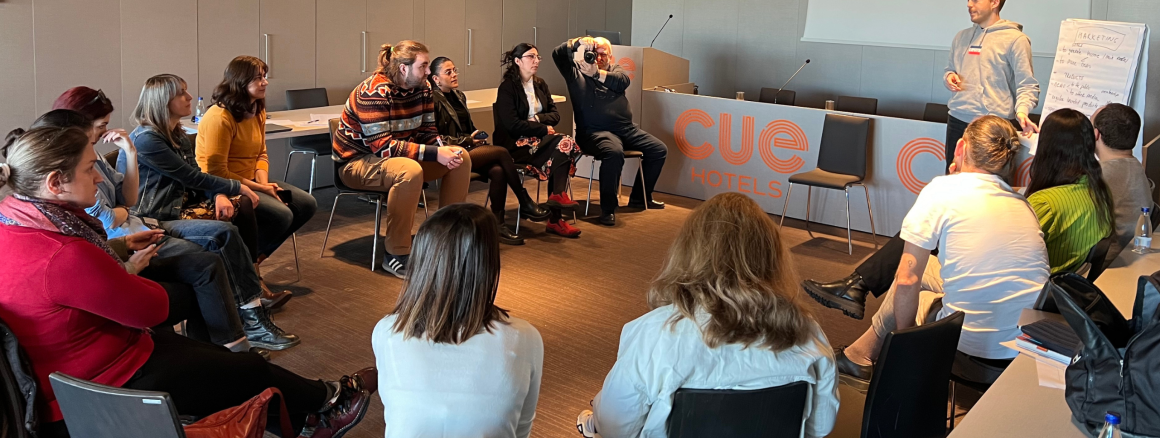
Reporting Diversity Network organised a three-day Reporting Diversity training for CSOs, grassroots activists, and human rights defenders in Podgorica, Montenegro. The training took place between 13-16 February 2024 and gathered 34 participants from across the Western Balkans.
The participants gained skills that will help them recognise hate speech and divisive narratives and be able to counter them.
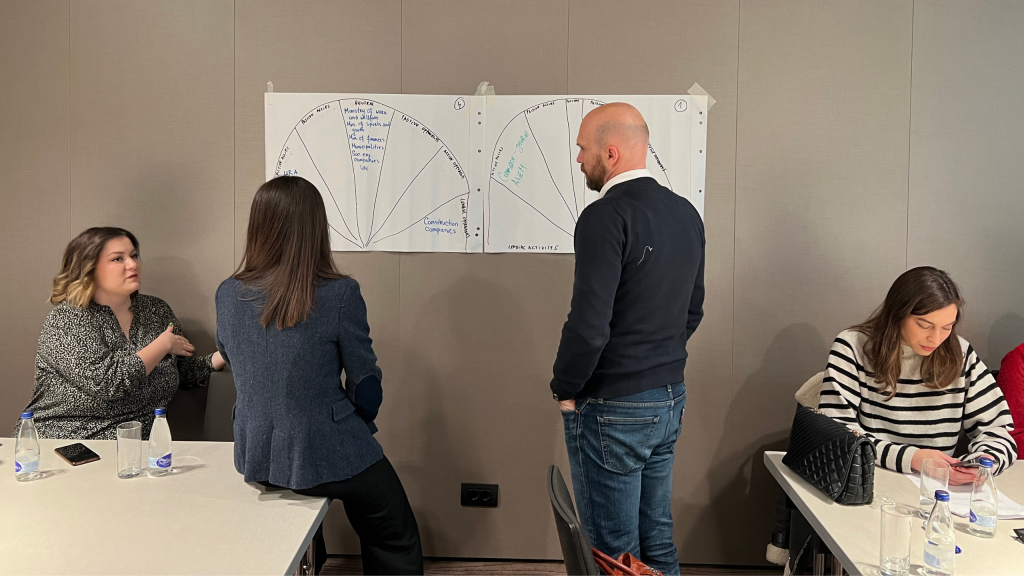
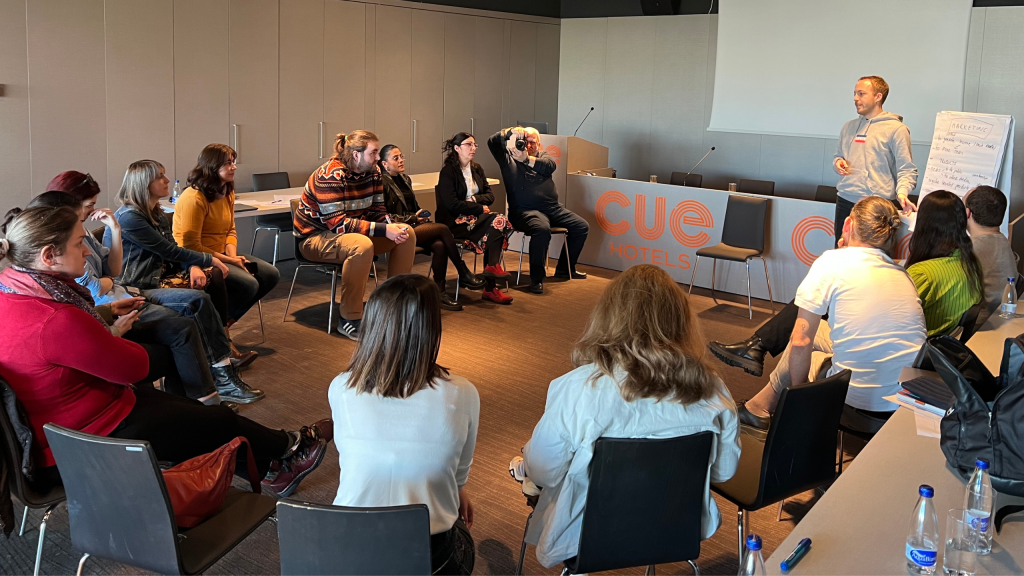
The three-day workshop focused on two sets of skills: implementing media campaigns to provide alternative narratives and more positive discourse about the diversity of our societies and advocacy campaigns.
During the first session of the first day, Ivana Jelača, Executive Director of Media Diversity Institute Western Balkans, introduced the participants to hateful and harmful narratives in the Western Balkans.
Experienced and well-informed trainers Nikola Ristić and Vladimir Pavlović delivered useful and practical skills and knowledge on media and advocacy campaigns and how to use them to achieve social changes.
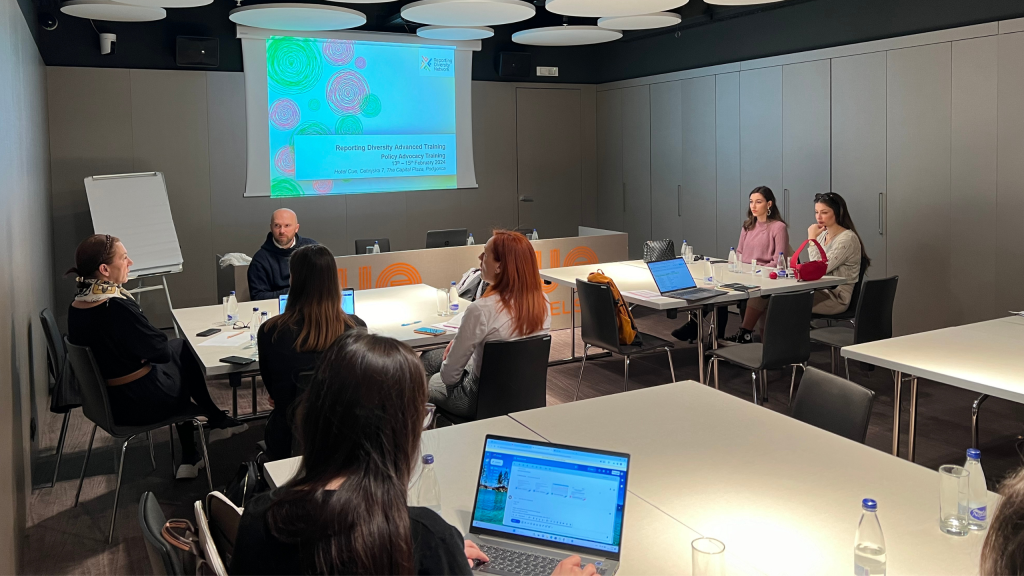
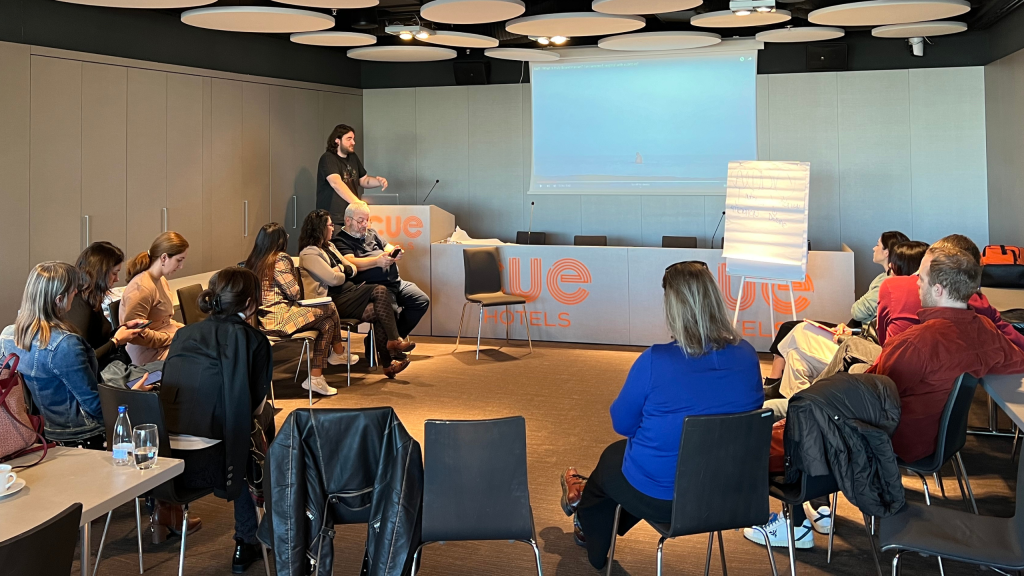
Continuing in the working spirit of the training, RDN organised a two-day conference on hateful and harmful narratives in the Western Balkans where the Network presented preliminary results of the media monitoring reports, that will be published in March.

A HUMAN TRAFFICKING CASE IN ALBANIA: Media must do better
February 13, 2024
NOTE: TV Klan was initially selected as Troll of the Month, but after additional internal consultations, the RDN team has recognised the following:
The coverage of TV Klan, even though still sensationalistic, misleading and unprofessional in the headline and deserves to be treated as harmful speech, does not meet the criteria for the Troll of the Month. The content itself rather transferred the statements made by the police. Therefore, our team will choose a new Troll for January this week.
At Reporting Diversity Network, we are working hard to ensure we are fair and avoid any mistakes when analysing and criticising the work of the media.
We sincerely apologise for any confusion it may have caused.
The rest of the article below is corrected to be more precise in describing the case.
At the end of January, a new case of human trafficking involving three minors was reported in the local media in Albania. However, most of the media outlets referred to the minors as prostitutes, rather than victims of trafficking.
This includes an article on TV Klan which also used the wrong terminology in the headline to refer to the victims. In the article itself, TV Klan and other leading media in Albania including Shqiptarjn, Report TV, Dosja Media, Gazeta Tema and Top Channel, used the same term.
There are a number of concerns about how the media covers issues of human rights abuses, such as human trafficking, particularly where minors are concerned. Referring to individuals, especially if they are minors, as ‘prostitutes’ implies a degree of choice or agency in participating in commercial sex work. This is far from the truth and reality in the context of trafficking, which is illegal and always involves coercion and lack of free will. In addition, TV Klan used a very problematic image to illustrate the article.
In this case such harmful terminology was used in the headline, while in the text the media quoted police when saying that “three perpetrators were arrested for exploitation of girls minors for prostitution”.
It is also important to distinguish between the legal frameworks surrounding sex work and the serious issue of human trafficking. While sex work, often referred to as ‘prostitution’, may be considered illegal and subject to criminal sanctions in many juridictions, human trafficking is universally condemned as a crime. Victims of trafficking deserve not only legal protection but also legal assistance.
Finally, there is the important difference between stigma and sensitivity. The term ‘prostitute’ often carries a strong social stigma due to various social norms and personal perceptions surrounding the issue. Using the term ‘victim of human trafficking’ acknowledges the abuse and exploitation that has been endured and addresses the issue with greater sensitivity and understanding. The headline “Girls were staying in the hotels, boys would bring them clients/ The network of the prostitution is destroyed! ignores the critical issue at hand—the exploitation of three underage victims of trafficking. This led to harmful discourses on social media questioning the ‘life choices’ that led the girls to become ‘prostitutes’, implying they had a choice in becoming victims of trafficking.
This all boils down to the fundamental issue of the media’s lack of knowledge and awareness of human trafficking which often involves women and girls, and illegal migration. This also shows the lack of sensitivity and careful approach to sensitive and important social issues. In addition to failing to address important issues in a meaningful way, by referring to the three minors in this case as prostitutes rather than as victims of trafficking already in the headline, the media contributes to the re-traumatisation of the victims and further stigmatisation in the community.
The media has a role and a responsibility to report accurately and factually. Unethical and unprofessional reporting can act as a catalyst for the spread of misinformation and disinformation. Words carry meaning and how we choose to explain and report events has a major impact on those who receive the information. As a primary source of information, the media must carefully consider how they frame events, as the misuse of terminology can distort reality, as this incident demonstrates.
Journalists and media professionals can benefit from using Manual for reporting trafficking on women (in Albanian language) produced in 2015, supported by UN Women Albania, as well as, guidelines for reporting on human trafficking (in Serbian language), produced by ASTRA, an organisation dedicated to eradicating all forms of exploitation and trafficking in human beings, especially women and children. ASTRA is based in Serbia and regularly researches media coverage of human trafficking in the country.
Illustration: BNP Design Studio/Shutterstock.com

COMMENTS THAT LEAVE A MARK
February 7, 2024
ONLINE ABUSE IS JUST AS SERIOUS AS OFFLINE ABUSE.
In September 2022, MP Daorsa Kica Xhelili announced that she was leaving Lista Guxo for the Democratic League of Kosovo (LDK). Kica Xhelili initially was a member of Vetëvendosje (VV), and was elected to the Assembly of Kosovo in the 2021 general election. Her election was secured through the VV and Lista Guxo joint electoral list.
When LDK chairman Lumir Abdixhiku posted a photo with Kica Xhelili — who is now the youngest member of the party — on Facebook, negative online comments against her quickly flooded in. The commenters used harsh language towards Kica Xhelili and judged her for joining LDK. Amid hundreds of insulting, denigrating and humiliating comments, many accused her of having manipulated the will of the people. This criticism stemmed from the fact that she was voted in as part of one political party and was now switching to another.
Facing hate speech on social media was a difficult experience for Kica Xhelili.
“These comments are always difficult to face in the beginning,” she said. “After that, you need to do a psychological analysis, a social analysis and an analysis of the propaganda. This makes you realize that it has less to do with you and more with society.”
According to her, hate speech is not necessarily about its target.
“[Comments that contain hate speech] are not about a substantive thought, just an inability to hear a different way of thinking,” said Kica Xhelili, adding that this creates the impression that there is only one dominant opinion and intimidates those who think differently.
Kica Xhelili’s case is not the only example of social media users venting their anger toward individuals whose actions they don’t like, disagree with or simply want to mock.
Members of the public who do not hold any public position are also often targets for hate speech. At the beginning of this year, a KTV interview with two girls went viral on social media. The journalist asked them about their musical preferences and they answered in Albanian, occasionally switching to English. In the comments section, social media users mocked, insulted and spread hate speech toward the girls for not responding solely in Albanian.
Video interviews, usually done in a vox pop format where journalists ask members of the public on the street for their opinions on various topics, are increasingly becoming targets for abuse on social media. Social media is frequently used to distribute short videos often taken out of context.
Nowadays, insulting and using hate speech has almost become the norm on social media. This is a hard problem for Kosovo’s media outlets to manage due the large number of internet users.
Hate speech on the rise and the need for a legal basis to control it
The most popular social media platforms such as Facebook, X, formerly known as Twitter, Instagram and YouTube are widely used by journalists and media outlets to distribute news to the public. The most popular social platform in Kosovo is Facebook. This may be why Kosovar media outlets use it most for distributing news articles and posting other media content.
Hate speech is widely spread on these platforms.
In the most general sense, hate speech refers to any form of communication or expression with the intention to discriminate, harass, provoke a reaction or incite negative attitudes, intolerance, hostility or violence against individuals or specific groups. This language involves attacks on race, gender, age, ethnicity, nationality, religion, sexual orientation, gender identity, disability, language affiliation, cultural, moral or political views, social status, occupation, physical or mental characteristics, or any other characteristic.
Comments that spread or incite hate speech can be dealt with by the Criminal Code of the Republic of Kosovo by reporting to the Police or filing a complaint.
Article 141, point 1 of the Criminal Code of Kosovo states: “Whoever publicly incites or publicly spreads hatred, discord and intolerance between national, racial, religious, ethnic and other groups or based on sexual orientation, gender identity and other personal characteristics, in a manner which is likely to disturb the public order shall be punished by a fine or imprisonment of up to five years.”
According to media lawyer Flutura Kusari, there are regulations to address hate speech in Kosovo, but the implementation of this legislation is lacking. According to her, women, particularly activists, journalists, and those involved in politics, are more frequently subjected to online hate speech. “There is an increase in the insults, incitement to violence, abuse, and death threats that happen on social media,” she said.
Kusari said that a part of the responsibility remains with media outlets. According to her, they do not pay enough attention to the wars happening in comment sections. “Sometimes [hate speech] is nurtured by the media itself and this then discourages people from participating in public discussions,” she said, adding that this particularly affects women. “They know that if they talk about it in the media, there will be thousands of comments that are largely attacking their personal lives.”
Kusari said that under the Civil Law against Defamation and Insult, individuals targeted by derogatory comments have the right to file a lawsuit and request that the comment be removed. They also have the option to request compensation for any damages. According to her, although this legal standard has been established by the European Court of Human Rights, it is not yet being practiced in Kosovo.
“If a media outlet publishes a news article on its Facebook page and comments with criminal content are reported, let’s say, an article about me is published and the comment section contains death threats. If I report it to the media outlets, then they have an obligation to react immediately. If they don’t react, criminal liability arises for them,” Kusari said. According to her, there are very few reports of hate speech comments due to low expectations that media outlets will take action.
Media outlets in Kosovo usually do not moderate their comment sections. This is either due to a lack of human resources to address the large volume of comments, or because the comments increase the visibility of publications, generating more clicks. Social media algorithms are designed to maximize user engagement and monopolize their attention, guiding users toward polarizing and inflammatory content.
While social media platforms such as Facebook moderate for comments containing hate speech in several languages, moderation is not available in Albanian.
Meanwhile, for media outlets, there is no framework other than journalistic and personal ethical code that mandates checking, deleting or editing comments that contain hateful or divisive language on their social media pages.
The Press Council of Kosovo (PCK) is a self-regulatory body established by the media to regulate content published in written media. However, comments on social media do not fall within the jurisdiction of the PCK and taking action on these comments is not within their mandate.
The executive director of the PCK, Imer Mushkolaj, said that the PCK doesn’t accept many complaints about comments on social networks. Even the complaints that are accepted are not addressed. Mushkolaj said that the PCK advises parties to follow procedures and complain to the relevant social network or pursue other legal avenues.
The PCK’s jurisdiction is limited to cases where hate speech appears in media content. According to Mushkolaj, derogatory comments, hate speech and insults published by media platforms are treated the same as any other media content and appropriate decisions are taken.
Large numbers of hateful comments on social media can be fueled by how the media packages content. Often, media outlets present content in a certain tone that leads to an influx of hateful comments.
At the beginning of this year, the media reported that a girl around the age of 15 died after an accident at the Brezovica Ski Center. Some media outlets mentioned the victim’s ethnicity in their headlines for this story. The fact that the victim was a Serb was enough for the comment sections of many of the media outlets that reported on the case to be flooded with comments containing dangerous hate speech. In addition, some commentators openly rejoiced at this death, wishing that more similar cases would happen.
The disclosure of the victim’s ethnicity by the media in cases where it does not constitute any importance for the news can be seen as careless, malicious and aimed at inciting hatred. Including such information also violates the PCK’s Code of Ethics.
Media leaders admit that it is challenging to control comments on social networks, and place part of the responsibility on readers and commenters. The editor-in-chief of Albanian Post, Lirim Mehmetaj, said that his publication tries not to allow inappropriate comments on social networks. This is done to prevent the incitement of hate speech and to avoid labeling or judging people.
“Expressing thoughts in the comments sections should be seen as an opportunity to participate and contribute, not to offend or threaten,” he said.
“Online abuse is just as serious as abuse in real life”
Comments on social media that contain hate speech can cause serious consequences for the person who is targeted.
Last year, TikTok videos showing Lulzim Paci, a high school biology teacher, dancing flooded social media. Vetëvendosje MP Fjolla Ujkani wrote a Facebook post calling on education officials in Vushtrri to take measures against what she called “improper and degenerate actions” by the teacher. Paci became the target of online abuse and derisive comments towards him flooded social media. He burst into tears during an interview with KTV while talking about the negative comments he received, and revealed that he told his brother that he could tell others he was merely a relative and not his brother, in case he was embarrassed by him.
According to psychologist Naim Telaku, someone who is the target of negative and derisive comments online may initially feel isolated and socially excluded, then start to feel scared about the long-term impact the comments may have.
“You can start to feel threatened and excluded, to experience feelings of guilt,” said Telaku.
The list of consequences Telaku mentions even encompasses problems with sleep and appetite. “Online abuse is just as serious as abuse in real life,” he said.
Telaku said that when abuse happens in real life, the number of abusers is usually smaller and the victim has more space to react. However, when abuse takes place online, there is a large number of abusers who encourage each other, often resulting in an escalation in the intensity of the abuse.
“These negative and offensive comments can then have an impact on employment opportunities, or on building social and romantic relationships,” he said.
The negative comments have also affected Kica Xhelili emotionally. She says that she often thought of withdrawing from public life, but has developed immunity to these comments and now avoids them.
“Unfortunately, in politics you are never free from attacks. If you separate politics from your life, your emotional, financial and professional well-being would significantly improve,” said Kica Xhelili.
She said that avoiding the potential impact of these negative comments has taken her tremendous energy.
Author: Blerta Agushi
Feature Image: Majlinda Hoxha / K2.0.
This article was originally produced for and published by Kosovo 2.0. It has been re-published here with permission.

VIOLENCE IS NOT A MEDIA SPECTACLE
January 30, 2024
K2.0’S EDITORIAL STANCE REGARDING RECENT MEDIA COVERAGE.
On January 20, it was reported that 18-year-old Lulzim Fejzullahu died at the University Clinical Center of Kosovo from injuries he received after two boys hit him with a car and then brutally beat him. When covering this event, some Kosovar media outlets were quick to reveal details about the families of those involved, the neighborhood, names, surnames and the backgrounds of the two suspects, who are reportedly minors.
This media exposure culminated when a video of the murder being committed was released by several online media outlets, on national television and social networks.
The coverage that flooded in sensationalized Fejzullahu’s murder, bringing us back to the murder of Liridona Ademaj in November 2023. Naim Murseli, the deceased’s husband, is a suspect in her murder. The media coverage of Ademaj’s murder was problematic — there were irrelevant interviews, comments from people unrelated to the case, videos from her wedding, video montages of her photos and conspiracy theories.
Rather than upholding the standards of professional journalism, the media coverage of Ademaj’s case and Fejzullahu’s case was a competition for clicks and views. Many media outlets rushed to be the first to captivate readers and viewers with headlines, speculations and private details to satisfy the readers’ curiosity. In doing so, they moved away from the fundamental purpose of journalism: serving the public interest.
Such media reporting not only fails to meet the standards of the journalistic Code of Ethics but also turns tragic events into a spectacle. This reporting does not respect the privacy of the families involved or the integrity of the victims.
The Code of Ethics forms the basis of the journalism profession and is voluntarily adhered to by all media outlets that are members of the Press Council of Kosovo (PCK). The Code clearly states that the privacy of minors must be respected, requires that tragic cases must be handled with extreme care, emphasizing the need for understanding and empathy towards the victim’s families. Many of the media outlets that published the video of Fejzullahu’s murder are members of the PCK.
Beyond violating journalistic principles, this distraction from the public interest prevents necessary discussions from occurring in the face of such acts of violence, which are not uncommon. Sensationalizing violence increases its exposure and allows violence to repeat itself either directly or indirectly.
The media coverage of Fejzullahu and Ademaj’s murders has not occurred in isolation. Media spectacles such as these should invite reflection on how journalists willingly ignore human dignity for more clicks, readers or viewers. Moreover, normalizing this type of coverage undermines the trust readers and viewers have in the media.
When the media sensationalizes, society moves further away from relevant institutions taking responsibility, institutions that are supposed to stop, reduce and address this violence. Additionally, such coverage invites citizens to make judgments themselves and makes it harder for victims to access justice.
The publication of videos, as in Fejzullahu’s case, only hinders the justice process. Journalists’ attention should be directed toward the responsible institutions and to deconstructing the factors that lead to violence. Journalism must play a role in breaking the cycle of violence, rather than serving as its accomplice.
Feature Image: K2.0
This article was originally produced for and published by Kosovo 2.0. It has been re-published here with permission.
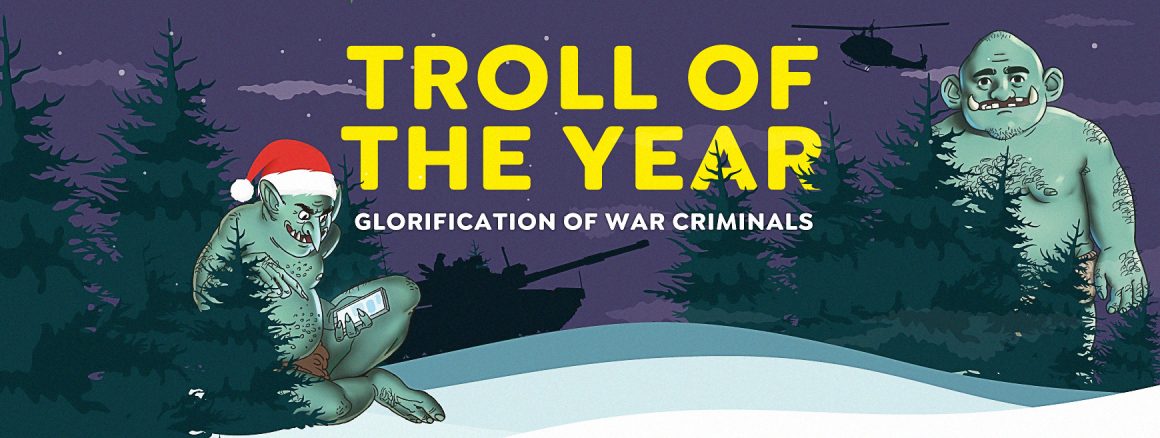
Troll of the Year 2023: Glorification of War Criminals
January 11, 2024
The Balkan Troll of the Month is an individual, a group of individuals or a media outlet that spreads hate based on gender, ethnicity, religion, or other diversity categories. The Balkan Troll is selected based on hate speech incidents identified across the Western Balkans region.
The Balkan Troll of the Month is selected on a monthly basis from incidents monitored and gathered across the Western Balkan region. In December, RDN 2.0 opened the vote of the Troll of the Year to the public to help us make this selection.
Following a preliminary selection by our media monitors in each of the six Western Balkan countries and a subsequent intense round of voting on our Instagram platform the Troll of the Year was selected.
This year, the 11th of July marked the 28th anniversary of the genocide in Srebrenica. Ruled as genocide by both the International Criminal Tribunal for the former Yugoslavia (ICTY) and the International Court of Justice (ICJ), this horrific event in July 1995 saw the systematic killing of more than 8,000 Bosniak men and the deportation of thousands of women and children.
On the 28th anniversary this year, the media reported on two students from the Faculty of Criminology and Security Studies in Sarajevo who turned to their social media platforms to glorify war criminals and spread inter-ethnic hatred. One of the students posted a photo of General Ratko Mladić of the Republika Srpska army with the caption that read “convicted to immortality. You were and will remain our hero”. Mladić was sentenced to life imprisonment for war crimes, crimes against humanity and genocide by the International Criminal Tribunal for the former Yugoslavia (ICTY).
The other student published a photo of herself holding up three fingers (a Serbian national sign) whilst wearing a T-shirt with the image of Mitar Maksimović Mando who was a wartime commander of the special unit of the Army of Republika Srprska “Mandini lavovi” (Manda’s lions).
In July 2021, the High Representative for Bosnia and Herzegovina Valentin Inzko imposed an amendment to Bosnia and Herzegovina’s criminal code to ban the glorification of war criminals if it is likely to incite violence or hatred. Consequently, in response to the incident involving the two young students, the Prosecutor’s Office of Bosnia and Herzegovina initiated legal proceedings against them.
In response to this, the director of the Security Information Agency of Serbia, Aleksandar Vulin, invited the two young students to continue their education in Belgrade. Moreover, Serbia awarded the two students with scholarships and housing in the capital city which they in turn both accepted and agreed to continue their education at the National Security Academy.
The invitation extended by Aleksandar Vulin to the young students to continue their education in Belgrade raises serious concerns. Vulin is a government representative and thereby, embodies the state’s authority. However, with this decision, the state unavoidably endorsed and rewarded the spread of hate speech and the glorification of war criminals. These actions are profoundly concerning and pose a substantial obstacle to social reconciliation.
Serbian mainstream media on the other hand, mostly overlooked this case with only a few media outlets reporting on the incident. However, the ones which did report, had a critical tone towards the situation, condemning the behaviour of both the young students and the government.
The glorification of war criminals, particularly in the context of Srebrenica, is extremely harmful and hateful. Srebrenica represents one of the darkest chapters in recent history of the region, marked by the massacre of thousands of innocent civilians. Any attempt to glorify individuals associated with such crimes not only undermines the pursuit of truth and accountability but also perpetuates the pain and trauma experienced by the survivors and their families. It is imperative that society unanimously condemns any glorification of war criminals connected to the Srebrenica genocide, as doing otherwise is not only highly insensitive and insulting to all those who suffered but also poses a grave threat to the principles of justice and reconciliation.
Monthly Highlights December: disinformation, sexism and anti-LGBTQI+ rhetoric
January 10, 2024
Throughout December, the RDN monitoring team has detected a range of hateful narratives and discourse. This month, we have seen hatred based on gender, religion, and sexual orientation, as well as the spread of discrediting campaigns against political opponents.
Sexism in Montenegro and Albania
Five Montenegrin female journalists, Danica Nikolic, Tamara Nikcevic, Bojana Dabovic, Mirka Devic and Slavica Kruscic, received rape threats via email from an unknown source. The threats were sent to Danica Nikolic, who is the main editor of the M portal and contained the names of her other colleagues from various media. The case was immediately reported to the police and the prosecutor’s office.
The SafeJournalists Network announced that it was very concerned regarding the news of the threats of rape sent to the female journalists, whilst the Trade Union of Media of Montenegro (SMCG) warned that the threats received were very problematic as it was the first time that such a massive threat occurred in the country, targeting only women.
Milutin Mićović, the poet and brother of Metropolitan Joanikije, referred to it on Facebook. When commenting on the threats towards the female journalists, he said “It really isn’t normal; who would rape those journalists!” This was criticised by part of the public, as it was not understood as a critique of the threats, but rather as an implication that the journalists that are being threatened are not good enough to be raped.
Commenting on a woman’s appearance in relation to sexual violence and/or harm is extremely problematic and dangerous. It is crucial to emphasize that making comments about a woman’s appearance should never be used as a basis for justifying or trivialising the abhorrent act of sexual violence. Sexual violence and harm or the threat of such is both illegal, immoral, and unacceptable – no one should ever be subjected to the threat or act of such. Mićović is aligned with the political opposition of the organizations where these group of female journalists are employed. His statement can be understood in quite opposing ways, however‚ if Mićović consciously made this comment ambiguous, he implied harmful misogynistic narrative about certain women “being unworthy of rape”. If he aimed to express his support for the targeted journalists, he could have expressed himself more clearly.This is especially harmful coming from a person of political and social influence, such as Mićović.
In Albania, lawyer Zace Islami was invited on the TV program “Bardh a Zi”, broadcasted on ABC News TV, and made an extremely sexist, stereotypical, and harmful statement targeting all women who work outside of their home. According to him, if a husband/partner allows his wife to work in any work environment outside the house it is equal to him (sexually) sharing her with the male director/manager.
This statement reflects the sexism and stereotypes towards women. What is even more disturbing is the fact that this statement was made by a lawyer who has a duty and profession to uphold the law and protect citizens. Furthermore, this statement was made on TV and in some ways ‘promoted’ on social media by the same media that had invited Zace to make such public statements.
The media have a moral and legal responsibility to be aware of what information they are sharing with their audiences. By allowing such sexist narratives and rhetoric to be openly expressed and furthermore, later ‘promoted’, this can only further spread such ideas in society with no repercussion as to the level of sexism and misogyny at play.
Disinformation surrounding missing minor in North Macedonia
A 14-year-old girl, Vanja Gjorchevska, from North Macedonia who had disappeared in late November was found lifeless on the outskirts of Skopje on 3 December. The investigation into her abduction and murder revealed a complex web of suspects including her father, Aleksandar Djordjevski and several other local figures. The investigation uncovered that the possible motive behind her murder was financial gain whilst her father allegedly shared information about her movements with the criminal group allegedly involved in the murder.
In the wake of her disappearance, numerous comments were made on social media platforms some of which were extremely distasteful, harmful and insensitivity considering the gravity of the situation and those affected. Furthermore, there was widespread disinformation by various media outlets claiming to have found the girl alive and well in a neighboring country. This report from Kurir, a media organization, caused significant public commotion. However, the Macedonian Ministry of Internal Affairs (MVR) quickly refuted the claim with an official statement resulting in Kurir amending their original article and acknowledging the inaccuracy of their report. Nevertheless, this false information was picked up by several other media outlets and portals that cited Kurir as their source and despite Kurir’s correction, some of the articles remain accessible. Whilst Kurir updated its article, the misleading headlines published by other media outlets remain present, running the risk of spreading disinformation.
The media bears an obligation to present information accurately and truthfully. The dissemination of false content not only contributes to the spread of disinformation but also reflects a lack of respect for the individuals affected and their families. In the case of a media outlet like Kurir, accountability for such actions is imperative. It is crucial to recognize and understand that these actions can exacerbate the proliferation of false information, emphasizing the need for responsible journalism.
Hate against political opponents in Bosnia and Herzegovina
Saša Trivić, who serves as the president of the Union of Employers of Republika Srpska and is also the owner of a bakery chain, recently made remarks on X platform (Twitter) about the responses of the opposition in Serbia to the recent elections in Belgrade. These comments specifically addressed the significant voter turnout from Republika Srpska in the Serbian elections. He wrote “after so much spitting on us Serbs from Bosnia and Herzegovina, the opposition deserves that we all take citizenships and that we all vote against them in an organised manner”. In response to this, one other X (Twitter) user joined the discussion and asked, “do you want to create a new Srebrenica in Serbia, well you won’t be able to”. In response, Trivić replied with the comment “we trained for you in Srebrenica, get ready!”
Trivić has in the past provoked serious reactions in response to his offensive, harmful and nationalistic comments on social media networks. Indeed, a few years ago, Trivić was also the target of public criticism for supporting convicted war criminals Radovan Karadžić and Ratko Mladić. After that, he apologized, as he did following his recent statement on X/Twitter.
However, regardless of this, no political tension or disagreement should ever justify hate of any kind. Furthermore, the threat made by one politician to another opposing political group, invoking the chilling statement “we trained for you in Srebrenica, get ready,” is deeply hateful and problematic, as it not only perpetuates an atmosphere of intimidation and fear but also callously exploits a tragic historical event of genocide for intimidation purposes whilst completely disregarding the weight such a statement carries.
Anti-LGBTIQ+ rhetoric in Kosovo
Pope Francis recently approved a decision to allow members of the LGBTIQ+ community to be blessed. According to the decision, Roman Catholic priests will be able to bless same-sex couples in the future, provided that these ceremonies are not part of regular Catholic rituals. The decision also applies to unmarried couples.
In reaction to this decision, human rights activist Zana Avdiu commented on the Pope’s decision on her Facebook profile (which was later deleted), asking when the LGBTIQ+ community would be accepted in Kosovo. This provoked reactions in certain parts of the media which reported on Zana Avdiu’s post, resulting in commentators using language of hatred towards the LGBTIQ+ community and offensive and sexist comments towards her.
The patriarchal and conservative society in Kosovo strongly opposes the LGBTIQ+ community. Furthermore, in the Kosovo Parliament, notably the ruling party and coalition partners from minority communities, consistently reject legislation such as the Civil Code which would allow for the cohabitation of same-sex couples, citing the preservation of traditional family values and alignment with voter expectations as the main reason for such decisions. However, every individual should have the equal freedoms and rights as everyone else regardless of their sexual orientation. Spreading hate against the LGBTIQ+ community is never justified.
Antisemitism in Serbia
The President of the Council of the Regulatory Body for Electronic Media (REM), Olivera Zekić, posted a photo montage of her in a Nazi uniform of the SS division as a profile picture on her Telegram channel. When asked about this, she said it was “a provocation” and that “someone made this a few years ago and posted it on Twitter”. In reaction, Zekić stated that with this act, she “laughed in the mob’s face, and showed how stupid and banal their “jokes”, drawings and photomontages are”, and that she can bear and accept them.
The Coalition for Media Freedom and the Jewish Municipality of Belgrade condemned her act in a statement, saying that they were “disgusted by the outrageous gesture” of the president of REM, as well as her explanation that she did it “out of provocation”. They called on the authorities to react to this and enforce the Law on the Prohibition of Neo-Nazi or Fascist Manifestations and the Prohibition of the Use of Neo-Nazi and Fascist Symbols. According to Article 3 of that law, it is prohibited to “produce, reproduce, store, present, glorify or in any other way spread propaganda material, symbols or signs that cause, incite or spread hatred or intolerance, propagate or justify neo-Nazi and fascist ideas.”
The original photo used for this photo montage shows Reinhard Heydrich, who was one of the main creators of the “Final Solution”, the Nazi regime’s systematic plan for the extermination of Jews from Europe during World War II.
The use of a photo montage depicting Zekić in a Nazi SS uniform is not only reprehensible but also deeply offensive, referring to a historical atrocity that caused immense suffering and loss of life. Zekić should not only publicly apologize for this act but also face the consequences of her actions – an image like this is not just an attack on her personal dignity but also a gross disrespect to the victims of the Holocaust.
SOCIAL MEDIA UNDER THE LENS OF FACT-CHECKERS
January 4, 2024
FACT CHECKERS’ FIGHT TO COMBAT DISINFORMATION.
“Even Vlora Çitaku has a Serbian passport!” “Mega scandal, Srpska Lista leader Goran Rakić has an intimate meeting on a yacht,” “Business loans up to 50,000 euros.” These are just a few examples of the disinformation shared on Facebook this year.
Disinformation published in the media spreads false information about public figures, political developments and social issues. It also offers unverified cures for various diseases, false job calls from European countries and deceptive opportunities for quick loans. A lot of disinformation is posted on Facebook from suspicious or fake accounts, but it also comes from established online media outlets.
The latest data from the social media analytics company That Ad indicates that as of September 7 there are approximately 950,000 open accounts in Kosovo. As the most popular social media platform in Kosovo, the media tailors content especially for this audience, such as short videos, infographics and live broadcasts.
Shkëlzen Osmani, the director of the fact-checking outlet Hibrid.info, said that Facebook contains many media outlets within it. “Facebook is now like a universe. In that universe there are many other celestial bodies, but Facebook has included them within its universe,” said Osmani.
Anyone with access to Facebook can publish content there. Social media networks owned by Meta — formerly known as Facebook and which owns WhatsApp, Instagram and Threads — do not make a distinction between media pages and other content publishers.
“There is nothing that tells you what pages are media outlets, influencers, health pages or institutions. You are informed depending on how the algorithm places them in your feed,” said Osmani. The social media algorithm determines the content’s audience based on the user’s prior preferences, which are determined based on likes, shares, clicks and user interactions.
This audience of nearly a million users is also targeted by suspicious and fake accounts that spread disinformation to generate money through clicks or to promote specific agendas. Globally, Facebook has over 3 billion users, ranking it among the top social media platforms in terms of user numbers. Facebook is also a leading platform in the spread of disinformation.
Meta has come under significant pressure for allowing the spread of disinformation, particularly after the 2016 American elections. It was shown that the spread of disinformation on social media influenced the election and that millions of users’ private data was sold for use in the election campaign.
During the campaigns, CNN revealed that a group of young people from North Macedonia operated a fake news farm by creating fake profiles of American citizens. They benefited financially from spreading fake news since they earned a certain amount for each click. This fake news largely favored Donald Trump. It was falsely claimed that Pope Francis supported Trump and that Bill Clinton, husband of presidential candidate Hillary Clinton, sexually assaulted a 13-year-old girl. Due to this fake news and the harvesting of private data, Facebook founder Mark Zuckerberg was called to testify before the U.S. Congress in 2018.
Meta began collaborating with fact-checkers to combat disinformation, starting with Facebook in 2017, WhatsApp in 2018 and Instagram in 2019. The newly launched social media platform Threads does not currently collaborate with fact-checkers.
Meta’s collaboration with fact-checkers in Kosovo started in 2018.
Facebook under the fact-checkers’ lens
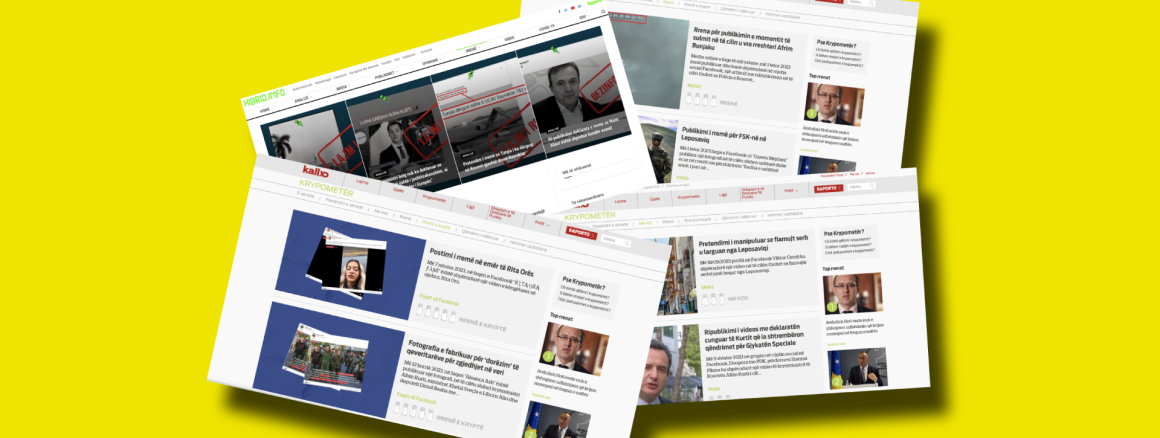
In Kosovo, one of the main fact-checkers is Krypometri, which has been part of the online media outlet Kallxo.com since 2016. In 2018, Krypometri received Facebook’s approval to review content and rate its accuracy. Krypometri is now what is known as a “third party fact-checker” and is so far the only Meta collaborator in Kosovo. Krypometri is also part of the International Fact Checkers Network (IFCN), an organization that monitors fact-checking trends, provides training resources and a venue for collaboration for nearly 200 fact-checking organizations worldwide.
Third-party fact-checkers identify and review posts on Facebook. If fact-checkers mark content as inaccurate or incomplete, a warning is displayed on the post, indicating that fact-checkers say it is fake news or lacks context. This also serves as a barrier to accessing the content, since users cannot open it without first seeing the warning and clicking on “See Why.“
When you click the “See Why” button, a new panel appears. Here, you have the option to click on the Krypometri article that explains why the post has been marked as disinformation. Below the article, there is the option to view the disinformation by clicking “View Post.”
On an almost daily basis, Krypometri deals with Facebook pages that are already marked as spreading fake information or news which lacks context.
In August 2023, the public broadcaster’s portal, rtklive.com, published a sponsored article on Facebook titled “The Economist: Kosovo with economic growth surpasses Balkan neighbors.” Its description read “The British magazine The Economist has written an article about Kosovo titled “Start-up nation – how Kosovan companies are defying expectations to lead the country into the future.””
Underneath this article, there was a warning on Krypometri that said, “Lacking context – independent fact-checkers say this information lacks context and may mislead people.” The inaccuracy was that it was not published in The Economist but in The Economist Impact, and it was sponsored by the Kosovo Chamber of Commerce, the American Chamber of Commerce and a USAID project. The Economist Impact is part of the Economist Group. What sets it apart from The Economist newspaper is that The Economist Impact allows the publication of sponsored content. As such, the article was not informative but promotional.
Most of the recent articles on Krypometri are about politics. Many are related to disinformation posts targeting the current government. The Komentet Politike page on Facebook published a poster featuring Xhelal Sveçla, Minister of Internal Affairs, that read “Xhelal declared all KLA veterans collaborators with Serbia.” After the article was fact-checked and marked as disinformation, the Komentet Politike Facebook page decided to delete the post.
The deputy leader of the largest opposition party, the Democratic Party of Kosovo (PDK), Vlora Çitaku, was also a target of disinformation on Facebook when an account baselessly claimed that she had Serbian citizenship. In the reel where this claim was made, there was a warning that stated “False information. Independent fact-checkers say this information is unsupported by facts.”
According to Facebook’s policies, accounts that publish disinformation that are marked by Meta’s partner fact-checkers will have their visibility reduced within the platform.
Kreshnik Gashi, managing editor of Kallxo, said that after they identify posts as false or lacking context, some pages remove the posts, while others correct their content.
“There are two groups. The first group includes anonymous pages that cannot be identified and it is unclear who is behind them. These pages have a large outreach. They don’t care about losing their audience as they are not interested in informing,” said Gashi. According to Gashi, the other group are pages belonging to the online news media and aim to be in the media market for a long time, so they mark their articles as edited or corrected.
“It’s not yet standardized or fully integrated as a policy across all media in Kosovo, but this has started to change,” said Gashi.
Valon Canhasi, founder of the digital marketing company Hallakate, said that fake accounts have become increasingly present during election campaigns. The rise of disinformation during election campaigns is a global phenomenon.
According to Canhasi, any attempts to assess the number of fake accounts is bound to fail.
“It’s hard to come up with a specific number, but platforms have become so sophisticated that these are in a very small percentage. In reality, real accounts are the problem because they share this kind of information,” said Canhasi.
According to a report by the National Democratic Institute (NDI), which monitored online news media and social media from March 2020 to February 2021, many Facebook groups and fan pages that are created to support a party or a cause spread disinformation, especially during election periods.
Osmani, from Hibrid.info, which is also part of IFCN, said that despite not being an official Facebook partner, they have ways to communicate with Facebook when it comes to fact-checking.
“Facebook algorithms usually notice on their own when a fact-checker or IFCN member deals with content on the platform,” he said.
Hibrid.info is in negotiations with Facebook for the status of a third-party fact-checker and in January of this year it started monitoring social media. According to the first monitoring report published for the period between January to June 2023, Facebook was the main social media platform where the distribution of disinformation related to events in Kosovo occurred.
Disinformation on TikTok, Twitter and Telegram
In June of this year, a fabricated video created with the help of artificial intelligence, known as a deep fake, was shared by hundreds of people on X, formerly known as Twitter, and by Facebook pages.
In the deep fake video a photo of Kosovo’s Prime Minister Albin Kurti and the United States Ambassador to Kosovo, Jeffrey Hovenier, was manipulated. In the fabricated video, Hovenier is seen telling Kurti that there will be consequences for the unjust arrests of Serbs in the north of Kosovo. Kurti responds to Hovenier, saying he will arrest Serbs regardless of whether or not they have committed crimes, to bring the north of the country under Kosovo’s control. Hovenier’s voice and accent sound similar to his real voice, but Prime Minister Kurti is given a British accent.
This video was shared during a period of tension in the Serb-majority municipalities in northern Kosovo after the April 24 municipal elections.
Adea Beqaj, a senior official for NDI’s Information Integrity program, said that the purpose of this misinformation is to sow distrust.
“Kosovo’s Prime Minister and the American Ambassador were used and through a fabricated conversation an attempt was made to harm both parties. The context of this manipulation of information is important because it plays a role in destabilizing the country and deepening the ethnic divisions between Serbs and Albanians,” said Beqaj.
The fabricated video also circulated in Telegram groups with a significant number of followers. Telegram is a messaging app that allows the creation of groups and channels, which can be followed by anyone with an account.
According to NDI, the Serbian-language channel “BUNT je stanje duha,” or “REVOLT is a state of mind” has a significant number of Serb users in the north of Kosovo.
The Telegram group has over 70,000 followers and makes daily posts related to Kosovo, which include disinformation and hate speech. Messaging apps are more difficult to monitor because moderators in closed groups decide what is shared.
In the Telegram app, there is an option to report content to the platform and contact the account manager, although the phone number and administrator’s name can be hidden.
In Kosovo, Hibrid.info has debunked false news multiple times published on the channel BUNT. Combating disinformation on messaging app channels like Telegram is more challenging since fact-checkers can’t use social media monitoring tools that work on other platforms.
Twitter is less commonly used in Kosovo. According to data from the company Hallakate, Twitter had 102,000 users in Kosovo in July 2022. Despite having fewer users, political content shared on the platform is also spread on more popular social media platforms.
“If someone has posted something false on Twitter, whether it’s a politician or an influencer, you can easily find it reposted on Facebook, Instagram or TikTok, by other media outlets and other people,” said Gashi from Kallxo.
The disinformation on Twitter is often spread through bots, which are used to spread disinformation and incite hatred. Bots, also known as “zombies” once a device has been infected, are computer programs that imitate human users. However, some bot-like activity is also carried out by individuals.
Bots often share and like each other’s messages and spread unverified or false claims to create an online atmosphere either for or against a specific idea or person.
Researcher Agon Maliqi exposed one such Twitter bot that was spreading nationalist narratives in both Kosovo and Serbia. “It’s time for Albania and Kosovo to merge and unite,” read a post on the profile Malcolm16991871, which had tagged American senators, including Democrats Chris Murphy and Jeanne Shaheen. However, as Maliqi showed, the same profile had also shared a post from the Serbian Progressive Party (SNS), the political party of Serbian President Aleksandar Vučić.
“There’s an army of bots like this one, pretending to be Albanian nationalists. They use hate speech against Serbs and distribute calls for nationalist gatherings in Tirana. Poor Malcolm, he confused the profiles and reshared the SNS post,” Maliqi wrote in a July tweet. According to him, the content shared by bots on Twitter varies but often comes from profiles with real individuals behind them, not just automated accounts.
“For example, they spread sectarian divisions, nationalism and ethnic hatred. Bots are not the only creators of this content, it can also come from real people with authentic profiles. Anyway, bots amplify and redistribute this content as needed,” said Maliqi. Based on his own observations, Maliqi claimed to have seen 500 such profiles between 2020 and 2023.
SNS reportedly pays people to comment and distribute content online, either supportive of the SNS and Vučić or critical of SNS’s political opponents.
During 2020, Twitter closed 8,500 profiles serving the SNS. Stefan Janjić, editor-in-chief of Fake News Tragac and assistant professor at the University of Novi Sad, explains in his recent article for K2.0 how SNS’s bots resemble an online army of over 8,000 real individuals taking orders from SNS.
Fact-checkers in Kosovo are concerned about the content published on TikTok and speak about the lack of filtering content. TikTok, a social media platform owned by the Chinese company Bytedance, is believed to have hundreds of thousands of users in Kosovo. There is no accurate user count as the platform does not list Kosovo as a country.
Both Krypometri and Hibrid.info deal with disinformation published on this platform, but they say it’s difficult to monitor due to the high volume.
Gashi said that TikTok is being used to spread disinformation and hate speech.
A Tiktok video that has over 800 shares shows the owner of a horse ranch in Obiliq. In the video, the filming of the movie “Dasma në Male” (Wedding in the Mountains) was taking place in his ranch and the actors and ranch owner were wearing KLA uniforms. In June 2023, the Patriotizamsrb Tiktok profile, which publishes content in Serbian and has over 4,000 followers, republished the video to deliberately spread disinformation. The republished video falsely claimed that the ranch owner is a terrorist and made his name public. The video has over 7,000 likes, nearly 1,000 comments, 830 shares and 1,300 profiles have saved it to watch later.
Osmani said that Tiktok poses a high risk, especially taking into account the age of the users. “TikTok has gained significant popularity, especially among the younger audience,” he said.
Although there is no accurate data on TikTok usage in Kosovo, it is believed to have many more users than Twitter due to the appeal of short format videos among young people. This suggests that Facebook’s dominance is being challenged by the preferences of younger audiences. According to data from That Ad, as of September 7 the 18 to 24 age group has 193,200 users on Instagram as opposed to 187,500 on Facebook.
Both Facebook and YouTube, as well as TikTok, Twitter and Telegram have been accused of profiting at the expense of users, either by failing to combat disinformation or by giving the green light to content that incites hatred and violence.
Author: Ardit Kika
Photo: Atdhe Mulla via Midjourney
This article was originally produced for and published by Kosovo 2.0. It has been re-published here with permission.
REPORTING DIVERSITY Advanced Training: Call for Participants
December 26, 2023
WHEN: 13-16 February 2024
WHERE: Podgorica, Montenegro
Reporting Diversity Network – The New Agenda is inviting CSOs, grassroots activists, human rights defenders to attend the Reporting Diversity training of trainers. The training will take place in Podgorica, between 13-16 February 2024 and will gather 30 participants from across the Western Balkans.
The participants will gain skills that will help them be more sensitive to minorities’ points of view, recognise hate speech and divisive narratives and their manifestations and be able to counter them. The three-day workshop will focus on three sets of skills: recognising hate speech, responding to hateful narratives and advocating for respecting diversity in reporting.
The Reporting Diversity Network aims to introduce and establish new practices of counteracting divisive media messages by providing alternative responses, demanding reactions (by the media, civil society, and/or authorities), and publicly exposing perpetrators.
This workshop is designed to equip participants with capacities, channels, resources, and methods to engage more effectively and actively and make countering irresponsible and often illegal behaviour of actors in the media sphere part of their regular practice in upholding human rights, the rule of law and democracy standards in the region. This entails better-informed and substantiated CSO advocacy actions aimed at achieving policy influence but also at alternating public perceptions of irresponsible media behaviour through effective campaigns. For these reasons, the Reporting Diversity Training will focus on increasing participants’ traditional and social media campaigning skills as well as advocacy skills.
All travel and accommodation costs will be covered by the organisers. If you have specific travel and/or accommodation requests, please let us know in advance in the comments section.
As a part of the Reporting Diversity Advanced Training, participants will also attend the Reporting Diversity Network Conference, which will be held on February 15 and 16, 2024. To apply, please fill in this form before January 22. Selected participants will be notified by January 25.
The working language will be English.
Reporting Diversity Network (RDN) – The New Agenda aims to activate the role of civil society in countering narratives of the divide and replacing them with positive discourse contributing to the values of respect for human rights, respect for diversity and good neighbouring relations. Reporting Diversity Network gathers organisations from the Western Balkan region: Albanian Woman in Audiovisual (AWA), Association for the Advancement of Journalistic Practices INNOVATIVE MEDIA, Center for Investigative Journalism Montenegro, Fondacija za razvoj Medija i civilnog drustva – MediaCentar, Kosovo 2.0, Media Diversity Institute Global (MDI Global) and Media Diversity Institute – Western Balkans.
Reporting Diversity Network – The New Agenda project is co-funded by the European Union and the “SMART Balkans – Civil Society for Shared Society in the Western Balkans” regional project implemented by the Centar za promociju civilnog društva (CPCD), Center for Research and Policy Making (CRPM) and Institute for Democracy and Mediation (IDM) and financially supported by the Norwegian Ministry of Foreign Affairs (NMFA).