Author: RDN
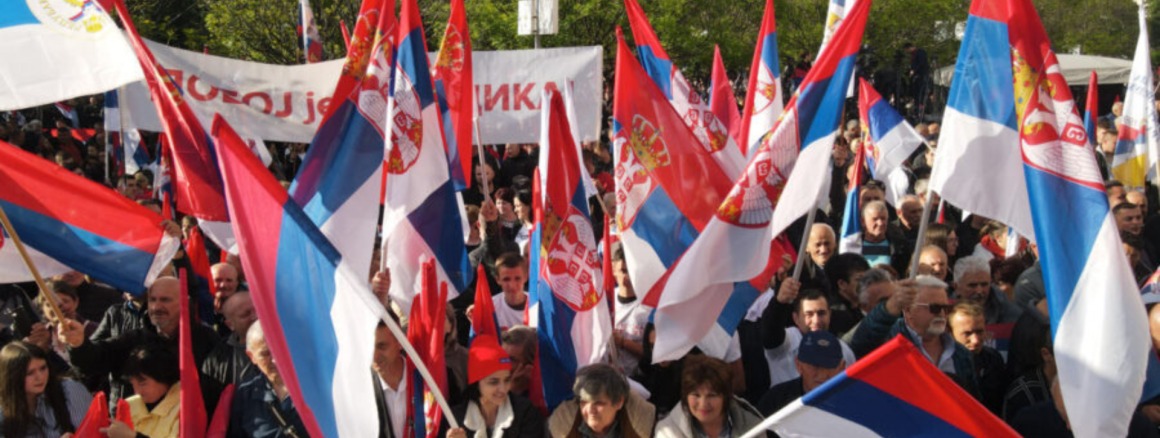
RESPONSE TO THE SREBRENICA RESOLUTION: GENOCIDE DENIAL AND HATE SPEECH
April 26, 2024
The National Assembly of RS adopted conclusions that deny genocide.
Denying the genocide in Srebrenica, relativizing war crimes, and using insulting messages and hate speech are the messages that have been coming from the Bosnian entity Republika Srpska (RS) recently.
An announcement that the draft Resolution on the genocide committed in Srebrenica will be on the agenda of the United Nations (UN) General Assembly on May 2 was followed by statements by RS officials denying that the genocide took place.
On 18 April, the National Assembly of Republika Srpska (NSRS) unanimously adopted the Final Report of the Independent International Commission of Inquiring on the Sufferings of All Peoples in the Srebrenica Region between 1992 to 1995, which was formed by the Government of RS. It includes 12 conclusions stating that the term genocide is incorrect and cannot be accepted.
A rally “Srpska Calls You” was held at Trg Krajine in Banja Luka, where several thousand people from RS and Serbia gathered. Photos of Russian President Vladimir Putin, as well as Ratko Mladić, who was convicted of genocide in Srebrenica, could be seen at the rally.
The President of RS, Milorad Dodik, has repeatedly denied the genocide in Srebrenica in recent days. “It was a crime at the end of the war after fatigue, hatred and suffering, revenge, but it was not genocide,” said Dodik at a rally held in Banja Luka.
The president of the NPS party, Darko Banjac, also gave a speech in which he denied the genocide in Srebrenica and called the ambassador of Bosnia and Herzegovina (BiH) to the UN, Zlatko Lagumdžija, a “Big Muslim”. He also called the European Union (EU) a “fag,” insulted the LGBTI community, and glorified Russia’s attack on Ukraine. He said he was sorry that “Russia’s special operation” did not extend to other Nazis and fascists, alluding to Germany, which supported the UN Resolution on the genocide committed in Srebrenica.
The NSRS adopted a report denying genocide
In the report conclusions adopted by the NSRS it was stated that they permanently reject the term genocide “bearing in mind that the minimum number of members of Muslim forces or prisoners of war, captured and executed is between 1,500 and 2,000, and the maximum number is up to 3,000”.
The International Court in The Hague found that Bosnian Serb forces executed between seven and eight thousand captured Bosnian men and boys in Srebrenica in July 1995, that the killings were the result of a well-planned and coordinated operation, and that they were carried out with genocidal intent.
“You are trying to impose by force to say that it happened, but it didn’t (…) The Serbian people did not commit genocide. I feel sorry for all the Muslim victims, but you are very mistaken. You are creating a rift between us,” said Dodik at the NSRS session. During his speech before parliamentarians, he made a number of unfounded claims and downplayed the number of those killed in Srebrenica.
The MPs from the PDP, SDS, Lista za pravdu i red (List for Justice and Order), who spoke in the NSRS before the report was adopted, expressed their respect for all the victims, but in their presentations, they mostly talked about the suffering of the Serbs and stated that they do not agree to be called a “genocidal nation”.
Srđan Mazalica from the SNSD said that the “genocide qualification” “was not the fruit of the Bosniak public, but that it was born in the circles of Western embassies that wanted to wash themselves and their country”.
Nebojša Vukanović, an MP from the List for Justice and Order, said that “what happened in Srebrenica was a terrible crime”, and Petko Rankić, a member of the Socialist Party, said that “it was not genocide, but it was a crime”.
Genocide denial is a criminal offence
The president of the commission that presented the report, Gideon Greif, said recently on the Tanjug television show that “the terrible crime that happened in Srebrenica in the summer of 1995 cannot be qualified as genocide in any way”. He also said that “the adoption of the Resolution on Srebrenica in the UN will not bring anyone anything good”.
“The genocide in Srebrenica did not happen, and if it had happened, this topic would not have been imposed this much,” said Dodik in a statement on April 15, which was released after he announced the “Srpska Calls You” rally.
Dodik again denied genocide on April 16, saying that “in order for someone to commit genocide, there must be an intention to biologically destroy an ethnic group. And that did not happen in Srebrenica”.
In a separate statement from April 16, Banja Luka Mayor Draško Stanivuković, announcing his arrival at the “Srpska Calls You” rally, said that “genocide did not happen in Srebrenica”. “We are not the people they want to mark and label us as,” he said.
The Hague Tribunal, the Court of BiH, and courts in Serbia and Croatia have so far sentenced a total of 54 people to five life sentences and 781 years in prison for genocide, crimes against humanity and other crimes in Srebrenica during July 1995, Detektor states in its analyses.
According to the amendments to the Criminal Code of Bosnia and Herzegovina imposed by the High Representative Valentin Inzko in 2021, it is banned in Bosnia and Herzegovina to justify or minimize the crimes of genocide, war crimes and crimes against humanity in a way that could incite violence or hatred directed against a certain group of people.
Denial of a crime is an attempt to claim that a crime did not occur, to deny factually established events, or to dispute the intent of committing a crime, and this criminal offense is punishable by imprisonment for a term between six months and five years.
The biggest denier of the genocide in Srebrenica, according to the Srebrenica Memorial Centre’s research from last year, was Milorad Dodik, who in 2023 denied the genocide as many as 11 times in different ways.
What is contained in the Resolution on the genocide in Srebrenica
Chairman of the Presidency of Bosnia and Herzegovina (BiH) Denis Bećirović and member of the Presidency of BiH Željko Komšić have been at UN headquarters in New York since April 17 regarding the UN General Assembly’s draft Resolution on the genocide committed in Srebrenica. The resolution was supported by the United States of America, Italy, France, Germany, Albania, Chile, Finland, Ireland, Jordan, Liechtenstein, Malaysia, Netherlands, New Zealand, Rwanda, Slovenia, Turkey and North Macedonia.
If the resolution is adopted, July 11 will become the International Day of Remembrance of the Genocide in Srebrenica.
According to Klix, the conclusions of the Resolution condemn without reservation any denial of the Srebrenica Genocide and actions that glorify those convicted of war crimes. It urges member states to preserve the established historical facts and educate future generations in order to prevent revisionism and future genocides.
Author: Selma Fukelj
This article was originally produced for and published by Media Centar. It has been re-published here with permission.

REGIONAL MEDIA MONITORING: Ethnicity and gender identity remain the main targets of hate speech as political targeting is on the rise
April 15, 2024
Reporting Diversity Network has been continuously conducting media monitoring of hate speech on a regional level for almost four years. Our latest set of reports show findings from May 2022 until December 2023. Gender identity and ethnicity remain the most targeted identities, as more than half of all recorded cases across the region referred to ethnic hate (28%) and gender-based hate (24%). Political targeting (15%) slightly increased, prevailing hate against sexual minorities (14%) in this reporting period, and becoming the third most targeted group. Serbia and Bosnia and Herzegovina especially noted a significant increase in share of cases with hate targeting political opponents. The straining of political relations either internally or regionally, conflicts in the world, protests, and elections are common triggers for this type of narrative.
In nearly a third of documented cases (30%) groups and individuals were targeted for multiple overlapping identities. Intersectional hateful and discriminative discourses are mainly reflected in the most-targeted categories, where someone’s gender, ethnicity or sexual orientation plays a role, even if it is not the sole reason why they are targeted. Moreover, an increase in hate towards journalists and religious groups was noted, as well as a decrease in hate towards migrants and refugees on a regional level. Most hate speech in the region was generated by journalists and media outlets as well as private persons, primarily users on social media platforms, with the same number of cases recorded (28% each), and politicians, state officials and political parties (20%).
Sparks in political conflicts, mutual visits and meetings of regional leaders or commemorations of specific war crimes or the genocide in Srebrenica often triggered waves of increased ethnic hate. Dominant narratives often included an “us vs. them” dichotomy where the ethnic group constituting the majority is presented as the victim, and ethnic minorities or neighboring nations as a threat and an enemy. Individuals advocating counter-narratives of interethnic cooperation and reconciliation were labelled as “traitors” working against their people and nation.
Gender-based hate, apart from women, occasionally targeted gender minorities, however generally contained patriarchal and misogynist depictions harmful to societies in the Western Balkans in general. Common narratives included stereotypical representations of women in the media, misogynistic and sexist targeting of women politicians, journalists and other public figures based on their gender rather than their work, extremely harmful unethical and unprofessional reporting on gender-based violence and anti-gender narratives including those undermining already achieved steps in ensuring gender equality and further efforts.
Homophobic and transphobic narratives contained mainly negative stereotypical depictions, presenting sexualities other than heterosexuality as a sickness or mental disorder and linking them to pedophilia, as well as anti-gender narratives similar to those targeting women. When aimed at the LGBTIQ+ community, these narratives also include presenting gender as an ideology imported from the West and aimed at annihilating the “traditional family values”.
When it comes to combative and preventive measures taken to address hate speech in this period, many efforts were detected across the region, from grassroots civil society actions and projects implemented by international organisations raising awareness among citizens to media regulation and self-regulation mechanisms in place, and legislative and institutional efforts focusing on this issue. However, many issues prevail in this process, as these actions often lack sustainability and coordination.
As misinformation, disinformation and malinformation often fuel hate speech, media literacy is becoming a crucial skill not only in recognising these information disorders but also in critically approaching hateful and harmful content. Western Balkan countries are rated quite low in the European Media Literacy Index, with all countries in the region ranking low media literacy index. These issues must be considered in attempts to prevent and combat hate speech.
Furthermore, as AI technologies are becoming more accessible and widely used, they can play a critical role in both spreading and preventing hate speech. As they use automated content, AI tools can amplify and disperse hate speech as seen in some recorded cases. However, these tools can also be used in combating hate speech if ethically designed, transparent and trained in region-specific languages and context. New technologies must be considered and responsibly integrated in future efforts of monitoring, detecting and countering hateful and harmful content in the digital sphere.
To learn more about hate speech narratives in the region see country reports:
MEDIA MONITORING REPORT: A REGIONAL OVERVIEW
MEDIA MONITORING REPORT ON HATE SPEECH IN ALBANIA
MEDIA MONITORING REPORT ON HATE SPEECH IN BOSNIA AND HERZEGOVINA
MEDIA MONITORING REPORT ON HATE SPEECH IN KOSOVO
MEDIA MONITORING REPORT ON HATE SPEECH IN MONTENEGRO
MEDIA MONITORING REPORT ON HATE SPEECH IN NORTH MACEDONIA
MEDIA MONITORING REPORT ON HATE SPEECH IN SERBIA

Monthly Monitoring Highlights March: ethnic hatred, sexism, hate towards journalists and political opponents
April 10, 2024
Throughout the month of March, the RDN monitoring team has detected a range of hateful narratives and discourse. This month, we have seen hatred based on ethnicity, gender and hatred towards journalists and political opponents.
Ethnic hatred in Bosnia and Herzegovina
Klix.ba, the most read web portal in Bosnia and Herzegovina reported on an incident that happened in Sarajevo where a woman was attacked. The article provided details about the attack itself, however, it also mention that members of the Roma community were involved in the incident.
This incident exemplifies highly unprofessional media reporting whereby a journalist from the web portal Klix.ba specifically mentioned the involvement of individuals from the Roma community. Such reporting contributes to a skewed and stigmatised public perception of the Roma community. This is also apparent in the offensive language and prejudiced comments proliferating in the article’s comment section, which served as a platform for the spread of hateful, discriminatory language against the Roma community to go unchallenged.
Minority social groups often receive limited attention from the media and when they are featured, especially in the aftermath of incidents, it tends to worsen discrimination and marginalisation. It’s crucial for the media to exercise sensitivity when reporting on ethnic minorities, avoiding the propagation of hateful or discriminatory rhetoric.
Hatred against political opponents in Montenegro
In the town of Herceg Novi, an effigy with the face of prominent writer Andrej Nikolaidis was burned during the town’s carnival organised by the municipal authorities. Whilst burning his effigy, individuals present shouted insults and hateful comments, which also resulted in numerous hate speech comments being written online.
Andrej Nikolaidis has been the target of many forms of harassment and hate speech as well as threats throughout his life due to his political activism, anti-nationalism, and support for human rights. In reaction to this recent incident of hatred and harassment, PEN International (a worldwide association of writers), the Montenegrin PEN Centre and PEN Bosnia and Herzegovina demanded that the “targeting of prominent writer, journalist and PEN member Andrej Nikolaidis must end at once”. No one regardless of their political stance or opinion should fall victim to harassment and threats of any sort. Furthermore, the organisers and authority of Herceg Novi should not have permitted such violent acts to take place in their town and moreover, should apologise for such behaviour.
Violence towards journalists in Albania
During a media appearance, Syri TV journalist Ambrozia Meta faced a physical attack by Prime Minister Edi Rama when he shoved her face as he refused to answer her questions regarding an investment project linked to Donald Trump’s son-in-law Jared Kushner.
In response to the incident, the SafeJournalists Network, an advocate for press rights in the Western Balkans, labeled Rama’s behaviour as “unacceptable and alarming,” demanding an apology from him. Additionally, the Union of Albanian Journalists publicly supported Ambrozia Meta saying she had the right to question Rama at the press conference. “The Prime Minister not only did not give a concrete answer to the specific question, but… avoided the obligation to give a concrete figure for the possible public benefits of one of the biggest projects in the field of Albanian tourism.”
Nevertheless, despite this, Prime Minister Edi Rama issued a statement on X (formerly Twitter), asserting that he did not regret his actions and refused to apologise. He controversially claimed that “denouncing an imaginary aggression disrespects the true victims of power aggression towards women journalists worldwide,” implying that Ambrozia Meta’s allegations undermine the credibility of actual victims of aggression. This statement attracted many views.
It is important to mention that Prime Minister Edi Rama has clashed with journalists, including Ambrozia Meta, on previous occasions. Any form of physical aggression towards an individual is unacceptable. It is particularly concerning when it involves a prominent and influential figure who serves as a public official, like Edi Rama, addressing journalists in such a manner. He should not only refrain from such behaviour but also issue a sincere apology for his actions.
Hatred towards a former activist and employee in Kosovo
Following a smear campaign against her Advisor on Foreign Policy, EU Enlargement, Western Balkans, and Transparency, Đorđe Bojović, MEP Viola von Cramon-Taubadel released a statement on her social media account. It reflected her concern about the impact of disinformation campaigns and propaganda on Kosovo’s European integration efforts. She suggested that such campaigns, including the one targeting Bojović, will not serve the interests of Kosovo or its aspirations for rapid progress towards European integration.
Viola von Cramon-Taubadel wrote on her account: “My question: Who will this help? Certainly not to Kosovo and its European integration. Fake news, disinfo campaigns, government propaganda or even a deep fake with bots and trolls will definitely not change anyone’s position, but only weaken (Kosovo’s flag) the chances for rapid progress. It is sad for the country”.
A campaign was launched against Đorđe Bojović after a video of him at an exchange program, , during his time as an activist and former employee of the Youth Initiative for Human Rights, was misused. Individuals who initiated the online campaign claimed that Bojović was denying the war crimes committed in the years ‘98-’99. He responded by attaching a video where he states that certain errors occur when certain crimes committed in Kosovo are labelled as genocide, when in fact they should be categorised as war crimes.
Đorđe Bojović received support from several representatives of Kosovo’s civil society, including Petrit Seljimi and Agon Maliqi, who responded to these attacks by saying that they are bots, that is, sympathizers of the ruling party, which labels all those who dare to criticise the current leadership. After that, several commentators organised a new campaign against Agon Maliqi. In reaction to this, Đorđe Bojović thanked Maliqi for his support. However, there were comments in reaction to Maliqi’s post that claimed he should be expelled from Kosovo and that his passport should be taken away. Former President of Kosovo Atifete Jahjaga also reacted. Commenters predominantly asked her to delete her post.
Furthermore, the Youth Initiative for Human Rights Regional Network released a statement calling for the condemnation of such attacks on Bojović strongly believing “that such attacks are wrong, damaging and should not be tolerated”. The nature of smear campaigns corrode trust and integrity, acting as a barrier to democratic discourse and dialogue.
Sexism in North Macedonia
In the lead up to the next elections in North Macedonia, three women and twelve men were collecting signatures to qualify to run as presidential candidates. However, the disparity between the level of sexism and hate speech faced by the male and female candidates was substantial.
Gender-based hate speech, insults and sexist comments were common in relation to the female candidates in comparison to their male counterparts. In one instance, the portal Kurir published a reel on Facebook from a speech of Gordana Siljanovska-Davkova, VMRO- DPMNE candidate for president. Most of the comments she received were negative and sexist. Being the oldest, many of the hateful comments also referred to her age.
In another instance one of the biggest television stations TV21, published a question on its Facebook page with the photos of two candidates running for MP’s from the DUI party (The Democratic Union for Integration). The headline read: “how do you evaluate these selections of DUI?” The publication incited many comments with hateful speech towards females in general and towards the two women in particular.
Negative, hateful, and sexist commentary towards individuals on the basis of their gender is never acceptable. Online abuse can force women out of political engagement, eroding the foundations of equality and democracy.
Targeting of journalists and political opponents in Serbia
After speaking at the Rebedu Festival in Dubrovnik, Croatia, journalist and president of the Independent Journalists’ Association of Vojvodina (NDNV), Ana Lalić, received thousands of threats and insults on social media and her private phone number. Lalić spoke at the panel “In the Jaws of Nationalism” where she said that “extra-Serbization” is happening almost every day in Vojvodina and that the people of Vojvodina are trying to defend themselves from the “gallop of Serbian nationalism”.
Soon after, a manipulated video of another journalist, Dinko Gruhonjić, who spoke at the same festival last year, appeared on social media. This video was instantly followed by a wave of hate speech towards him. Gruhonjić is also a member and the Program Director of NDNV and a professor of the Faculty of Philosophy at the University of Novi Sad.
In the controversial misleadingly cut video from last year’s panel at Rebedu, he spoke about the people “who are climbing his genealogical tree”, ironically stating, among other things: “So they even invented the name Sabahudin for me, even though I have a nice name, Dinko, like Dinko Šakić.” After this, the video showed a presentation of who Šakić was – a commander of the Jasenovac concentration camp in the Independent State of Croatia during World War II, where many Serbs, Roma and Jews were tortured and estimated between 77 and 99 thousand were murdered.
Several tabloid pro-regime online portals, including NS Uživo, Republika, Srbija danas, NSuživo, Gradske info and 025, used this part of the video to prove that Gruhonjić “declared that he was proud to be named after Dinko Šakić”, spinning his actual words. In a statement for the fact-checking portal Raskrikavanje, Gruhonjić says that this is not the first time that “nationalists pull him out of the hat” and spin his words and that he has been suffering pressure and attacks on his work for decades. Threats continue to this day, the most notable being a graffiti of a death threat that appeared at the entrance of the building where he lives with his family.
Due to alleged hate speech, a criminal complaint was filed against Gruhonjić. The seemingly organised tabloid chase and hateful comments, including threats of violence and death, he received on social media were followed by condemnations by ultra-right organisations, the former director of the Security Information Agency Aleksandar Vulin, and even the Student Parliaments of the Faculty where he works and the University of Novi Sad. These student bodies demand that Gruhonjić be fired and removed from his position as professor.
After that, the Faculty of Philosophy in Novi Sad suspended work on March 28th after a group of primarily young men broke into the institution at the invitation of the Student Parliament. The group first gathered with banners in front of the faculty, then entered the building, locked the entrance with chains and a padlock and blocked the door with chairs. Students and professors were forced out of the building, which was blocked for four days. Many students and professors gathered with activists and citizens in front of the faculty to support Gruhonjić and defend faculty integrity and autonomy. Some students claimed they did not recognise most people blocking the faculty. Gruhonjić received public support from many colleagues, students, journalist associations, civil society and other individuals and organisations.
In March, young activists were also targeted in tabloid media. Certain media outlets with large audiences play a critical role in targeting journalists, activists, political opponents and those who oppose the regime. Targeting individuals through media is unacceptable and as is the case with Dinko Gruhonjić can be threatening to their safety and livelihood.

TROLL OF THE MONTH: Daily paper “Alo”
April 5, 2024
The Balkan Troll of the Month is an individual, a group of individuals or a media outlet that spreads hate based on gender, ethnicity, religion, or other diversity categories. The Balkan Troll is selected based on hate speech incidents identified across the Western Balkans region.
March Troll is a tabloid Alo in Serbia.
On March 6th, a protest denouncing police brutality targeting LGBTIQ+ individuals took place in Belgrade’s central square. Da se zna, an organisation dedicated to addressing discrimination and violence against LGBTIQ+ individuals in Serbia, initiated this protest in response to what they claimed to be Novi Beograd Police Station’s dismissal of a complaint concerning alleged misconduct by police officers toward two members of the LGBTIQ+ community.
Prior to this, the organisation Da se zna held a press conference in late February announcing that two LGBTIQ+ people, a young man and a woman, contacted them for support after they allegedly experienced brutal verbal, physical and sexual violence by police officers who raided their apartment on February 14th.
The police had entered their apartment under the premise of suspected drug possession by the two young individuals, who were also roommates. They ended up finding some materials that were supposedly drugs. The investigation of this case is still ongoing. According to the young man and woman, the special police forces tied them up and knocked them down whilst pointing their guns at their heads. Upon noticing the LGBTIQ+ symbols in the apartment, including the rainbow flag, further abuse followed.
In addition to the absence of an immediate reaction from the relevant institutions, some of the mainstream media in Serbia also failed to report on the case. The Radio Television of Serbia, a public media service entrusted with informing all citizens of Serbia in the public interest, failed to provide timely reporting despite its fundamental role and obligation to do so. On the other hand, Da se Zna representatives and the mother of the young man went public with this story and engaged with journalists to address their queries. Some media outlets with limited reach did provide timely and professional reporting on this case.
Following the protest in early March, popular tabloid Alo, both on their online portal and in the print edition, published a text titled “WE DISCOVER! LGBT ASSOCIATION “DA SE ZNA” SELLS DRUGS IN ITS OFFICES: The fight for the rights of gay people is their facade for dealing!”, claiming that “this organisation, in addition to fighting for the rights of homosexuals and bisexuals, is also involved in the sale of narcotics.” Alo also claimed in the text that “sources close to this case state that both the guy and the girl whose apartment was searched, as well as the “Da se zna” organisation itself, of whom they are members, are involved in the sale of narcotics.” This was the first time tabloid Alo reported on this case of police brutality. The only evidence they provide for these serious accusations was an unidentified source and a picture of confiscated drugs taken by the Police of Montenegro. Da se zna denied that the two people accused of drug possession were their members and announced a lawsuit against Alo.
Da se zna announced a lawsuit against Alo and journalist Sofija Lolić, the author of this text. They claim that the newspaper Alo and Lolić directly targeted Da se zna and put their safety at risk. In a public statement, Da se zna said they view this as “an attempt to intimidate our activists who, together with the mother of a brutally beaten young gay man, made public the details of the police torture of two young LGBT+ people that took place on February 14th this year”.
The intentional spread of misinformation and disinformation by portal Alo in reference to the organisation Da se zna is extremely harmful. Aside from undermining the case of police brutality and not addressing this case in its seriousness, the intentional spread of harmful lies is both unprofessional and unacceptable. Furthermore, police brutality against LGBTIQ+ individuals is a big violation of human rights. Failing to respond accurately or condemn such cases not only perpetuates systemic injustice but also undermines the credibility of both the media and relevant institutions who have a duty to stand for equality and report on cases of injustice.

A RECURRING PHENOMENON: HATE SPEECH SURGES AGAINST ETHNIC GROUPS IN NORTH MACEDONIA BEFORE ELECTIONS
March 29, 2024
According to the Code of Ethics of Journalists, “Freedom of the media is an inalienable right,” is one of the fundamental principles of journalism. Every journalist should be fully aware that “the fundamental duty of journalists is to respect the truth and the right of the public to be informed,” as per Article 16 of our Constitution.
Considering that political parties in North Macedonia traditionally use nationalist rhetoric to gain political points, hate speech, mainly on ethnic grounds, intensifies significantly in every pre-election period. This year, nothing has changed and the hatred has spread from social networks into the media.
The campaign began unofficially with the formation of a technical government, although the campaign for the presidential elections is scheduled to start on April 4 and end on April 22, while the campaign for the parliamentary elections specifically should commence on April 18 and last until May 6, as reported by Portalb.mk.
One of the most disturbing forms of party propaganda in the pre-election period in our country is the spread of hate speech on ethnic and even religious grounds. This situation becomes even more disturbing when such content receives media space. Since there is no law regulating the work of online media in North Macedonia, most online information platforms are plagued with disinformation, propaganda, and unprofessional journalistic reporting. The phenomenon of the media becoming loudspeakers for nationalist propaganda is not new.
Sefer Tahiri, a journalist and university professor who has been closely following political and social developments since the country’s independence, asserts that hate speech on ethnic grounds has consistently permeated our media.
“Hate speech has always been prevalent in the media, particularly targeting ethnic and religious groups. It was evident at the political gatherings of the right-wing ethno-nationalist party VMRO-DPMNE (The Internal Macedonian Revolutionary Organization – Democratic Party for Macedonian National Unity) during the 1990s, and it was certainly not absent from those of SDSM (The Social Democratic Union of Macedonia) between 1993 and 1998. It escalated during the conflict in 2001 and resurfaced after the Ohrid Agreement was reached. From 2002 to 2006, inter-ethnic relations calmed, leading to a decrease in the use of hate speech. However, it resurged after 2010 when Gruevski and his party amplified such rhetoric through their anti-Albanian propaganda. In 2017, there was a political and inter-ethnic relaxation, with fewer instances of hate speech,” explains Tahiri.
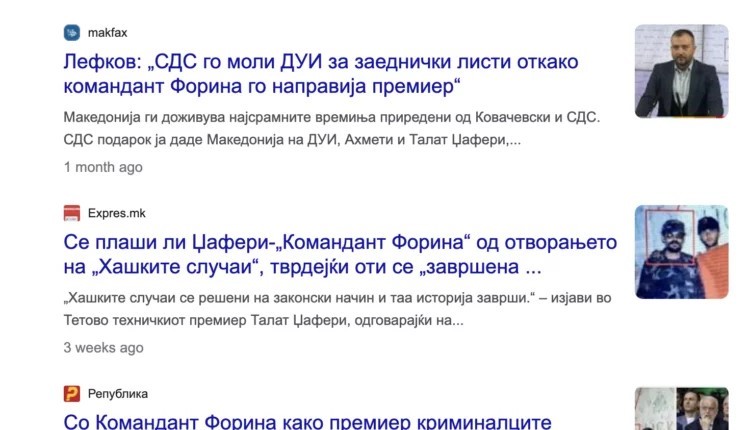
Articles from various media portals with headlines that refer to Talat Xhaferi, the current Prime Minister of North Macedonia, as” Commander Florina’’, criminal and terrorist with intentions to stir inter-ethnic hatred.
Media responsibility is crucial given the media’s extensive reach and credibility. However, examples in our country demonstrate that not every journalist adheres to professional ethics.
One notable example is Alfa Television, a national media outlet in the Macedonian language, which consistently publishes materials aimed at inciting inter-ethnic hatred. This trend appears to intensify, particularly during election campaigns.
On January 28, Talat Xhaferi, a member of the DUI, assumed the position of head of the technical government, marking the first instance of an Albanian holding the position of prime minister in the country. Xhaferi boasts a lengthy political career in North Macedonia. However, while this fact should be the primary focus of media reporting on his suitability for the role, certain media outlets have surpassed professional ethics. Instead, they exploit the situation to propagate hate speech to the public. An example of this can be seen in the media coverage of Talat Xhaferi published by Alfa Television.
Example 1 of Alfa Television inciting inter-ethnic hatred prior to elections:
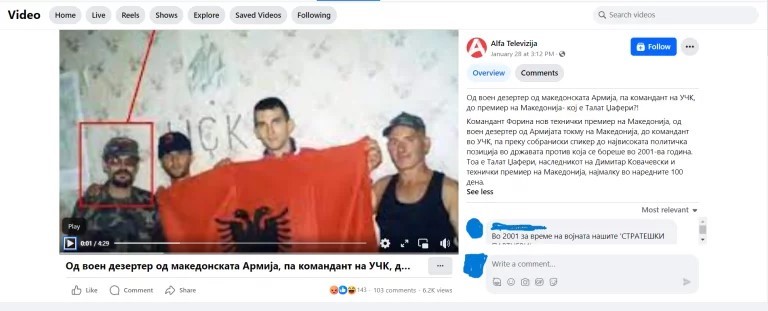
The explainer in the post again refers to the past of the current Prime Minister Talat Xhaferi, stating he is a military deserter from the army and later a commander in the UÇK who fought against the Macedonian security forces. Meaning he is a threat to the Macedonian society.
Despite the fact that tendentious headlines have no place in professional journalism, some national television channels continue to spread hate speech on ethnic grounds through such headlines, especially during election periods. An example of a headline with a clear intention to incite hatred towards Albanian politicians in the country is the following: “May God help Macedonia: Zijadin Sela, Ali Ahmeti’s last Trojan Horse”.
Example 2 of Alfa Television inciting inter-ethnic hatred prior to elections:
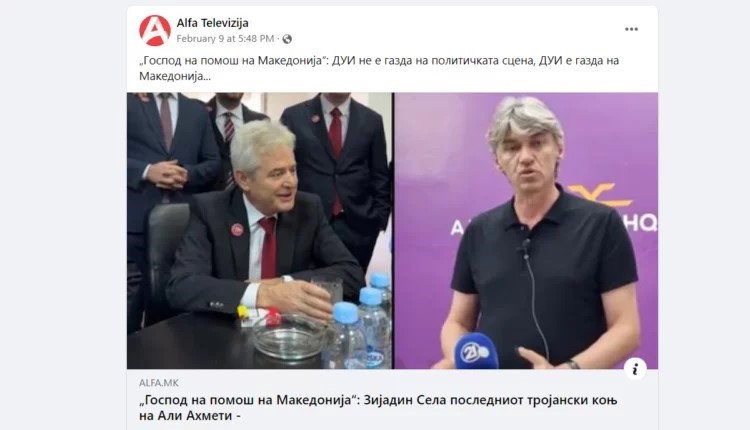
The explainer in the post refers to the political party DUI (The Democratic Union for Integration) the largest ethnic Albanian political party in North Macedonia. DUI is the third largest political party and because of its influence is being presented as a ‘’owner of the country’’.
In addition to political issues, the spread of hate speech can also be observed in reports on culture. Although culture should serve as a means of bridging gaps between diverse communities, when news in this field is broadcast without adhering to professional standards, it can lead to unnecessary conflicts. An illustration of how hate speech spreads in cultural reporting can be seen in the example below:
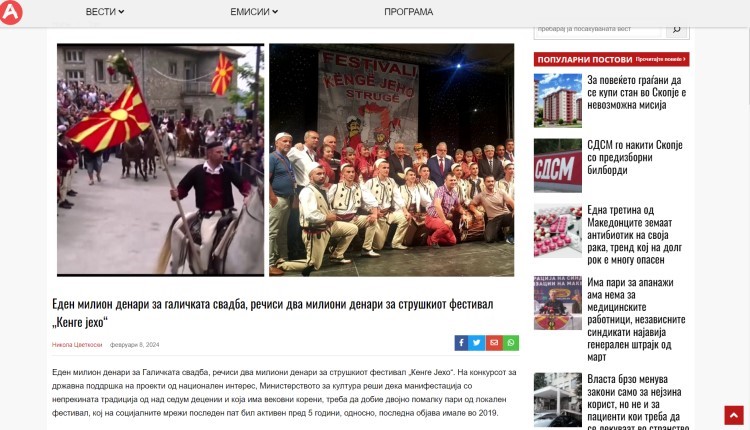
Reporting by Alfa Television – hate speech and culture news
The article writes about the amount of financial support that two different events are getting the ‘’Gaelic wedding’’ and the ‘’Kange Jeho’’ Struga Festival. Claiming that in a competition for state support for projects of national interest, the Culture Ministry decided that an event organized in Sruga, where the dominant population is ethnic Albanian, is worth more trying to provoke anger and polarization.
What follows these reports is an avalanche of comments where citizens vent a lot of anger and hatred towards their fellow citizens. Encouraged by such content, public comments on social networks where these materials are published range from the most banal insults and curses up to wishes for the death and extermination of an entire people.
According to Professor Sefer Tahiri, such propaganda is dangerous for our society, because in many cases it can also be an indicator of physical violence. “Ethno-nationalist propaganda is dangerous because it incites ethnic hatred, but it also leads to physical violence with ethnic or religious motives. The media must beware of the use of speech containing prejudices and stereotypes, but also of hate speech, because the media can encourage ethnic and religious tensions with disastrous consequences for society.”
According to data from IRI research, Alfa Television ranks among the top five most watched television channels in our country. So, the number of those who are influenced by the content this media broadcasts is very large. In cases where media outlets lack mechanisms for self-regulation and have no knowledge of how to determine the boundaries of ethics and professionalism, it is necessary, above all, to develop media literacy in our society.
“Firstly, the regulatory and self-regulatory mechanisms must function, the concept of media literacy must be developed, the role of the public radio-television service must be strengthened, and there must be training for journalists and editors,” Sefer Tahiri said.
According to the Code of Ethics of Journalists, “Freedom of the media is an inalienable right” is one of the fundamental principles of journalism, and every journalist should be fully aware that “the fundamental duty of journalists is to respect the truth and the right of the public to be informed”, as per Article 16 of our Constitution.
In the Code of Ethics of Journalists, a separate article outlines the obligations of journalists regarding reporting during election campaigns. Article 10 of the Code emphasizes the following: “Reporting on political processes, particularly elections, must be impartial, balanced, and fair. Journalists are expected to maintain professional distance from the political subjects they cover.”
Additionally, the Code provides a definition of professional reporting regarding discriminatory elements. All of this is done keeping in mind the importance of the media in the formation of public opinion. Article 10 of the Code states:
“Journalists shall not consciously create or process information that jeopardizes human rights and freedoms, shall not use hate speech, and shall not encourage discrimination of any sort (nationality, religion, sex, social class, language, sexual orientation, political orientation…).”
The presence of hate speech in the media is a global phenomenon with a very long history. The definition of “hate speech” was established by the Council of Europe Convention on Cybercrime in 1997. The term “hate speech” encompasses all forms of expression that “spread, incite, promote, or justify racial hatred, xenophobia, anti-Semitism, or other forms of hatred based on intolerance. This includes intolerance expressed through aggressive nationalism and ethnocentrism, discrimination, and hostility towards minorities, migrants, and people of immigrant origin”.
Author: Shefkije Alasani
This article was originally produced for and published by PortALB. It has been re-published here with permission.
Translation in Macedonian available here.
TROLL OF THE MONTH: Dr. Ferid Agani
March 12, 2024
The Balkan Troll of the Month is an individual, a group of individuals or a media outlet that spreads hate based on gender, ethnicity, religion, or other diversity categories. The Balkan Troll is selected based on hate speech incidents identified across the Western Balkans region.
In Kosovo, there has been a large debate and divide over the adoption of a draft law on reproductive health and medical-assisted fertilisation. The draft law covers a variety of topics surrounding reproductive health rights, including reproduction, information, and education on sexual and reproductive health alongside family planning.
The draft law was first voted in its initial reading in October 2023 with the second reading scheduled for February 22. However, the vote was consequently cancelled due to the lack of sufficient members present in the Assembly. A number of members from the Vetëvendosje (Self-determination) political party have been vocally opposed to the draft law, arguing that “a child has the right to know who his father or parents are”. Various other MPs have equally been opposed to the draft law.
Dr. Ferid Agani, a former Minister of Health and a doctor specialising in neuropsychiatry, is among the public figures expressing opposition to the draft law. During a recent debate on the show “Konfront” aired on KTV, which focused on the topic of reproductive health, Dr. Agani made an extremely harmful remark concerning single mothers. Agani claimed that women who decide to have children without a partner are “emotionally unstable”.
In response, journalist Saranda Ramaj, who participated in the debate, pointed out that it is shameful to call a woman without a partner ‘unstable’. She added: “science has made it possible for a man or a woman to enjoy parenthood. And now, to judge women, to consider them as having emotional problems because they want to have children, is more than problematic. It’s an insult to the women who are watching us. It is shameful to call a woman without a husband emotionally unstable.”
A woman should have the autonomy and choice to decide to have a child regardless of whether or not she has a partner. Commenting and labelling a woman who is a single mother as “emotionally unstable” is extremely sexist, hateful, and harmful. Furthermore, a doctor, especially one specialising in neuropsychiatry, labelling women as “emotionally unstable” perpetuates harmful stereotypes, undermines their autonomy, and disregards their agency. Dr. Ferid Agani, a former Minister of Health who held a highly respectable and important position within the Kosovan government and society, should not be using his voice and platform to spread such harmful rhetoric.
TROLL OF THE MONTH: Professor Biljana Vankovska
February 26, 2024
The Balkan Troll of the Month is an individual, a group of individuals or a media outlet that spreads hate based on gender, ethnicity, religion, or other diversity categories. The Balkan Troll is selected based on hate speech incidents identified across the Western Balkans region.
Early this year, a group of people broke into the air traffic control centre (M-NAV) at Skopje airport in North Macedonia and verbally and physically attacked the controllers on duty. Following this incident, NATO, the EU, and foreign embassies in the country reacted, and the leadership of the centre was soon replaced.
President of the Trade Union of Air Traffic Controllers, Aleksandar Tasevski, stated that the employees were attacked because they supported the union’s protest against employing people based on party affiliation.
Four men are suspected of the attack, including the coordinator of the Albanian party DUI, Bekim Neziri, who is an adviser to the director of air traffic control and a former minister of economy.
University professor and author Biljana Vankovska commented on this case on her Facebook profile. She stated “Someone needs to fly away from here – on kicks! And not to celebrate his birthday in a government ministry!” She continued by saying that this is a glove thrown especially in the face of our fellow Albanians! Let’s see if they are willing to put up with such a threat to public safety and common sense!”
Even though it is her right to criticise such acts of violence, Vankovska insinuated that Albanians should react and be held accountable for the actions of individuals and party representatives. Blaming an entire ethnic group for the actions of individual persons is unfair and can be quite dangerous, especially in a multiethnic country such as North Macedonia. Diverting the responsibility from perpetrators and institutions to the Albanian minority is extremely harmful for the democratic values and relations between different ethnic groups in the country. Furthermore, the rhetoric perpetuated by Biljana Vankovska can be harmful to already fragile interethnic relations in North Macedonia, which hampers peaceful co-existence.
This is not the first time Professor Vankovska used such inflammatory rhetoric. A university professor spreading ethnic hate on social media undermines academic values, erodes trust, and fosters a divisive atmosphere contrary to the principles of higher education. Furthermore, this only serves to spread ethnic hate amongst members of society.
Monthly Monitoring Highlights January: racism, ethnic hatred and gender violence
February 23, 2024
Throughout the month of January, the RDN monitoring team has detected a range of hateful narratives and discourse. This month, we have seen hatred based on ethnicity, race, and gender alongside genocide denial.
Racism in Serbia
In Serbia, an Instagram account started posting photos of Black people in Serbia, taken in public without their consent in October last year. This account has garnered increased attention lately, with reports of its hateful content prompting warnings from users, alongside a surge in followers. The description of the account itself reads: “DM if your picture is posted to be removed *(this account is satire)*.” However prior to the account becoming more visible, followers were asked to send in pictures of Black people “with location and time”.
In this way, the creator not only promoted racism and harassment of Black people in public, but also potentially posed a threat to their safety. In addition to this, the creator used racist “jokes”, such as creating fake giveaways of bananas and KFC food, both anti-Black racist tropes. Other posts included jokes that perpetuated anti-Black tropes, like one featuring a woman in a drugstore with the caption “banana or watermelon shampoo?” An overwhelming number of racist comments could be found under these posts as well, including some that called for violence against Black people, including “How much does this one cost?” and “Where can I buy?”
In response to this, people mass-reported the account and helped to raise awareness about it. This included many Instagram users tagging the Serbian Ministry of Internal Affairs, CSOs, activists etc. Moreover, MDI filed a complaint to META through the Trusted Partner platform against the Instagram account. Shortly afterwards, META responded that they had acted and removed the account. An account like this is extremely harmful and racist. Racism is not acceptable on any grounds and holds no justification. Such accounts perpetuate harmful stereotypes and contribute to division and discrimination, undermining the values of equality and respect for all individuals. Eventually, they can threaten individuals’ safety.
Ethnic hatred in North Macedonia, Kosovo, and Montenegro.
In North Macedonia, university professor Vankovska posted a Facebook status commenting on recent events at the flight control centre where a group of individuals entered and began attacking employees. The professor’s post was written in an ethnically discriminatory manner whereby she begun to insinuate that the incident took place because of the Albanians who live in North Macedonia. She even went as far as to say that now is the time that they show who they really are, claiming that somebody should ‘fly away’, in other words referring to the Albanians and the Albanian party DUI.
This is not the first time that Professor Vankovska has spread nationalistic sentiments and ethnic hatred. This instance is just one of several where she attempts to shift the blame for systemic issues in the country onto the Albanian minority. A university professor spreading ethnic hate on social media undermines academic values, erodes trust, and fosters a divisive atmosphere contrary to the principles of higher education. Moreover, it exacerbates the spread of ethnic hatred within society, particularly in ethnically diverse nations.
In Kosovo, on the occasion commemorating the anniversary of the massacre in the village of Račak, the President of the Committee for Kosovo and Metohija, Milovan Drecun spoke out. The Račak massacre in January 1999 was perpetuated by Serbian security forces in response to Kosovo Liberation Army actions. NATO’s intervention, which included bombing Serbia, followed in the same year.
Drecun stated that it is incomprehensible that “for 25 years there has been insistence on presenting lies as truth and blaming Belgrade for a non-existent massacre”. This statement, as well as statements from other officials, were reported by Kosovo Online. Drecun took the opportunity to criticise the then head of the OSCE Verification Mission William Walker, stating that in a meeting with him and a British general, he saw “how willing these people are to manipulate what happened” and that Walker arrived first in the village of Račak, before journalists, and prepared the “scenario”.
Denial of genocide, massacres and war crimes is unfortunately common in the Western Balkans region. Every year, the commemoration of the Račak massacre is accompanied with denial of the events having taken place including accusations of such massacres being fabricated and fake. Denying massacres and historical events perpetuates dangerous cycles of ignorance and unacceptance, as well as injustice and harm to all those who fell victim to such atrocities. Moreover, it is imperative that politicians, as public figures entrusted with professional and moral responsibilities to represent the people, refrain from making public statements that deny the occurrence of atrocities. Such actions undermine efforts to acknowledge and address historical injustices.
In Montenegro, Dragoslav Šćekić, Vice-President of the Government of Montenegro and Minister of Sports and Youth, recently commented on the success of the Montenegrin handball players. He claimed that one should not celebrate their success, furthermore, implying that the official flag of Montenegro should not have been shown. He explained how the ‘tricolor flag’ was and will be preserved. The tricolor flag has been traditionally used to represent a Montenegrin and Serbian joint state thereby undermining the independent state of Montenegro.
Montenegro is an independent state, which has the right to self-determination and public recognition. Denying its independence is harmful and insulting to all those people who live within Montenegro and are part of its statehood. A public official such as Šćekić should stand for the rights and needs of the population of the country he represents. Remarks that undermine the sovereignty and independence of a nation pose grave harm to its populace, eroding the very foundation of their collective autonomy and self-determination.
Genocide denial in Bosnia and Herzegovina
In Bosnia and Herzegovina, Milorad Dodik, president of Republika Srpska, attended a celebration in Banja Luka held on the unconstitutional Day of Republika Spriska. On this occasion, he denied genocide and furthermore, glorified war criminals claiming, amongst other things, that “Karadžić and Mladić were the people who led Republika Srpska, and you will not convince us that the Serbian people had a genocidal or any criminal urge. We fought for freedom”.
Both Karadžić and Mladić have been convicted of genocide, crimes against humanity and war crimes by the International Criminal Tribunal for the former Yugoslavia. Glorifying war criminals is a serious form of hate that not only dishonours the memory of the victims, but also perpetuates a culture of denial of justice. Such glorification normalises horrific acts of violence, undermines reconciliation efforts, and threatens the stability and peace of societies recovering from conflict. Furthermore, genocide denial and other war crimes, including the glorification of war criminals, are prohibited in Bosnia and Herzegovina since 2021. A recent publication by the Srebrenica Memorial Centre – ‘2022 Srebrenica Genocide Denial Report’ – found that during the monitoring period (May 2021 – May 2022), a total of 327 actors had been identified as publicly denying the Srebrenica Massacre. “Among these actors, the most prolific denier of genocide was BiH Presidency Member Milorad Dodik.” Despite genocide denial being illegal in the country, reports on genocide denial have been sent to the prosecutor’s office,but so far no one has been punished for it.
Gender violence in Albania
On Big Brother VIP Albania, a participant by the name of Klodian Duro – an Albanian former football player – was recently eliminated. This was in response to his admission of abusing his wife during one of the episodes. His elimination from the show was most certainly a positive step towards addressing and condemning such behaviour. Nevertheless, despite Duro being removed from the show, it is noteworthy to mention that Top Channel, one of the primary organizers of Big Brother VIP Albania, did not issue a public statement explicitly denouncing violence and promoting a zero-tolerance stance for such actions.
Furthermore, following his expulsion, several news media outlets continued to report on the incident. They not only revealed details of the case but also shared photos of his ex-wife. Rather than fostering a constructive conversation and critique about a TV channel and a program with millions of viewers accepting a participant who was previously convicted of domestic violence, the public witnessed the media playing a role in re-traumatising the victim and completely disregarding her privacy.
This incident reflects the lack of adherence to professional journalistic standards and ethics. This is a prime example of how the media, rather than using their platform to hold others accountable for wrongdoing and educate their audience on the serious topic of domestic violence, is more concerned with clicks and views.

ADVERTISING INEQUALITY
February 22, 2024
ADVERTISING IN KOSOVO CONTINUES TO PERPETUATE GENDER INEQUALITY.
The gentle clink of a spoon against a tiny teacup accompanies the sight of a Turkish teapot boiling on the stove. A door opens and a man enters the house. Over 10 people are gathered in the living room waiting for him, a woman with a smile on her face and a tray full of teacups comes down from the kitchen to serve them.
While everyone is sitting, dancing to the music and drinking their tea, the woman who serves them is sitting separated from the rest. One man turns to another and says, “Uncle, I almost forgot, I came to arrange a marriage,” the camera pans to the woman with the tray, implying that the man had come to marry her to someone.
This scene is from an advertisement for tea. Such advertising, which reduces women to servants and promotes the idea that men determine women’s fate, is considered at least outdated by many, and sexist by others. Such videos and other similar forms of advertising are still prevalent on television, radio, billboards and elsewhere.
Before the rise of social networks, these advertisements were mainly on the TV and radio. Now, they are everywhere, as different companies flood social media to promote their products or services.
Over the years, social media users in Kosovo have been exposed to advertisements using slogans such as “make your husband yours.” In these advertisements, beauty salons suggest that if women do their hair and wear makeup, her husband will be more responsible. On March 8, International Women’s Day, it is common to see household products like vacuum cleaners, clothing irons, and other items on sale as a way to celebrate women.
Recently, an international brewing company began advertising its products through sexually suggestive expressions on billboards and social media. These expressions included a play on words in Albanian with sexual connotations. Meanwhile, “Show your girlfriend what it’s like waiting while shopping,” was written on a shop that sells tires and other car parts.
A social media account for a serum which is supposed to grow eyelashes and eyebrows posted an advertisement telling women: “Of course he ignores you, have you seen your eyelashes?” This slogan was accompanied by a photo showing a man staring at the woman in front of him.
The list of similar advertisements is long. Many of them intentionally or unintentionally perpetuate gender roles, rigid expectations about how women and men should behave. This makes efforts for an equal media landscape more difficult.
Facing a flood of advertisements
Successful advertising of products or services is often equated with sales and therefore profit for the company or business that produces it. So, advertising is essential for businesses. This is evident in the amount of money spent each year on advertising and the exponential growth of advertising and public exposure to advertisements.
According to German data collection platform Statista, 522.5 billion dollars was spent worldwide on advertising in 2021. Projections suggest that this figure will increase yearly and will reach $836 billion by 2026 — a 60% increase over 2021. This increasing investment in advertising has also increased the number of advertisements. For example, in the 1970s, the average American was exposed to about 500 advertisements per day. Today, the number is around 5,000. According to a University of Southern California infographic, an American adult now sees around two million advertisements annually, while a child sees around 20,000.
With their wide reach and distribution, advertisements do not just promote products but also possess the power to spread messages, evoke emotions and influence behavior. These advertisements often simulate everyday life, trying to influence and connect with the audience.
WHEN IT COMES TO ADVERTISING THAT PERPETUATES SEXIST AND MISOGYNISTIC PORTRAYALS, ORGANIZATIONS STRIVING TO COMBAT GENDER INEQUALITY OFTEN FIND THAT BUSINESSES SHOW NO WILLINGNESS TO SUPPORT THE CAUSE.
However, for many groups, such as women, the routines of daily life should be challenged rather than reproduced. Instead, many businesses capitalize on existing gender inequality in their advertising by portraying women as caregivers, oversexualizing their bodies, perpetuating narratives that place women at a disadvantage and reinforce rigid gender role expectations.
Advertising that includes sexist content harms women’s well-being and normalizes misogyny and violence. As a result, it also fosters an environment conducive to information disorder and gendered disinformation — a term that is often used regarding disinformation aimed at discouraging women from public participation. In a broader sense, gendered disinformation refers to spreading disinformation about people based on their gender, often employing gender stereotypes as means to do so. Additionally, misogyny, homophobia and transphobia are also common features of gendered misinformation often present in how businesses advertise in Kosovo.
When it comes to advertising that perpetuates sexist and misogynistic portrayals, organizations striving to combat gender inequality often find that businesses show no willingness to support the cause.
Eurisa Rukovci, founder of the feminist online magazine Grazeta, considers businesses and their advertisements a reflection of society.
“Companies and businesses do not develop on an island isolated from society, nor do they live closed off from it. I don’t expect business advertisements to take on an emancipatory mission for gender equality, but they should at least be criticized when they go to the extreme of solidifying [traditional] gender roles,” said Rukovci.
However, while many advertisements imitate reality, they also play a role in shaping reality. According to Lindita Tahiri, professor of English Language and Literature and Journalism at the University of Prishtina, advertisements influence our lifestyle and so have an even more radical impact.
“You are walking on the street, you see the advertisements, whether on the bus, in shops, on the advertising billboards on the streets, even at home on the TV. It’s not that you pay much attention, but if 365 days each year you are exposed to the same scenes of stereotypes, it starts to become natural for you and then unconsciously it becomes our lifestyle,” said Tahiri.
According to Leonida Molliqaj, executive director at the Center for Information, Critique, and Action, advertisements’ pervasive nature enables them to communicate messages about beauty standards, societal expectations about women’s behavior and the characteristics women should have. Thus, depictions of women in this type of advertising influence whether women are accepted or excluded in society and become a means of measuring status and success.
“You think that a certain cream will remove your wrinkles, and your main concern is ‘do I have enough money to buy that cream,’ instead of thinking, ‘Why is this pressure being placed on me and should I think this way about myself and my body? Should women always look beautiful, what do I think about beauty?’ These questions are rare because this type of marketing is very powerful and very abusive. They serve it to us as an absolute truth,” said Molliqaj.
Sexist content in advertisements is not a problem isolated to Kosovo. Around the world, various initiatives and mechanisms have been established to encourage businesses and advertising agencies to pay closer attention to the messages they convey and their societal impact. Now, the new concern has become sneaky sexism.
Sexism is hidden in plain sight
Since advertising is such a significant industry, Kosovo has many marketing agencies that work with businesses to develop marketing strategies.
For Molliqaj, advertising agencies bear much of the blame for reproducing sexist content through advertisements in order to sell their products.
“Their main goal is to go viral, which can lead to increased sales if they adhere to these traditional forms of marketing. It’s not that they are unaware of their advertisements’ impact, but they realize that ‘it’s easier to make an advertisement that reflects societal realities.’ So, it is much easier to sell flour if [the advertisement depicts] a woman cooking a pie rather than a man cooking a pie,” she said.
Meanwhile, according to Arian Rexhepi, director and founder of the Koperativa advertising and communication agency, which has been active since 2004, the concepts and final decisions for advertisements primarily come from businesses. However, there is room for change and suggestions from the advertising agencies. In his 20 years of experience in creating commercials, there have been occasions when he has objected to ideas that promote sexism or perpetuate gender inequalities. According to him, it is important for companies to uphold certain beliefs and values when deciding on the work they accept or reject.
“Each company must have some social responsibility, because that improves the communication culture in general,” said Rexhepi. “It is in the interest of the whole society to have an open-minded approach, not to create advertisements that assume women must be in the kitchen and men must be working in the garage.”
According to Rexhepi, the advertising industry has started to be more cautious, with noticeable changes in overall professionalism and communication. According to him, this has happened due advancements in technology and innovation that have had a significant impact. Now, there are numerous and fast public reactions, providing businesses and agencies with opportunities to develop professionally.
Even according to Tahiri, advertisements have undergone a significant transformation compared to the past. Now, advertisements are much more sophisticated, crafted by teams of experts and are more aesthetically and artistically made. They are designed to convey more intelligent messages and benefit from more financial resources.
Despite these changes, the new concern is that advertisements continue to perpetuate sexism in a more subtle manner. In 2021, Philippa Roberts and Jane Cunningham, founders of PLH research consultancy, published the book Brandsplaining: Why Marketing is (Still) Sexist And How To Fix It. The book presents findings of 15 years of research during which they spoke to 14,000 women from 14 countries around the world to understand their thoughts about marketing.
In this research, the authors utilize the term sneaky sexism or hidden sexism. They found that today, 25% of advertisements featuring women depict them in a sexualized manner, while in 85% of these advertisements women are presented within the “good girl” narrative. This term describes the ideal woman as seductive, passive, young, thin and white.
Cunningham and Roberts argue that the issue of sexist advertising persists and that rather than disappearing, it has changed form.
In Kosovo, various initiatives actively monitor and publically denounce sexist content on a daily basis. Their work is particularly significant given that in Kosovo, unlike in many other countries, there is no specific institution or mechanism dedicated to addressing advertising content.
The European Advertising Standards Alliance (EASA) operates at a continental level. EASA consists of 41 organizations. These organizations represent 27 self-regulatory bodies for advertising from Europe, along with 13 organizations involved in advertising, such as advertisers, agencies and media entities. One of EASA’s primary focuses is to ensure responsible portrayal of gender in advertising.
There are two relevant bodies overseeing the media in Kosovo, but their scope extends beyond advertising specifically. The Independent Media Commission (IMC) is an independent body responsible for regulation, management and supervision of broadcasting in Kosovo. The IMC licenses public and private broadcasters, defines and implements broadcasting policy, and regulates rights, obligations and responsibilities of providers of audio and audiovisual services. The IMC also monitors advertising content. Complaints about sexist advertisements are addressed in accordance with the relevant legislation. This legislation consists of Regulation for Commercial Audio and Audiovisual Communications, Regulation for the Protection of Children and Minors in Audio and Audiovisual Media Services and the Code of Ethics for Media Service Providers in the Republic of Kosovo.
“We have received several complaints about advertisements, which we have decided to not broadcast or to edit,” said Arsim Dreshaj, officer for public communication at the IMC. Dreshaj added that until now, there has been no need to pursue legal proceedings and impose fines on media outlets that have broadcast non-compliant advertisements. This is because once the media outlets were notified by the IMC, they stopped broadcasting the non-compliant material.
The self-regulatory body for the press is the Press Council of Kosovo (PCK), which consists of 40 regular members, newspapers, online portals and news agencies. The PCK operates with the Press Code and aims to protect citizens from false articles and to protect journalists from unsubstantiated complaints.
When it comes to written advertisements, citizens can file complaints to the PCK if advertising content in media is not clearly distinguished from editorial content or if advertising content contains language that incites hatred. The PCK says that it has not received any complaints.
Meanwhile, one of the independent initiatives dedicated to gender issues in advertising is Tung Seksizmit — a subsidiary of the French association Pépite Sexiste. Tung Seksizmit provides a platform for consumers to report instances of sexism and stereotypes that are spread through marketing. Tung Seksizmit operates in both Albania and Kosovo with the aim of raising awareness about sexism and gender stereotypes. The organization seeks to engage with companies that, whether consciously or unconsciously, use sexist language or images or gender stereotypes to sell their products.
Since its founding in 2020, Tung Seksizmit has issued calls to over 100 companies regarding advertisements containing sexist content.
“Companies must understand that nudity, hypersexualization, gender-based price gaps are becoming more and more unacceptable to customers. Now, this may even lead to boycotts, as has happened to some international firms,” said Tung Seksizmit via email.
Tung Seksizmit maintains continuous communication with the public, whose engagement provides Tung Seksizmit with opportunities to expand its presence and identify sexist content, especially sneaky sexism in advertising. “We are lucky to be in dialogue with a tolerant, curious and engaged community about gender issues. Often they are the ones who send us the materials and appeal to sexist companies,” said Tung Seksizmit.
Molliqaj and Rukovci also see a difference in the way the public reacts and opposes. Meanwhile, Tahiri thinks that change should be sought early and in the way education is organized, from the very beginning.
“I think that if society wants to see how many sexist stereotypes exist, it should start from daycare, with which toys children play with, which fairytales they hear,” said Tahiri.
Author: Fatjona Rudi
Feature image: Majlinda Hoxha / K2.0.
This article was originally produced for and published by Kosovo 2.0. It has been re-published here with permission.