Author: RDN

Troll of the Month: Instagram Page Deportacija
October 7, 2025
The Balkan Troll of the Month is an individual, a group of individuals or a media outlet that spreads hate based on gender, ethnicity, religion, or other diversity categories. The Balkan Troll is selected based on hate speech incidents identified across the Western Balkan region.
An anti-migrant Instagram page Deportacija (translated as deportation), gained significant traction in September, now boasting over now over 12,000 followers. The page spreads hate against migrants, often based on disinformation.
The page had four times fewer followers until it published a viral post about ” a drunk Pakistani hijacking a bus in Niš and heading towards Pakistan”. A fact-checking platform run by KRIK (Crime and Corruption Reporting Network), Raskrikavanje, flagged this and other similar posts as misleading and based on disinformation. Niš police did not respond with information about this case, nor did the media report on it.
The page, whilst being a source of disinformation and hate itself, also serves as a breeding ground for further hostility and animosity. Posts usually share information surrounding violent crimes, mainly in the US, Canada and Western Europe, claiming they were caused by migrants. Raskrikavanje debunked a few of these posts and flagged them as misleading. In these posts, Deportacija often calls people to express their opinion on these cases, which results in hateful speech in the comment section, varying from claims about migrants being violent, to blatant racism and Islamophobia, as well as open calls to violence against migrants, refugees, Muslims and people of colour. Some posts include videos of people of colour or Muslims littering, protesting or praying. One video of a prayer in a park reads, “This is Norway. What do you notice?”.
As Raskrikavanje reports, there are also bizarre claims by the page, such as in one of their videos with the caption “a fake asylum seeker (migrant) cooks himself a cat for lunch in the middle of the street”, alongside a viral post about foreign citizens receiving work permits in Serbia. According to the Commissariat for Refugees and Migration of the Republic of Serbia, at the end of 2024, around 50.000 foreigners in Serbia had a work permit, more than half of them Russian and Chinese citizens. However, anti-migrant messages on foreigners working in Serbia mainly focus on those from South Asia and the Middle East, Muslims and people of colour.
In one of its earliest posts, Deportacija informed followers that illegal entry is a deliberate violation of the law and a threat to state sovereignty. Deportation, it stated, should not be seen as a policy choice but as a “duty towards our country and our children.” Pages like these, which spread disinformation and baseless accusations, are dangerous in their attempt to fuel hate and division in society while targeting already vulnerable communities. Furthermore, the analysis carried out by Raskrikavanje documenting multiple fabricated posts and baseless accusations, underscores the page’s role as a powerful source of hate speech and disinformation, with the potential to fuel both online and offline hostility towards migrants. It is the role of the platform hosting such content, in this case, Instagram, to remove these pages, which clearly violate their community standards on several accounts. It is, furthermore, the role of users to report such pages to have these removed rather than feed into these narratives and spread hate.
Breaking Words, Building Bridges: Regional Experts Warn Against Rising Polarisation in the Balkans
October 1, 2025
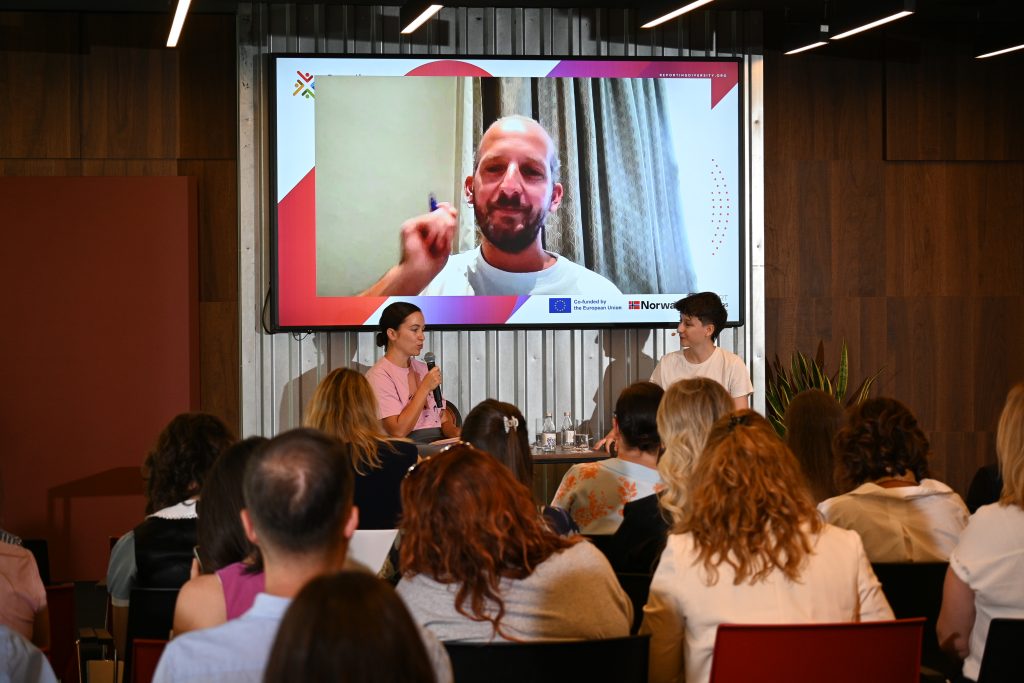
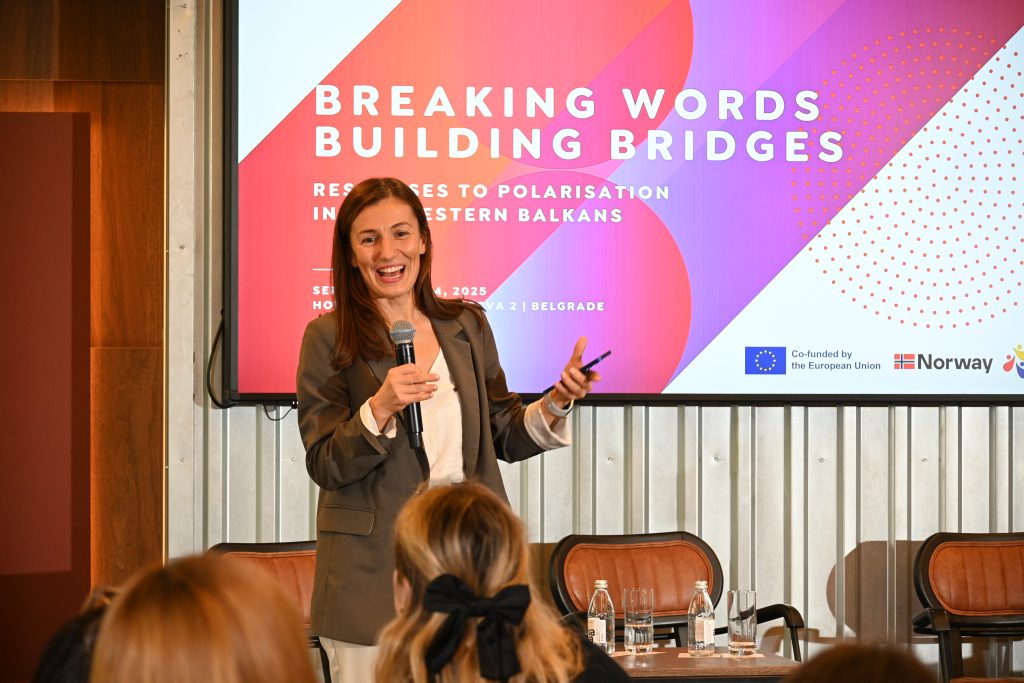
Hate speech in the Western Balkans is becoming more complex, layered, and increasingly used as a political weapon, according to new media monitoring reports presented at the regional conference Breaking Words, Building Bridges: Responses to Polarisation in the Western Balkans held in Belgrade, Serbia.
The Reporting Diversity Network (RDN) showcased its third set of reports covering January 2024 to July 2025 highlighting persistent hateful and harmful narratives, especially those targeting gender and ethnicity.
In Serbia, the latest findings show that hate speech has not only intensified but also diversified in the wake of the rising political crisis. More than 40% of recorded cases targeted overlapping identities, such as political opponents who were simultaneously attacked on the basis of gender or ethnicity. In Albania, nearly half of all cases targeted gender, followed by hate against journalists and political opponents. Ethnic hate remained dominant in Bosnia and Herzegovina, Montenegro, North Macedonia and Kosovo, showing still strong ethnic divides across the region. Across the region, main sources of hateful and harmful rhetoric remain political figures, media outlets and social media users.
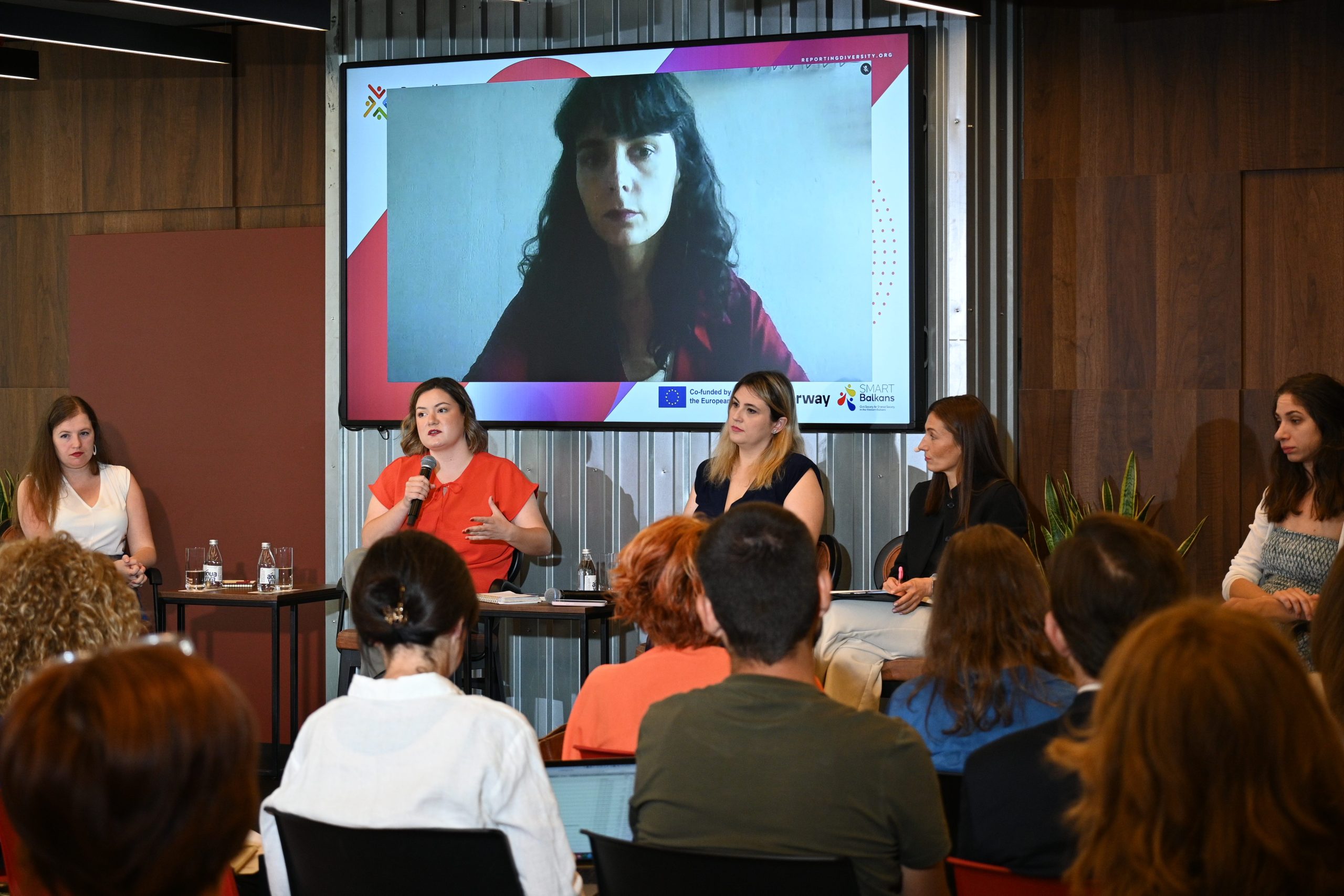
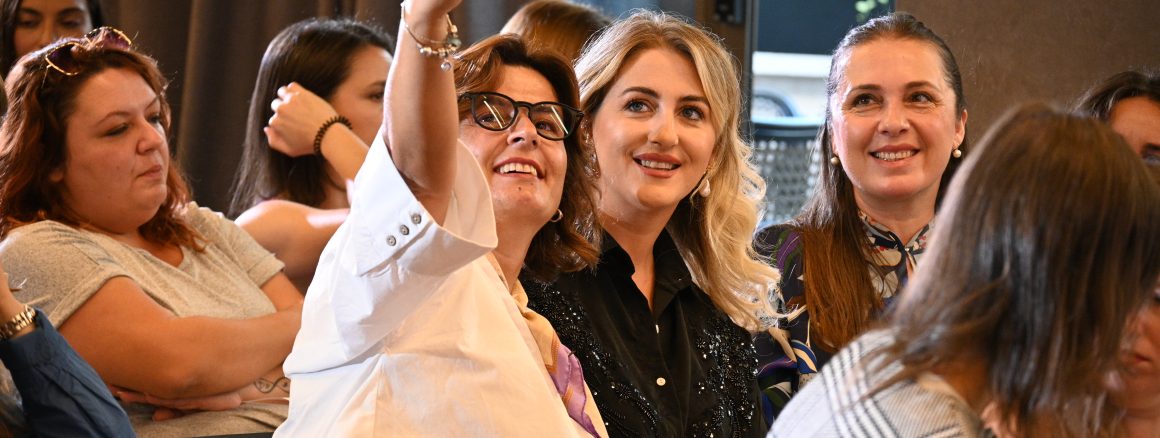
At the two-day regional conference hosted by the Media Diversity Institute Western Balkans, journalists, media experts, and civil society representatives from across the region gathered to confront the growing challenges of hate speech, disinformation, and political divides.
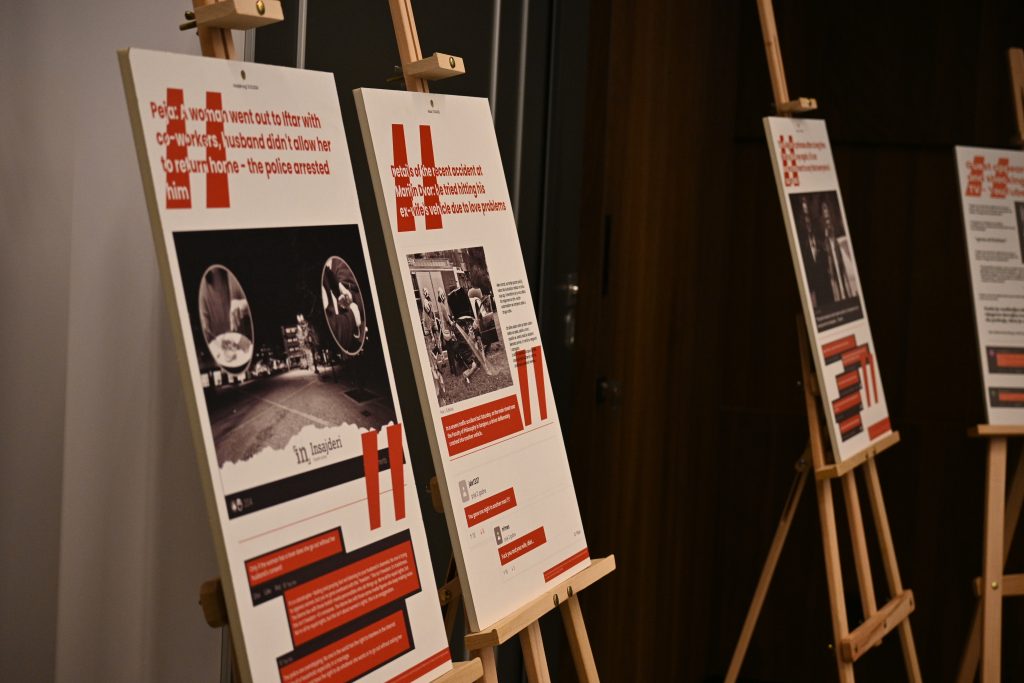
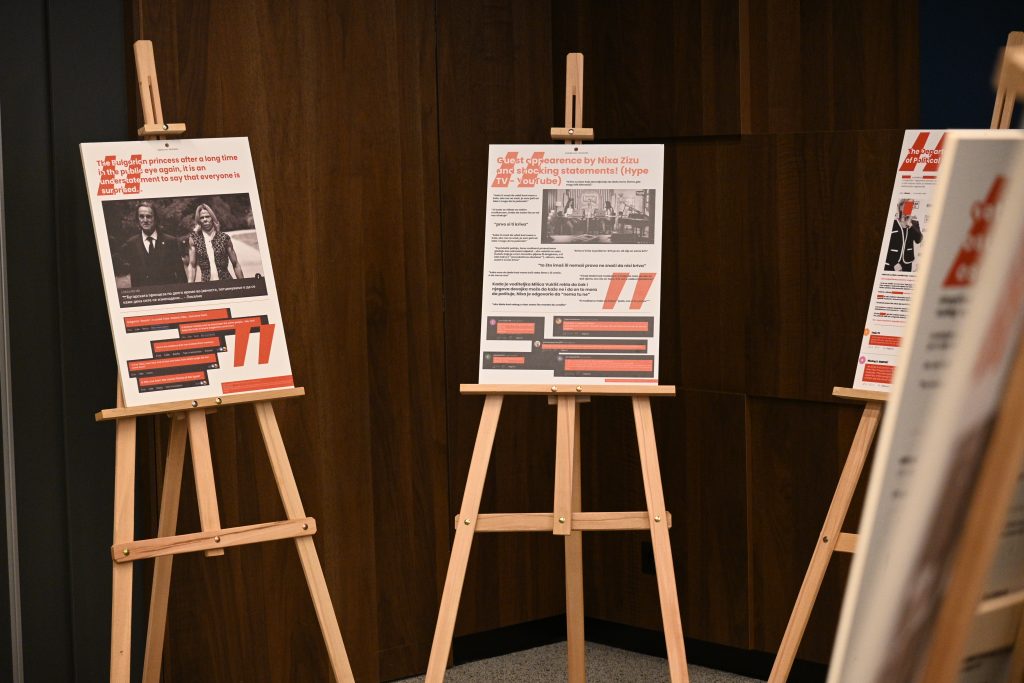
The event opened with an exhibition on gender hate speech in the media, curated by artists Una Mazrak and Ismar Žalica based on RDN findings. Panels brought together leading voices from across the region who warned that polarisation in the Western Balkans is deepening, fueled by disinformation and amplified by insufficiently regulated social media platforms.
Sessions also focused on media regulation, representation as a countermeasure, and the dangers faced by journalists reporting in increasingly hostile environments. A panel with Iva Parađanin and Dardan Hoti, both running platforms that provide space for marginalised voices, discussed why representation is important.
The second day opened with discussions on inter-ethnic divides and how to foster cooperation among young people across the region. A highlight was the workshop “Words Break Bones” led by linguist Anna Szilágyi, which trained participants to identify and counter scapegoating narratives, a tactic increasingly used to fuel fear and division.
Participants agreed that urgent action is needed to challenge harmful narratives before they take even deeper roots. The conference closed with a call for solidarity across borders, sectors, and communities in defending inclusive, democratic discourse.
Monthly Highlights August: Ethnic discrimination, religious hate and hatred towards politicians and journalists
September 10, 2025
During the month of August, the RDN monitoring team detected a range of hateful narratives and discourse fuelled by religious hate, ethical tensions and hatred towards politicians and journalists.
Religious hate in Bosnia and Herzegovina
Sanin Musa, leader of the “Faith. People. State.” movement and president of the Bosnian People’s Party, announced the arrival of 1,000 Muslims in Široki Brijeg to perform prayers at the same site where a Muslim woman had earlier been disturbed while praying in public. However, the police banned the gathering in the majority Croatian Catholic town, arguing the initiative had “a certain political connotation” beyond religious motives.
Several Herzegovinian portals and Facebook pages reacted with hostile, ethnically charged, and openly anti-Muslim rhetoric. One example includes Hercegovački portal who wrote on Facebook saying: “What shall we do, my Herzegovinians!? Sanin Musa announced a mass prayer in Široki Brijeg. He says he is coming to defend Islam” and later added: “In Široki Brijeg, prayers have always been and will always be made only to JESUS in the Most Holy Sacrament of the Altar. AMEN!!!” Another portal, Vijesti Široki Brijeg, wrote a post which claimed: “Sanin Musa announced he is coming to pray in Široki Brijeg on Thursday. Just on the eve of the holiday. In Bosnia and Herzegovina, nothing happens by accident!” Meanwhile, the Domaljevac Diaspora page warned: “This is how wars start… This Musa wants to become popular… I don’t believe he will go to Široki Brijeg… He announced the arrival of 1,000 Muslims. Police are banning these gatherings… Musa should be arrested immediately.”
This type of rhetoric risks fuelling interethnic mistrust, deepening religious divides, and escalating local conflicts in a country still marked by the legacy of war. Rather than spreading hateful comments, posts and fuelling religious tensions, the media should use their platform to provide context, facts and unbiased information to the public.
Unethical journalism in Albania
An article published in media portal Prapaskena presented a a deeply concerning narrative related to the recent closure of News 24 television. At its core, it focused on alleged tensions between the station’s owner and central government authorities. However, it also goes far beyond reporting by engaging in inflammatory commentary, personal attacks, and the dissemination of hate speech.
One of the most serious concerns is the prejudiced and dehumanising language used throughout the piece, particularly in reference to the Albanian Journalists’ Association (AGSH) and its board members. The publication employs explicitly derogatory slurs traditionally aimed at the LGBTQ+ community, misappropriating them in a mocking and intentionally offensive manner. This framing not only reflects blatant homophobia but also seeks to discredit and delegitimise the association’s advocacy efforts by associating them with stigma and public ridicule.
Rather than offering any substantive critique, the text ridicules AGSH’s defense of media workers’ rights and implies that its members are acting out of self-interest or political alignment. It also accuses the association of manipulating public discourse, suggesting that its engagement in issues such as the Gaza conflict or the awarding of journalism prizes is performative or unethical. These claims are made without evidence and are presented in a sarcastic and hostile tone intended to undermine the integrity of the individuals and organisations involved.
Equally problematic is the broader rhetoric used to describe civil society actors in Albania. References to “various associations gathering to extinguish their internal fire” are clearly intended to belittle and dismiss legitimate advocacy work, framing such efforts as self-serving and disconnected from public interest.
The publication’s conclusion is particularly alarming, marked by intensified hostility and language that borders on incitement. It promotes a climate of contempt toward independent journalism, discredits the work of professional media organisations, and reinforces harmful social prejudices posing real risks to freedom of expression, press integrity, and the personal safety of journalists.
In its entirety, this is not a journalistic piece, but a targeted attempt to intimidate and publicly shame those who stand for press freedom and democratic accountability. The use of discriminatory language, especially slurs historically weaponised against LGBTQ+ individuals; demands urgent condemnation and institutional response.
Ethnic tensions in North Macedonia
In North Macedonia, two sports matches took place in the month of August which left an impression. The first involved a basketball match in Kumanovo between Macedonian and Romanian teams. During the match, a group of fans chanted offensive anti-Albanian and nationalistic slogans, prompting a prosecutor’s investigation and strong political reactions, while social media amplified extreme statements and threats targeting Albanians and political leaders.
The second match was a football game between teams Shkendija and Karabakh in Skopje. At the Shkendija–Karabakh football match, fans chanted nationalist and irredentist slogans such as “Greater Albania,” “Ilirida,” and “Chameria,” leading authorities to open investigations for public order disruption and incitement of ethnic tensions.
As a result of both matches, hate speech and commentary surged on social media including calls for ethnic exclusion, accusations of double standards and hate. Comments like these only serve to further fuel inter-ethnic polarisation. In a country like North Macedonia, characterised by its ethnic diversity, social harmony remains fragile. During high-stakes moments such as football and basketball matches, where tensions run high and competitive emotions intensify, hate speech and inter-ethnic conflicts can easily erupt. When these incidents spill over into online spaces, they serve to perpetuate and amplify existing divisions within society.
Hate towards politicians in Montenegro
At the end of July, the President of the Republic of Montenegro, Jakov Milatović, once again brought to Parliament the proposal to amend the Law on Property Tax. The President explained that certain articles of the proposed amendments are not compatible with the Constitution of Montenegro, the Law on Tax Administration, and the Law on Protection of Competition.
In reaction, a few days later, the Office of President Milatović announced that the Deputy Prime Minister and Minister of Economic Development, Nik Đeljošaj, had sent private messages that were inappropriate and contained threats. The accusation included that the Deputy Prime Minister claimed that the President of the State refused to sign the law “due to godfatherly ties with Nebojša Vuksanović, in order to obtain personal gain for himself and for Vuksanović.” In reaction, the Deputy Prime Minister and Minister of Economic Development Nik Đeljošaj rejected as untrue the claims by the Office of the President of Montenegro, Jakov Milatović. Đeljošaj further added that he did not threaten Milatović and even offered to publish the correspondence should Milatović not apologise for making the accusation.
Hate speech towards journalists in Serbia and Kosovo
During August, Serbia witnessed multiple incidents of journalist harassment and targeting, creating a hostile environment for journalists. Minister of Information Boris Bratina appeared on TV Informer, stating he was “tired of answering questions to slobs from Nova S and N1,” with a visual behind him displaying “Occupation of Media Platforms” alongside logos of Nova S, Danas, N1, and RTS. Though the minister later claimed he was “only joking,” his inflammatory rhetoric was one in many incidents of hateful messages and threats that N1 journalists have been receiving for months, especially on social media.
These threats equally translated offline with physical confrontations; in one case, while reporting from a protest outside the Novi Sad court, N1 journalist Lea Apro was attacked by a policeman despite identifying herself as a journalist and wearing a press vest, while her colleague Gordana Bjeletić was targeted by Pink and Informer during protests in Niš. Similarly, a Nova S correspondent testified that police accused her of “working for foreigners and against the state and the people.” Following these incidents, Informer and Pink devoted entire programs to attacking N1’s reporting, with Dragan J. Vučićević declaring that N1 and Nova S were leading a “bloodthirsty mob.” The harassment extended to serious death threats via social media, with N1, Danas, Nova S, and Insajder editor Brankica Stanković all receiving threatening messages on X, including one warning that “N1 started to burn” and referencing the Charlie Hebdo attacks. Stanković has been victim to serious threats with references to journalist Slavko Ćuruvija’s murder during the Milošević regime being chanted in sports stadiums for years. The same message was sent to her in a post on X this month.
Alongside national media outlets and TV stations, local media also came under attack, as the same individual who previously threatened Magločistač portal in Subotica sent death threats to IN Media’s editorial office in Inđija—an outlet that has faced intimidation and pressure since its establishment, with its editor-in-chief experiencing attacks for months. As a result, ANEM filed criminal complaints with the Prosecutor’s Office for High-Tech Crime. However, no institutional response has been reported or received, leaving journalists to operate in an unpredictable, unsafe and dangerous environment where they face daily physical and verbal attacks, even while wearing press vests.
In Kosovo, RTK employees had not received salaries for weeks as budget transfers were delayed by the post-election period when new institutions remained unformed. The financial crisis prompted protests by RTK staff, while management proposed borrowing over two million euros as a temporary solution. Against this backdrop, Fadil B. Hoxha, advisor to the Director General and president of the RTK Workers’ Union (SPERTK), engaged in a social media debate with journalist Astrit Gashi. In his comments, Hoxha used offensive and sexist language, writing: “Astrit, hopefully you’re not left living off your wife’s salary.”
Journalist Alba Merovci responded on her Facebook profile: “I’m glad you finally remembered that I, Alba Merovci Gashi, whom you refer to simply as ‘Astrit’s wife,’ work at RTK and am a member of the union you lead… Instead of reacting to the fact that I and 699 other colleagues haven’t received our salary for 2 weeks, you chose to use sexist and patronising language, denying me my name, identity and professional position, as if I exist only through my husband. This is pub language, not that of a union chairman. I have a name, I have a career, and I have a voice. None of these can be taken from me by someone like you,” Merovci wrote among other things. The Network of Women Journalists of Kosovo also reacted, demanding the suspension of the RTK Workers’ Union chairman: “Through language that belittles, mocks and ridicules a journalist through her husband – a classic tactic of institutional sexism – Hoxha not only makes clear his contempt for women in media, but also shows a tendency to undermine their professional legitimacy through low personal attacks,” the statement emphasised. Not addressing an individual by their given name and position, is a mere tactic of intimidation and belittling. Someone who is leader of a worker’s union should stand by values of respect and equality and not use their position and title to spread sexist, misogynistic rhetoric.
Words that kill: Why “crime of passion” must disappear
September 9, 2025
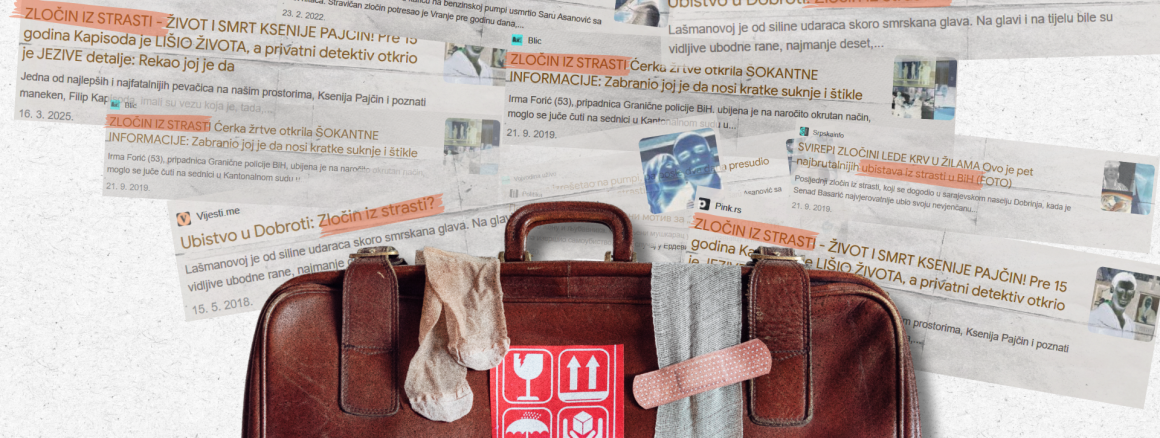
“Crime of passion” sounds almost romantic. In reality, it means femicide. The phrase is not a legal term, but it regularly appears in tabloid headlines when reporting on men killing their wives or girlfriends. It usually suggests that the crime was unplanned, committed under “emotional distress,” which is a framing that shifts focus away from the killer’s responsibility.
This has a long history. The term “crime of passion” emerged from the French legal system in the 19th century, with the 1810 French Penal Code recognising it as a partial defence that could mitigate sentences for crimes committed under sudden, overwhelming emotion like adultery, according to Manchester Hive.
This means that in 19th-century France, a husband could receive a lighter punishment if he killed his wife after catching her cheating. Similar excuses existed across Europe, where femicides were often defended as “impulsive acts” or “heat of the moment reactions.” The same excuse, however, rarely applied when the roles were reversed. Women who killed men – whether after betrayal, prolonged abuse, or even in self-defence – were described as hysterical and monstrous. That double standard has persisted to this day and the media has carried that legacy into the present. Headlines often portray men as lovers consumed by jealousy or passion, while women are depicted as unstable and cruel.
In the Western Balkans, the phrase is still widely used by the media. A quick Google search in Serbian for “crime of passion” shows more than 20,000 results in the past year alone. Many reports are about murders, TV interviews debating whether something can or cannot be considered a “crime of passion”. Headlines like “An unprecedented crime of passion: He strangled a girl in his apartment and jumped from the second floor of the Palace of Justice” or “Terrible murder due to jealousy: The policeman shot the ex-girlfriend in front of the new guy” demonstrate how responsibility is framed. The murderer becomes the victim of passion, and the woman becomes a tragic footnote.
By using this phrase, the media is helping justify the murder. If their love was “full of passion,” then he couldn’t have done it on purpose – it must have been a “one-time emotional outburst,” or he killed her because he “loved her too much, but she didn’t love him back.” By adopting such language, the media not only trivialises femicide but also sustains a long-standing pattern of romanticising perpetrators, excusing violence as passion, and silencing the very reality of gender-based hatred.
But romanticising femicide has never saved women’s lives. In fact, the numbers are not declining. In Serbia alone, more than 310 women have been killed in the past ten years. Since the beginning of 2025, the number has already reached 11 – and that is only what is known from the media. Serbia still doesn’t have mechanisms like femicide watch, which would ensure proper, reliable institutional statistics. And the problem is regional: across the Western Balkans, femicide is often treated as a private tragedy or a crime of love, not as systemic gender-based violence.
What is needed is not stories with neighbours describing the killer as a “good family man,” nor headlines that cast murder as “driven by passion.” Ethical, in-depth, and professional reporting that places gender-based violence and femicide at the centre of attention all year round is what’s missing from the picture, not only when a particularly shocking case occurs.
Some may ask: “But would changing the terminology really save lives?” While language alone cannot prevent femicide, it shapes how we understand responsibility. Calling femicide a “crime of passion” creates the illusion that it was unavoidable – a spontaneous reaction to provocation, rather than an act that could have been foreseen and prevented. In reality, many women who were later killed had already reported threats or violence to institutions. Lack of action often made the difference between life and death.
If we don’t call femicide by its real name, if we keep sugar-coating it, we risk ignoring the broader pattern of gender-based violence. Words matter. And in this case, they can mean the difference between excusing murder, confronting it, and preventing it. When we call it “passion,” we portray the killer as a man overwhelmed by emotions. When we call it femicide, we acknowledge it as gender-based violence, the end of a woman’s life, and a crime that is both preventable and deeply rooted in patriarchy.
This is also where journalism has a role to play. Across the Western Balkans, media outlets need to abandon sensationalist headlines and stop framing femicides as personal dramas. The Serbian network “Journalists against violence against women” (“Novinarke protiv nasilja”) provides clear guidelines for responsible reporting: respect the dignity of victims by not publishing personal details without family consent; avoid rushing for sensation and verify facts before reporting; speak only with relevant sources, not neighbours or relatives whose statements can cause further harm; never romanticize the perpetrator or describe femicide as the end of a “tragic love story;” include context that explains risk factors such as divorce or possession of firearms; and always provide information about available support services.
Changing media narratives will not, on its own, stop femicides, but it can challenge double standards, prevent the normalisation of violence, and pressure institutions to act.
Author: Iva Gajić
Trolls of the Month: TV Informer and editor Dragan J. Vučićević
September 3, 2025
The Balkan Troll of the Month is an individual, a group of individuals or a media outlet that spreads hate based on gender, ethnicity, religion, or other diversity categories. The Balkan Troll is selected based on hate speech incidents identified across the Western Balkan region.
In Serbia, August was marked by violent protests. Supporters of the ruling party, as well as the police, reacted violently towards citizens and journalists reporting from the ground. One night, several people, including students, were taken into a garage in the government building, tied and placed on the ground, where the police physically and verbally attacked them.
Student Nikolina Sinđelić was one of them, she later testified about how, after the August 14 protest in Belgrade, Serbia, the commander of the Unit for the Security of Certain Persons and Objects (JZO) Marko Kričak took her to the garage of the main Government building and threatened her with rape, slapped her and hit her head against the wall.
Shortly after she publicly shared about the violence she experienced, the Ministry of Interior instantly issued a statement denying those allegations. The Minister of Internal Affairs Ivica Dačić said that the police did not insult, tie, or mistreat any of those detained that night, and that no one objected to the actions of law enforcement agents.
The next day her intimate photos were shared on social media by anonymous accounts, but also by the former State Secretary of the Ministry of Internal Affairs, Dijana Hrkalović. Hrkalović shared these photos on her official public Instagram account.
Sinđelić, as well as the Faculty of Political Sciences where she studies claims the photos were taken when she was a minor.
On August 20th, the editor-in-chief of TV Informer, Dragan J. Vučićević, showed these intimate photos during a live programme and made nasty comments along with three other guests.
Doing this, Vučićević and TV Informer violated the Criminal Code, several media laws and the Code of Journalists. More importantly, they abused Informer TV to intensify violence towards Sinđelić. Several journalist associations, as well as RDN, called the Regulatory body for electronic media to initiate the procedure against Informer. Furthermore, all of this coincided with the Serbian government announcement to introduce image based sexual abuse (colloquially named “revenge pornography”) as a criminal offense.
This case goes to show the dangerous overlap between the state, media and gender-based violence. The interlock between the state and state controlled and supported media has resulted in citizens being exposed to hate and violence. Instead of protecting a young woman who testified and spoke up about policy brutality and rape threats, pro-regime media took this case as an opportunity to humiliate her and publish private, intimate photos. Mean whilst, there was no acceptance and acknowledgement of her testimony and what the young woman was put through at the hands of public servants. The media has a role to play in upholding the law, truth and justice. Rather than silencing critical voices, normalising and participating in violence against women and undermining justice, their role is to stand by citizens, expose where there are wrongdoings and demand accountability.

30 years since the Srebrenica genocide: Genocide denial persists in regional media
August 20, 2025
8372 Bosniak men and boys were killed by the Army of the Republika Srpska on July 11, 1995, in what is widely recognised as the largest massacre in Europe since the Second World War. This year marked three decades since the genocide. Here is how the media in the region reported before, during, and after the commemoration.
Media outlets from Bosnia and Herzegovina (BiH), as well as regional and international media reported from the ground during the commemoration in Potočari. Among them were regional TV channels Al Jazeera and N1. Numerous media outlets reported professionally and ethically, stating judicially established facts, but also highlighting stories of survivors and returnees, as well as others directly affected by the genocide. This is important in reporting on such crimes.
By showing stories of people affected by war crimes, journalists not only fulfil their professional duty, but also contribute to reconciliation and counter unfounded narratives of relativisation and denial.
However, most media outlets in Republika Srpska, including the public broadcaster, covered the commemoration only briefly, stripping it of necessary context. As in previous years, the genocide is almost never referred to as such, but rather vaguely named a “crime” or “suffering,” while attention was shifted toward Serbian victims of other war crimes. An exception was the highly professional reporting of the news portal Buka.
According to the latest report of the Srebrenica Memorial Centre, there were three times fewer instances of genocide denial this year than last. Yet the sources remain the same. Media outlets and public officials from Serbia, Republika Srpska and, occasionally, Montenegro were the most common generators of genocide denial.
Among them were Serbian president Aleksandar Vučić and Milorad Dodik, who served as president of Republika Srpska until early this month when he was stripped of his mandate. Apart from Dodik and Vučić, the biggest genocide negators include Serbian media outlets Alo, Informer, Politika, Srbija Danas and B92, as well as the Montenegrin media outlet Borba.
One of the articles published in Borba labelled the genocide as “staged”, while another article on the Montenegrin portal IN4S framed it as a “Western fabrication”.
Genocide denial peaked in 2024 because the United Nations General Assembly adopted a Resolution on Srebrenica, declaring July 11 as the International Day of Remembrance of the Srebrenica Genocide and condemning the denial of that crime.
The resolution only reaffirmed what international courts had already established, while Serbia or the Serbs as a people and a nation are not even mentioned in the resolution.
Still, a months-long campaign in Serbia and Republika Srpska portrayed it as an attack on Serbs and Serbia. The central message of the campaign, “We are not a genocidal nation”, appeared not only all-over mainstream media but in public spaces as well, including billboards across Belgrade, the Belgrade Tower, and the official social media pages of President Vučić.
The “genocidal nation” narrative resurfaced again this year, but with a twist. It was also weaponised against protesters, students, activists and civil society organisations, opposition politicians, and journalists and media outlets in Serbia that report professionally. Pro-regime tabloid Informer branded Al Jazeera as “Islamist” and N1 as “anti-Serb” media, claiming they plan to “overthrow Vučić and teach Serbian children that Serbs are genocidal”.
This escalated before the commemoration, around a huge protest in Belgrade on June 28th, and continues to this day, as protests, as well as regime oppression and police brutality, escalate across Serbian cities. The Srebrenica Memorial Centre noted how genocide denial was used as a tool to suppress growing student-led protests in Serbia.
Serbia’s mainstream media coverage of the commemoration was widespread but similarly evasive. The term genocide was avoided and reduced to a “tragedy” or “terrible event”. Many either openly relativised, minimised, and denied the genocide in Srebrenica or interviewed and provided space to those who did. TV Kurir had a special show titled “30 years since Srebrenica – abuse of crimes against the Serbian people”, framing the massacre as a political weapon used against Serbs.
Still, many independent outlets in Serbia reported ethically and professionally, held institutions accountable and highlighted the persistence of genocide denial, often facing smear campaigns for doing so.
In Albania, where Srebrenica usually receives less attention than in the former Yugoslav countries, this year stood out. National media covered the commemoration extensively and professionally, often focusing on human stories, such as Euronews Albania’s feature on Devla Ajsić, a survivor of sexual violence who was raped in the former Dutch-run camp.
Many outlets emphasised the need for the Serbian government to acknowledge and apologise for its complicity and part in the genocide. Several also drew parallels between the genocide in Srebrenica and the ongoing genocide in Gaza.
Almost all Kosovar media outlets reported responsibly on the 30-year commemoration of Srebrenica, while the day was marked with a minute of silence in the parliament, which MPs from the Serbian List boycotted. Many media, both in Albanian and Serbian languages, reported on this, but without giving any comments or context. Several independent media in the Serbian language, such as Kossev and Radio KiM, reported on the commemoration held in North Mitrovica professionally as well.
In North Macedonia, coverage was quieter. The government issued a statement honouring victims, echoed by the opposition SDSM, while the ruling VMRO party remained silent. Media outlets offered little explanatory reporting, apart from republishing EU officials’ remarks acknowledging their responsibility for failing to prevent the genocide.
The final rulings of the International Criminal Tribunal for the former Yugoslavia (ICTY) established the events in Srebrenica as genocide. Together with ICTY, the judiciary in Bosnia and Herzegovina, Serbia and Croatia have so far sentenced a total of 54 people to 781 years in prison for genocide, crimes against humanity and other crimes committed in Srebrenica. Among them were Radovan Karadžić and Ratko Mladić, the former political and military leaders of Republika Srpska, who were sentenced to life imprisonment, however, they remain glorified as heroes by many public officials and media outlets in Republika Srpska and Serbia, as well as some in Montenegro.
The glorification of war criminals responsible for Srebrenica, as well as the genocide denial that culminates around the commemoration day on July 11th each year, has been ongoing for as long as the memory of the genocide itself.
Repeated for decades, especially by public officials and mainstream media, this culture of denial shapes entire generations. Reconciliation in the region is necessary, and the first step towards this is dealing with the past, recognising the genocide in Srebrenica and other war crimes, honouring the victims, and acknowledging individual and institutional responsibility.
Author: Anja Anđušić
Monthly Highlights July: Ethnic discrimination, sensationalism, genocide relativisation and denial and the restriction on personal freedom
August 14, 2025
During the month of July, the RDN monitoring team detected a range of hateful narratives and discourse fuelled by genocide denial and relativisation alongside ethnic discrimination, sensationalism and the imposition of restrictions on personal freedom.
Ethnic Discrimination in Serbia and Kosovo
In Serbia, on the morning of July 29th, masked individuals—later revealed to be a private security company—forcefully entered the State University in Novi Pazar (DUNP), removing students who were blocking the building. This triggered widespread condemnation from students, citizens, and political parties, followed by mass protests and clashes with police. Students eventually regained access to the building and declared victory, though at least 13 people were arrested, including one student.
Following the incident, several pro-government media outlets and officials incited ethnic hatred, targeting the mostly Bosniak, Muslim population of Novi Pazar. Students and citizens were labelled as extremists and terrorists by tabloids and national TV channels. Additionally, President Vučić made derogatory remarks about the university, contributing to the inflammatory rhetoric quoting “the building of the State University in Novi Pazar looks like a pigsty, I don’t want to say pigsty so as not to offend anyone’s religion”.
Tabloids claimed Serbs in Novi Pazar feared violence, accusing protesters and media outlet N1 of fuelling an “anti-Serb rampage.” Protests spread to other cities like Užice, where green hand symbols—associated with Bosniak and Muslim community—were used in support and solidarity. The tabloid Informer linked these symbols to Hamas, alleging the violence was pre-planned, and ran a front page with the headline “Terrorists break up Serbia,” reviving unsubstantiated separatism claims about Novi Pazar and the Sandžak region. This narrative has been present since the beginning of the protests. Pro-regime media outlets push a repeated narrative on the supposed separatism in Vojvodina and Sandžak, failing to provide real evidence of such occurrences. The media should act as unbiased sources of news and not as catalysts for the spread of division and hate.
In Kosovo, the Director of the Council for the Defence of Human Rights, Behxhet Shala, in the first part of an article published by the online portal Epoka e Re, expressed his opinions surrounding the acting Prime Minister Albin Kurti, his associates in the Vetëvendosje party, and the acting ministers. A portion of the text specifically targeted Dejona Mihali, the coordinator of the party’s committees.
Shala focused heavily on Mihali’s alleged Greek origin and included the following statement:
“Dejona Mihali. Nationally, she is a hybrid—she speaks Albanian, thinks in Greek, and acts Serbian. In Albania, she couldn’t even find a place to pi**, while in Kosovo she made a big sh**. I remember her from the early days in Vetëvendosje, wandering through protests dressed like Baba Stana from Šumadija.” He further accused Mihali of being responsible for all the problems currently facing Kosovans and Albanians in North Macedonia, Serbia, and, to some extent, Montenegro.
Dejona Mihali is not a popular figure among many citizens in Kosovo—not because of her Greek origin, but because of the belief that she influences the current policies implemented by acting Prime Minister Albin Kurti from behind the scenes. Despite various criticisms, Mihali has rarely addressed the scandals in which she herself was implicated. Due to her influence over the ruling party and Kosovo’s domestic and foreign policies, political observers consider her to be one of the most powerful individuals. Regardless, this is not a valid reason to tie criticisms of her political orientation or strategies to her ethnic background, nor to analyse her mentality based on how she speaks or thinks.
Discrimination and restriction on personal freedom in North Macedonia
Prime Minister Hristijan Mickoski made a controversial proposal during a public debate of introducing a tax on unmarried people. He stated that while there’s no magic fix, the government is committed to reversing the population decline through consistent policies aimed at restoring public trust and encouraging family formation. After Prime Minister Mickoski publicly suggested the introduction of a tax on unmarried people as a potential response to North Macedonia’s demographic decline resulting in the statement going viral, sparking widespread public debate and media coverage.
However, the discussion quickly escalated when a journalist Janko, in his podcast, went beyond the proposed policy, calling not only for taxing unmarried individuals but also for them to be beaten. He claimed that people who “want to sleep around” and “don’t want children” are selfish and responsible for the demographic crisis.
This inflammatory rhetoric has raised serious concerns about hate speech, gender discrimination, and the normalisation of violence against individuals who choose not to marry or have children.
Genocide Relativisation in Montenegro
On his private profile on X, Vladislav Dajković, leader of the Free Montenegro party, posted a video with a caption that read “We’re going crazy over Srebrenica! I’m standing up for my people and our innocent victims that no one talks about!” The video itself included snippets from his visit to Berane, where he was meeting potential voters. All acts of violence and harm against any group of people are unacceptable and unjustifiable. However, using the suffering of one group to diminish or undermine the violence and genocide experienced by another—especially during the 30th anniversary of the Srebrenica genocide—is deeply inappropriate and unacceptable. A statement like this, suggests that too much attention is being given to Srebrenica, which amounts to a relativisation of one of the most serious war crimes in Europe since World War II. Instead of showing empathy for the victims, it expresses fatigue or irritation at the mention of Srebrenica, which is offensive to the victims’ families and to the broader public that respects the facts established by the international court rulings.
Moreover, aside from Dajković’s statement, several news portals also published questionable headlines and pieces. The news portals Borba and IN4S published articles denying the genocide, while the President of the Parliament of Montenegro, Andrija Mandić, likewise relativised the crime when a moment of silence was proposed in the legislature to honour the victims. He stated that the minute of silence was for all victims of crimes committed on the territory of the former Yugoslavia — not exclusively for the victims of the Srebrenica genocide.
All human tragedy is tragedy, and the commemoration of all war crimes and the suffering of victims must be respected. Every loss deserves remembrance. However, this cannot be used as a justification to undermine the significance of a genocide such as Srebrenica. Each atrocity must be acknowledged on its own terms, and Srebrenica—especially on the occasion of its 30th anniversary—must be given the space it deserves for collective remembrance, reflection, and mourning.
Genocide denial in Bosnia and Herzegovina
This year marked the 30th anniversary of the Srebrenica genocide, one of the worst crimes committed on European soil since World War II. Ruled by the International Criminal Tribunal for the Former Yugoslavia (ICTY) and the International Court of Justice (ICJ) as a genocide, there still remains a level of denial amongst certain groups of people, institutions and bodies within the Balkans who consistently deny and underplay the events which took place at Srebrenica, failing to label it as a genocide in its rightful category. One of the main perpetrators include the media.
Most media outlets in Republika Srpska reported very brief information in select few sentences about the commemoration of the victims of the Srebrenica genocide, without providing context, identifying the perpetrators, judicial facts, and without calling the crime by its true name – a genocide. Most media outlets in Republika Srpska did not report the fact that the Hague Tribunal, the Court of Bosnia and Herzegovina, and courts in Serbia and Croatia have so far sentenced a total of 54 people to five life sentences and 781 years in prison for genocide, crimes against humanity, and other crimes in Srebrenica in July 1995. 18 people were convicted of genocide and other crimes committed in and around Srebrenica. The reporting by the Glas Srpske, Nezavisne, and RTRS portals on Srebrenica was once again accompanied by a complete downplaying of the scale of the crime, as well as denial, relativisation, insulting the victims. The anniversary of the terrible crimes was mentioned in these media outlets in only a few sentences, with an emphasis on commemorating the suffering of Serbian victims.
Alongside media outlets, prominent political figures including the president of the entity in Bosnia and Herzegovina Republika Srpska (RS), Milorad Dodik, a day after his detention was lifted and he was released on probation, denied the genocide in Srebrenica from July 1995, referring to it as a “terrible crime”. Despite the denial of genocide being illegal under Article 145a of the Criminal Code, Dodik and other public figures and public officials continue to deny the genocide.
On the day of the commemoration itself, July 11th, in the evening, music by Baja Mali Knindža was played in front of the church in Srebrenica. According to a report by Klix, this music is used in the most horrific ways to insult Bosniaks, glorify crimes, and incite expulsion. The portal also stated that this is a “customary display of hateful provocation, clearly aimed at disturbing the Bosniak population in Srebrenica, sending messages of hatred and glorification of the genocide that was committed.” The statement of Republika Srpska Vice President Ćamil Duraković was also shared, in which he warned about the incident and noted that this is what Bosniaks in Srebrenica live through every July 11, once official delegations leave under police escort.
While nothing can undo what has been done and what crimes have been committed, the least that can be offered is acknowledgement, respect and commemoration for the crime which took place, the crime which has been internationally recognised in the law as a genocide. Anything that serves to undermine the facts is disrespectful to survivors, victims and their families and communities. It also poses a serious threat to justice, reconciliation, and peace by distorting history and fostering division.
Sensationalistic reporting in Albania
Media outlets in Albania swiftly and fervently reported on a grave and deeply sensitive incident in the village of Frashër, Fier where 26-year-old woman was reported to have murdered her father using a wire. Initially, she claimed that the death had been accidental. However, police verification uncovered signs on the victim’s body that raised suspicions of homicide. What followed was a media storm. News outlets bombarded the public with a constant stream of updates, gruesome details, and emotionally charged headlines. Several elements were particularly prominent in this media frensy including headlines filled with emotionally provocative and dramatic language, the rush to publish the suspect’s photo, broadcasted interviews with neighbours from the village. Furthermore, various media ran intrusive investigations into the suspect’s personal life, going far beyond factual coverage. By placing emphasis and focus on the character of the perpetrator, the focus shifts from the act of violence itself to the moral worth and perceived lifestyle choices of the woman involved.
There is no question that such crimes are serious and reprehensible, regardless of the circumstances. However, what remains deeply concerning from a media ethics perspective is the double standard evident in how the media in Albania reports murders committed by women compared to equally brutal crimes perpetrated by men. These headlines were later followed by tabloid-style revelations implying she was romantically involved with a much older man—approximately her father’s age. When viewed through a critical media lens, it becomes clear that the coverage of such incidents often veers into moralistic, judgmental, and gender-biased territory. In these cases, the media rushes—often without filter or, perhaps, with normalized sensationalism.
The media coverage of this incident underscores the urgent need to strengthen ethical standards in crime reporting—particularly in cases involving gender dynamics. The patterns observed reveal a deeper concern: the normalization of sensationalism, gender bias, and the reinforcement of harmful stereotypes in public discourse. To address these challenges, media outlets are strongly encouraged to adopt gender-sensitive editorial standards, avoid biased or sensationalist language, use accurate and context-aware terminology, protect the privacy and dignity of those involved, and actively challenge gender stereotypes. Importantly, advocating for ethical and non-discriminatory reporting does not mean minimizing the seriousness of the crime or the accountability of the perpetrator—regardless of gender. Rather, it calls for a more just and informed media approach that upholds the principles of fairness, accuracy, and social responsibility.

Troll of the Month: Milorad Dodik, president of Republika Srpska in Bosnia and Herzegovina
August 6, 2025
The Balkan Troll of the Month is an individual, a group of individuals or a media outlet that spreads hate based on gender, ethnicity, religion, or other diversity categories. The Balkan Troll is selected based on hate speech incidents identified across the Western Balkan region.
This month’s title goes to Milorad Dodik, president of Republika Srpska, who has once again publicly denied the 1995 genocide in Srebrenica.
Just one day after his detention was lifted under prohibitory measures, Dodik appeared in Bratunac, where he denied the Srebrenica genocide, calling it a “terrible crime” instead.
“The Serbs in Srebrenica did not commit genocide. A terrible crime happened in Srebrenica. Let them commemorate that pain in seven days,” he said, referencing the 30th commemoration of the genocide.
He added that he was a comrade-in-arms of Radovan Karadžić and Ratko Mladić, the former political and military leaders of RS, who were sentenced to life imprisonment for the genocide in Srebrenica and other war crimes in Bosnia and Herzegovina.
On August 1st, the Appellate Panel of the Court of Bosnia and Herzegovina upheld the first-instance verdict sentencing Milorad Dodik to one year in prison and imposing a six-year ban on holding the office of President of Republika Srpska for disobeying the decisions of the High Representative. At a session of Bosnia and Herzegovina’s Central Election Commission held on 6 August, Dodik was stripped of his mandate as President of Republika Srpska.
At a press conference held on June 26, Dodik also said that the significance of marking the 30th anniversary of the genocide in Srebrenica is being exaggerated, while on the other hand, the crimes against Serbs in Podrinje are not being discussed. Dodik again repeated that “it is undeniable that a crime took place in Srebrenica against Muslims, but it is not a crime of genocide, but a serious war crime.”
This is not the first time Dodik has made such claims, nor is he the only figure who does so. Reports from the Srebrenica Memorial Centre identify Dodik as one of the biggest deniers of the genocide in Srebrenica, alongside other high-ranking public officials from Republika Srpska and Serbia. This shows genocide denial “comes from the very top of the political, institutional and media structures in the region”, confirmed by RDN findings as well.
The final rulings of the International Criminal Tribunal for the former Yugoslavia (ICTY) established the events in Srebrenica as genocide. Together with ICTY, the Court of Bosnia and Herzegovina, and the judiciary in Serbia and Croatia have so far sentenced a total of 54 people to 781 years and five life sentences in prison – for genocide, crimes against humanity and other crimes committed in Srebrenica in July 1995. Under Article 145a of Bosnia and Herzegovina’s Criminal Code, genocide denial is a criminal offence. Denial of the Srebrenica genocide dishonours the memory of the victims, retraumatises survivors and families of the victims, and obstructs efforts toward reconciliation and justice not only in Bosnia and Herzegovina, but in the whole region. By legitimising revisionist narratives, such statements further entrench ethnic divisions, fuel distrust among communities, and erode the foundations of democratic governance.
Monthly Highlights June: Ethnic discrimination, sexism, online harassment alongside hatred towards journalists and genocide denial
July 11, 2025
During the month of June, the RDN monitoring team detected a range of hateful narratives and discourse fuelled by sexism and ethnic discrimination alongside online harassment and cases of genocide denial and hatred towards journalists.
Ethnic discrimination fuelled by the media in North Macedonia
In North Macedonia, a headline was published reading “ПРИТИСНАЛ НА ГАС, НАМЕСТО НА КОЧНИЦА: Едно лице загина откако Албанец со џип влетал во пекара(Pressed the gas instead of the brake: One person died after an Albanian man drove an SUV into a bakery)”. The headline incited hate speech on ethnic grounds as it unnecessarily emphasised the ethnic identity of the driver (“Албанец” – Albanian), despite the fact that the person’s ethnicity is irrelevant to the incident itself. In doing so, it implicitly linked a tragic and possibly accidental event to a specific ethnic group, reinforcing harmful stereotypes and potentially fuelling ethnic tension. By identifying the driver as “an Albanian” rather than simply as “a man” or “a driver,” the headline shifted the focus from individual responsibility to collective identity, encouraging readers to form negative associations between Albanians and reckless or dangerous behaviour.
This type of framing contributes to the stigmatisation of minority communities and violates journalistic ethics aimed at objectivity, fairness, and the avoidance of incitement. The media should adhere to ethical and journalistic standards, presenting information and news to the public in an impartial manner rather than acting as catalysts for the spread of hate speech.
Sexism and objectification in Albania
She’s On Top is a show aired on Sundays as part of Top Channel’s weekend programming. With the arrival of summer, it is common for television networks to introduce seasonal programs that claim to depict women and girls in the full complexity of their character and personality. However, such shows have historically placed women in roles subject to public scrutiny, often exposing them to mockery, offensive commentary, hate speech, and discriminatory attitudes.
Recently, during a game segment filmed at a pool outside Tirana, two groups of girls competed against each other. At one point, when one participant lost a challenge, two others attempted to throw her into the pool. Alarmed, she resisted and pleaded with them not to touch her. The situation escalated and nearly turned into a physical altercation.
Despite the show’s stated intent to portray women and their freedom of expression, such programs, whether intentionally or not, often amplify harmful stereotypes, objectify women, and contribute to the hyper-sexualisation of their bodies. Verbal confrontations, as seen in this instance, frequently verge on physical violence and reinforce portrayals of women as overly emotional, irrational, and incapable of self-control, valued more for their appearance than for their intellectual or professional qualities.
The arguments promoted by women featured in these shows are often shallow and lack substance, raising serious concerns about the justification for granting them airtime. These programs frequently exploit women’s images to boost ratings, undermining gender dignity and justice. Rather than using women as objects of entertainment in a disrespectful manner, such programs should aim to present respectful, authentic portrayals that challenge outdated stereotypes and contribute to a more equitable media landscape.
Online harassment in Kosovo
Flutura Kusari announced on her Facebook page that she had filed a criminal complaint against Vetëvendosje party supporter Mentor Llugaliu, due to the fact that over the past three years she had experienced online harassment. During these three years, Llugaliu had made at least 101 posts against Kusari on his Facebook page, which garnered over 42,000 likes, 700 shares, and 2,200 comments. Kusari stated that Llugaliu aimed to abuse, intimidate, and cause emotional distress to her and her family, and that he succeeded in doing so.
“The harassment, which also contained threatening and sexual content, and the obsessive three-year online stalking by the accused Llugaliu, was carried out as revenge for my activism in monitoring the selection process for the RTK board members, a process in which he failed to become a member,” Kusari wrote, among other things.
As a result, Kusari has received support from numerous domestic and international non-governmental organisations, the Association of Journalists of Kosovo, and various embassies. In response, Llugaliu has been referring to Kusari as a “mosquito” in nearly every post, and supporters of the Vetëvendosje party have used the same label for her. This term was also used in the comments on Llugaliu’s posts by professor and political analyst Nexhmedin Spahiu.
Mentor Llugaliu is close to the Vetëvendosje party and was one of the candidates for the Board of the Public Broadcaster RTK. However, he was not selected. In order to become a board member, interested individuals must not only meet the formal criteria but also lobby members of political parties in order to secure enough votes in the Kosovo Parliament. Llugaliu clearly did not manage to achieve his goal and blamed Flutura Kusari for it, as she had monitored the interviews with potential board members and publicly shared her opinions about the procedures. One of the requirements for candidates is that they must not belong to or be closely affiliated with any political party.
Regardless of the circumstances, harassment, whether online or offline, is never acceptable. Even in times of heightened tension, respect for others must be maintained. There can be no justification for intimidation or causing emotional distress. Llugaliu should be held accountable for his actions.
Hate speech towards journalists in Montenegro
The portal Borba published an Instagram exchange involving businessman Ratko Knežević, in which he used offensive language and spread hate speech against Draško Đuranović, former editor of the daily Pobjeda and current columnist for the E Television portal.
The exchange followed Đuranović’s appearance on E Television, where he attempted to discredit long-time police official Milan Paunović. Just days earlier, Paunović had testified before a parliamentary committee, claiming that senior figures in the security sector had been covering up crimes committed by Montenegrin police officers for years. In response, Knežević launched a series of insults at Đuranović and accused him of being a former spy for the state security service.
Journalists have a responsibility to uphold ethical standards, including treating one another with respect, even in disagreement. Spreading hate or engaging in personal attacks should have no place in journalism, as it not only damages professional integrity but also encourages the public to adopt similar hostile behaviour.
Genocide denial in Bosnia and Herzegovina
The president of Republika Srpska, Milorad Dodik, once again denied the genocide in Srebrenica. At a press conference held on June 26, Dodik claimed that the significance of marking the 30th anniversary of the genocide in Srebrenica is being exaggerated, while on the other hand, the crimes against Serbs in Podrinje are not being discussed. Dodik again repeated that “it is undeniable that a crime took place in Srebrenica against Muslims, but it is not a crime of genocide, but a serious war crime.”
The words uttered by Dodik contradict facts established by the trial chambers of the Hague Tribunal, including several final judgments of the International Criminal Tribunal for the Former Yugoslavia (ICTY), which confirmed that genocide was committed in Srebrenica.
Indeed, the Hague Tribunal, the Court of Bosnia and Herzegovina, and the judiciary in Serbia and Croatia have so far sentenced a total of 54 people to 781 years and five life sentences in prison for genocide, crimes against humanity and other crimes committed in Srebrenica in July 1995.
Denial of genocide is punishable in Bosnia and Herzegovina under Article 145a of the Criminal Code; however, Dodik continues to disobey and breach this law by continuing to deny the genocide of Srebrenica and refusing to abide by local law. Dodik remains one of the highest political figures in the region who continues to deny genocide and the judicial facts established in relation to the genocide in Srebrenica. As the leader of Republika Srpska, Dodik holds a significant platform and influence in the region, one he repeatedly uses to spread divisive narratives and deny the genocide, undermining any prospects for peace, reconciliation, and coexistence. The Srebrenica genocide of 1995 left 8372 victims, and such rhetoric is not only deeply disrespectful to those affected by this war crime but also dismisses the pain of survivors, their families, and entire communities still healing from its lasting trauma. Dodik should be held accountable and face the consequences of his actions in accordance with national law, whilst simultaneously stopping to spread of narratives of divide and hate.
Harmful media narratives surrounding the Vidovdan Protest in Serbia
In the days leading up to the large protest in Belgrade on June 28, Vidovdan, a major national and religious holiday in Serbia, pro-government media outlets used fearmongering, divisive and harmful narratives with the attempt to discredit student-led protests and deter public participation. Despite this, around 140 thousand people attended the protest.
Headlines in tabloids and coverage on national television painted a disturbing picture of the upcoming protest, referring to demonstrators as a “rampaging mob,” “terrorists,” and “extremists” allegedly plotting “bloodshed” in the capital. This paved the way to legitimise police violence that occurred during and after the protest towards peaceful protesters. Tabloids later directly legitimised the actions of the police as necessary against “hooligans”. As a response to the police brutality, citizens blocked major crossroads across the country in the following week. The police continued to use excessive force and arrested hundreds of protesters.
Most of Serbia’s mainstream media failed to cover key aspects of the crackdown: masked officers operating without identification, attacks on journalists, misogynist comments of police officers at the blockades, and the indiscriminate use of force.
Apart from this, a dominant narrative was that protesters or “blockaders”, as they are labelled in certain media outlets, want to “declare Serbs a genocidal nation”. Emina Spahić, a student at the State University of Novi Pazar, appeared in the popular TV show Utisak nedelje before the protest. She reminded us that we will soon mark 30 years since the genocide in Srebrenica and said that “A people or a nation can never be genocidal – only individuals who participate in or support genocide.” Her statement at first drew a wave of online hate. Soon, the narrative of a “genocidal nation” reappeared in tabloids as well. This time, weaponised against students and citizens involved in protests.
This narrative first appeared last year when the UN’s declaration of July 11 as the International Day of Remembrance for the Genocide in Srebrenica was adopted. Although the resolution neither names Serbia and Serbs nor assigns collective guilt, Serbian officials and aligned media outlets framed it as an attack on the Serbian people – a campaign that resurfaced before the protest.
Attacks on civil society organisations further amplified the atmosphere of hostility. Association Krokodil, which hosted its annual festival that weekend and included a programme dedicated to remembrance of the genocide, became a new target. Pro-regime media launched a campaign against the festival, triggering online threats, harassment, and even physical attacks on their offices.
These events and the complicity of certain media outlets in them reflect a dangerous trend – the shrinking space for free expression, protest, and cultural dialogue in Serbia. When the media acts as a mouthpiece for state power rather than a watchdog, it not only misinforms the public but also enables violence and suppresses democratic rights.