Livestock Woes Lost in Headlines Over Former Pageant Queen
April 17, 2026
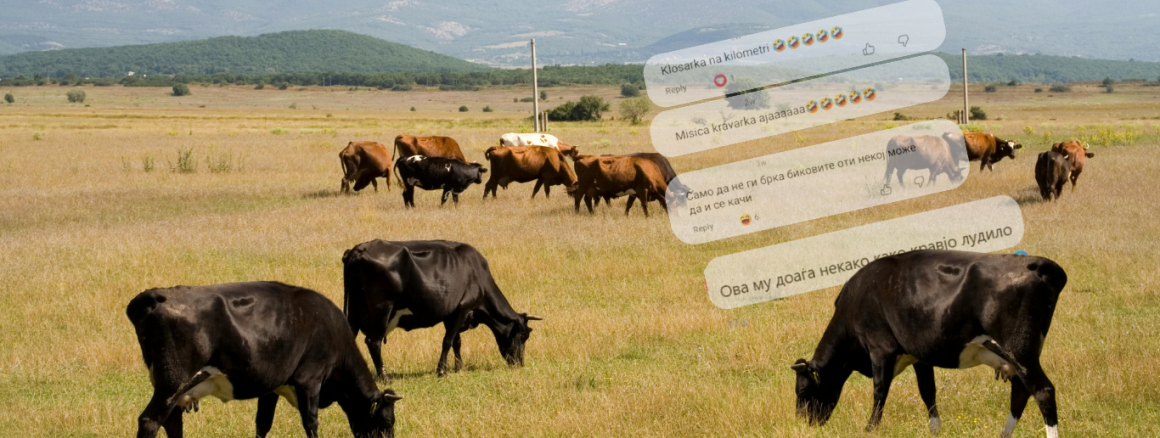
Cattle roaming freely on the streets and highway near Kriva Palanka in North Macedonia have now even crossed the border into Bulgaria. The local problem, which seems to have slipped through the cracks of institutions for years, has now become an international issue.
The issue of abandoned livestock has brought light to the declining trend in quality media reporting, where instead of addressing the real problems, much of the coverage focused on the appearance of the owner, producing cheap sensationalism about her past, ultimately abandoning the struggles of the community.
What happened in Kriva Palanka
For nearly three years, residents have been dealing with the irresponsible behaviour of a father and his two daughters, known for negligently raising their animals. Complaints had been filed against them for property damage, destroyed crops and private property. With around thirty property owners near the village submitting six complaints in 2024 and four more in 2025, an inspection was carried out by the Food and Veterinary Agency in cooperation with police officers from Kriva Palanka but was obstructed by the owners who used force and serious threats.
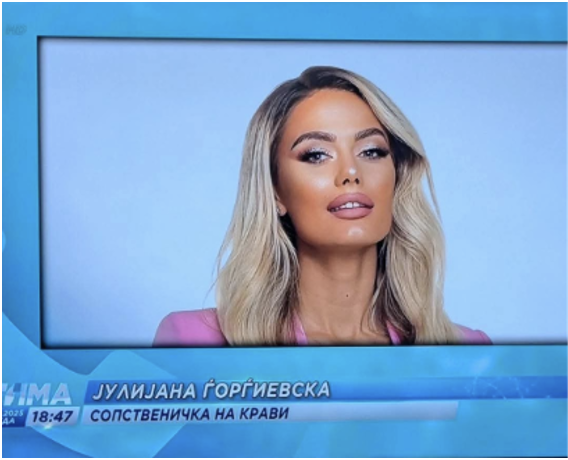
Julijana Gjorgjievska. Photo: TV Telma
While the Food and Veterinary Agency worked to capture the animals, the cows wreaked havoc across Kriva Palanka, and Mayor Saško Mitkovski and the agency became embroiled in a dispute, with events going in circles, until it was revealed that the suspected owner of the stray cattle held the title of former Queen of Europe. Her name is Julijana Gjorgjievska.
Once a photo from her personal Facebook profile was published, it spread across social media like wildfire, and the comments drew no shortage of words.
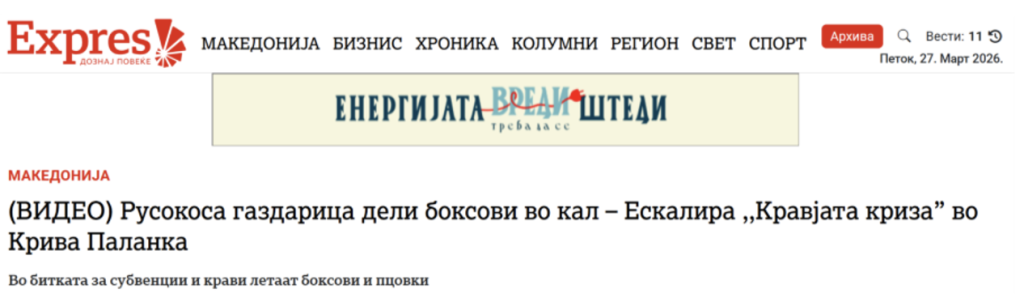
Clickbait headlines promised drama, chaos, and trading blows
The case drew more attention as media headlines reported the same events but chased higher engagement.
It is worth noting that 13% of the articles got her name wrong (here, here, here, and here). While the media sensationalised the event in their headlines, the articles themselves mostly contained verified information and official statements, most often drawn from the same source.Beneath the social media headlines, comments were dominated by hate speech and insults.
A research article on Facebook’s News Feed and self-perceptions of knowledge published within Research and Politics, shows that audiences who only read article previews think they know more than they actually do, especially individuals who are motivated to seek emotions.
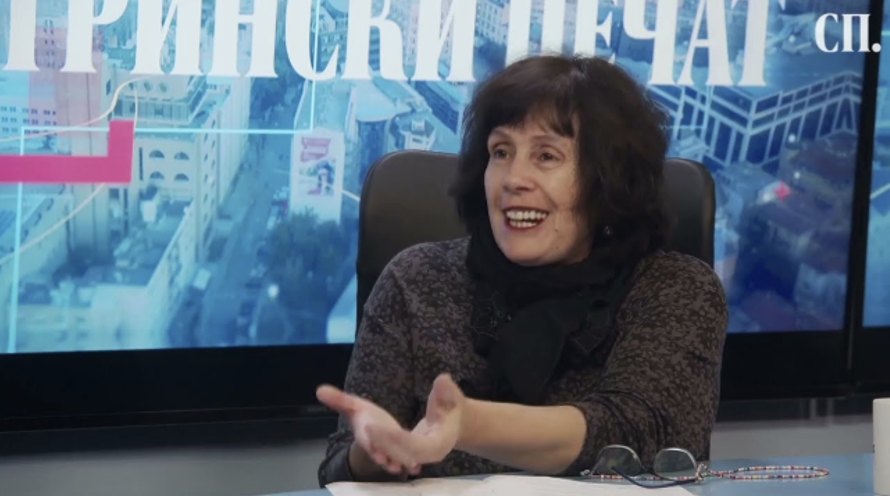
Biljana Bejkova, an expert in communication strategies and public relations, argues that this is not a case of a random editorial or journalistic decision, but a deliberate media choice driven by the pursuit of clicks and attention, rooted in gender stereotypes and misogynistic narratives.
Biljana Bejkova. Photo: Sloboden Pecat TV
“This represents a classic example of clickbait journalism that deliberately sacrifices substance in pursuit of attention. Instead of informing the public about the event and its implications, the focus is shifted toward the appearance and “miss” background of one of the involved parties, thereby reducing the woman to a body and a media spectacle.
Instead of encouraging serious public debate about livestock farming, institutional procedures, or the challenges faced by women and youth in rural areas, the public is drawn into a trivialised, gender-stereotyped narrative with no real informational value,” Bejkova says.
Under such conditions, young people are discouraged in their efforts to raise livestock. When livestock farming and animal husbandry are mocked, rural communities and agricultural productivity suffer even greater stagnation, especially when it comes to young women. Analysis of the perspectives of women in rural and agricultural areas shows that the country lacks concrete measures to promote greater inclusion of young farmers and women farmers in the creation and implementation of agricultural policies.
Reinforcement of gender stereotypes
These narratives influence how society thinks, whom it judges, and what it considers an important issue. This leads to the normalisation of gender stereotypes and prejudices, and their use to describe women or discredit them regardless of their profession, says Marta Stevkovska, a communications specialist.
Marta Stevkovska. Photo: Žarko Čulić
“Women are most often judged based on their physical appearance or gender roles and expectations, and this completely diverts public attention from the real problem, whether it will be resolved in the long term, what the institutions will do to address it, or why nothing has been done so far. By reinforcing stereotypes, reality is distorted and attention is redirected, and women’s appearance becomes just clickbait information, without consideration of the potential serious negative impact it may have on them,” Stevkovska concludes.
Author: Viktorija Furnadjiska
Featured illustration: Marija Jovanović/MDI WB/Canva