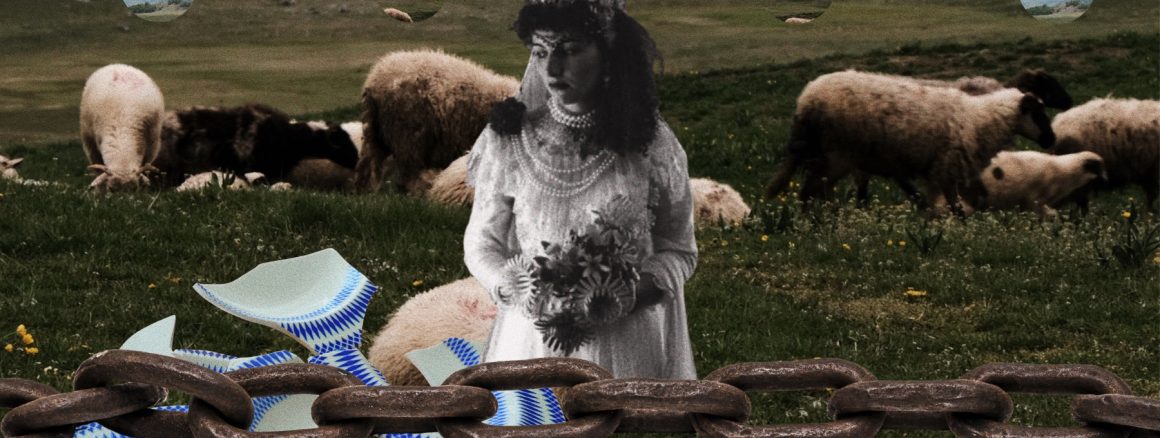
Born as a guest: The unwritten code denying Albanian daughters their heritage
June 17, 2026
In many Albanian families, the question of inheritance is not decided in courtrooms or by law, but around kitchen tables quietly, almost automatically. Daughters are often left out of these conversations, not because the law excludes them, but because tradition does. For generations, it has been widely accepted that a girl does not truly “belong” to the home where she is born, and therefore should not expect a share of it.
This unwritten rule continues to shape real lives. Women across Albania are still excluded from property and inheritance, not through formal decisions, but through family expectations and social pressure. What is often presented as “normal” or “fair” is in reality, a deeply rooted form of gender inequality one that limits women’s financial security, independence, and sense of belonging. Legally, the situation is clear. Albanian law guarantees equal rights to property and inheritance for both women and men, as defined in Article 41 of the Constitution and further detailed in the Family and Civil Codes.
Yet, for many women, this legal equality exists only on paper. In practice, it is often overridden by a persistent cultural belief that a daughter is only a temporary member of her family of origin, destined to become part of her husband’s household. Between what the law promises and what women experience, there remains a wide and deeply personal gap.
The data desert: A barrier to Institutional Transparency
In theory measuring how deep this inequality runs should be straightforward, just look at the numbers. In reality, it’s not that simple. Any attempt to find out how many women own property in Albania quickly runs into a basic problem, marked by missing data and institutional limitations, making the issue difficult to track and fully understand. The absence of the statistics is not just a technical gap it reflects a broader lack of attention to the issue.
For instance, in 2026, a formal request was submitted to the State Cadastre Agency (ASHK), asking for data on property ownership by gender for the year 2025. The response was revealing, the agency acknowledged that “its electronic system does not record or track ownership based on gender, and therefore it is unable to identify how many properties are registered in the name of women or men”. In other words, the data simply does not exist in a usable form.
While ASHK could provide general figures reporting a total of 2,748,269 active properties in Albania and 165,742 new properties created in 2025, they were unable to clarify how many of these belong to women. Even an appeal to the Commissioner for the Right to Information failed to produce results, as the Commissioner ruled that public authorities are not legally obligated to generate new data or carry out additional analysis if such information is not already collected.
This gap is not unique to one institution. INSTAT, the country’s main statistical authority, has also consistently lacked detailed, gender-specific data on property ownership. As a result, the issue remains largely invisible in official records. Experts warn that without reliable and disaggregated data, it becomes nearly impossible to assess whether existing laws are making a real difference, or to fully understand the scale of gender inequality in property ownership. In the absence of numbers, the problem risks remaining both underestimated and unaddressed.
Voices behind the statistics: The heart of the injustice
The reality behind this inequality becomes clear not through numbers, but through the lived experiences of women themselves. Testimonies collected through a survey from women of different ages, backgrounds, and regions across Albania reveal a consistent pattern: exclusion from family property is not an exception, but a deeply rooted practice, often justified by tradition and reinforced within the family.
E. H., a 35-year-old mother from Tropoja, recalls the moment she understood she had no place in the property of the home where she was born and raised. “They told me that because I am a woman, I was born in a ‘foreign house’ and that one day I would go to ‘my own home’, my husband’s house,” she says.
This came despite years of contribution to her family. “I started working before I was even 15, and I gave my entire salary to my parents,” she explains. Yet, when the property was divided, it was shared only between her brothers. Today, she finds herself without ownership in either home: “The house I grew up in is not mine, and the house I live in now is in my husband’s name.” Reflecting on the long-term impact, she adds, “When you don’t have anything of your own, you hesitate to leave even a situation that is not working, because you have nowhere to go.”
A similar experience is shared by Ana, a 30-year-old from Elbasan, who was excluded from her family’s inheritance following her father’s sudden death last year. “I was not informed about anything. Only at the very end did they ask for my signature to give up every right to the property,” she says. The decision had already been made by her brothers and supported by her mother. “She told me this was the right thing to do, because property belongs to the sons.”
For Ana, the issue went beyond financial need. “It wasn’t about money it was about belonging, justice, and my place in the family,” she explains. Under emotional and social pressure, she signed. “If I refused, I would be seen as selfish, as if I was asking for something that wasn’t mine.” The experience left a lasting impact: “That day, something broke inside me. For the first time, I no longer felt part of my own family.”
Mimoza, a 40-year-old woman from Tirana, represents another, more complex layer of this injustice—where exclusion is not only symbolic, but deeply affects daily life and long-term security. She grew up in a family that, by all appearances, was economically stable. “We had everything—a large house, land in different areas, and several shops,” she explains. Over the years, her parents had built considerable wealth, which seemed destined to provide security for all three children: Mimoza and her two younger brothers.
After her father passed away, the management of all family assets remained in the hands of her mother. At that time, Mimoza was married, but when her marriage broke down, she was forced to return to her childhood home with her two children. What she found there was not support, but a quiet form of exclusion.
“Today I live in a single room, the same room where I spent my childhood,” she says. The rest of the house, although empty, has effectively been reserved for her brothers. “Neither of them lives here anymore. They both have their own families and homes. My mother lives in another room, and I am the one who takes care of her every day.”
Despite her presence, her contribution, and her need, the key decisions about property have gone against her. “My mother signed documents giving my two brothers the exclusive right to manage and benefit from all the family properties,” she explains. These are not minor assets, but inherited properties passed down through generations. “These should be divided equally among the three of us. Yet, in practice, I have received nothing.”
“The only thing given to me is this room, a door opened out of necessity because I had nowhere else to go,” she says. Even this limited space does not feel like security. “Even here, I don’t feel like I am in my own home.”
Her situation is made heavier by daily judgment and stigma. As a divorced woman, she faces constant prejudice within her own family. “I feel like a stranger in the place where I was raised,” she says. At the same time, she struggles economically, while her brothers have built successful lives by managing and expanding the very properties she has been excluded from.
Looking ahead, her uncertainty is even more troubling. “My biggest fear is for the future that one day, when my mother is no longer here, everything will pass again only to my brothers,” she says. “And I will be left once again outside without property, without security, without a place I can call my own.”
Across these testimonies, a clear pattern emerges: women contribute to their families throughout their lives, yet are excluded from property when it matters most. Their exclusion is often justified as “tradition,” reinforced by both male and female family members, and accepted under social pressure to avoid conflict. The consequences go beyond financial loss, they affect women’s sense of belonging, security, and independence. Many describe feeling like outsiders in their own families, with limited options and increased vulnerability, especially in moments of crisis such as divorce or economic hardship.
Formal equality and economic violence
For Gentjana Zeneli, a lawyer and researcher at the Center for Comparative and International Studies, the exclusion of women from inheritance is a “persistent and complex phenomenon in Albanian practice, even if it is not always formally expressed.” On paper, women and men have equal rights. In reality, many women never fully benefit from them.
Zeneli puts it plainly: “Legislation guarantees full gender equality in inheritance, but this equality often remains only formal.” Behind this gap are everyday barriers, family pressure, lack of information, and deeply rooted cultural expectations that make it difficult for women to claim what is legally theirs.
She stresses that inheritance is not just a legal matter, but a crucial economic one. “Inheritance remains one of the main ways through which women can become property owners,” she says, especially in a country where women’s participation in the labor market and their ability to build wealth are more limited. When women are excluded from inheritance, they are not just losing property, they are losing financial security and independence.
In practice, this exclusion often happens quietly. “In many cases, women are de facto excluded from benefiting from this wealth, or are forced to give it up in favor of male family members, mainly brothers,” Zeneli notes. This pressure rarely appears as direct coercion. Instead, it is framed as a duty to keep peace in the family, to avoid conflict, or to do what is considered “right.” But, as Zeneli points out, this turns renouncing inheritance into something else entirely: “not a free choice, but a forced choice.”
Economic dependence makes this situation even more difficult. Women without stable income or property are far more vulnerable. Data shows that around 37% of women who experience violence are unemployed, which limits their ability to leave abusive situations. Without property or financial resources, many women feel they have no real alternative but to stay.
Zeneli’s research also shows that economic control is often part of a broader pattern of abuse. In a study of court decisions in Tirana from 2020 to 2021, about 12.5% of domestic violence cases that led to protection orders included clear elements of economic violence, often alongside physical and psychological abuse. This includes denying women access to money, property, or their legal share of inheritance.
Even when legal tools exist to correct these injustices, they are not widely used. For example, women have the right to request joint ownership of property acquired during marriage, but many do not take this step. According to Zeneli, the reasons are clear: lack of awareness, social pressure, and fear of disrupting family relationships.
Zeneli sees the denial of inheritance not just as discrimination, but as a form of economic violence. It is a system that limits women’s independence, keeps them financially dependent, and reinforces inequality despite what the law says.
The social roots of exclusion
Sociologist Gëzim Tushi argues that this systemic exclusion is rooted in an “old paradigm of property discrimination” that functions as an ancient reflection of “masculinism” in Albanian society. He characterizes this mentality as a denial of what should be an “inalienable biological right to gender equality in ownership”.
Tushi explains that renouncing inheritance is rarely a free choice. “It is driven by a historical moral and social framework according to which a woman should leave her family without seeking her share, considering this as something ‘fair and honest’.”
This is reinforced by a “punitive mentality” explains Tushi.
“Women who seek their rights are stigmatized, considered selfish, or labeled with negative epithets. Consequently, many women choose a compromise of silence and accept their exclusion as a ‘fait accompli’ to maintain family harmony.”
Tushi notes that this property gap creates a sense of submission and insecurity and feelings of inferiority within marriage. Critically, without assets, women lack an exit strategy from dangerous relationships. “Many women accept difficult situations and every type of marriage typology, remaining submissive in even harmful relationships because they lack economic alternatives,” Tushi concludes.
Legal gaps and inequality
While Albania has made significant strides in aligning its legislation with international standards, including the Convention on the Elimination of All Forms of Discrimination against Women (CEDAW), these laws often fail to penetrate the reality of domestic life.
Academician Aurela Anastasi provides a deep analysis of how structural discrimination is embedded within the Albanian system. She argues that “gender discrimination is not only formal due to the inequalities provided for in the law or its shortcomings, but is also fundamental due to economic, political, social, cultural, and other developments.”
Anastasi notes in her analyse that there are gender inequalities that stem from the failure to implement the law due to gender stereotypes and prejudices in society. “In many cases, the legislation is not enough to eliminate them. As a result, the identification and analysis of gender discrimination in property relations remains crucial for its prevention and combatting, as well as for the economic empowerment of women and girls.”
Anastasi’s studies highlight several critical areas where women are systematically disadvantaged. The “Head of the Family” (Kryefamiljari) Legacy: Since the fall of communism, major reforms like the 1992 privatization of state housing were marred by the persistence of the customary role of the ‘head of the family’. This led to properties being registered solely in the name of the male patriarch, depriving wives and daughters of formal ownership titles.
Another key issue is the gap in how agricultural family property is regulated. The Civil Code regulating agricultural families has not been updated since 1994, reinforcing a regime where land is viewed as a male inheritance tool. Anastasi points out that daughters often marry and leave their family of origin without any share of land, and they do not benefit from property in their new families, effectively deepening the gender gap.
The lack of property ownership also affects other basic rights. Women who have worked for years in agriculture are often denied old-age pensions because they are not officially registered as co-owners of the land. Furthermore, women have faced discrimination in the provision of basic services, with utility companies (water and electricity) sometimes refusing to let wives sign supply contracts because they lack a registered property title.
Gender inequality becomes even more visible in times of crisis. Anastasi observes that gender inequalities deepen during crises. “For example, following the 2019 earthquake, grants for house reconstruction were often issued only in the name of the male head of the family, even when the destroyed property should have been considered joint matrimonial property.”
The lack of property ownership has dire consequences for women’s safety and autonomy. Without assets in their own name, many women find themselves trapped in unhappy or even abusive marriages because they have nowhere else to go. As E.H. points out in her testimony, “If I had inherited property from my parents, I would be more independent. If something went wrong in my marriage, I would feel safer having something of my own to rely on”.
Statistics from 2024 highlight the broader context of vulnerability, showing that the at-risk-of-poverty rate in Albania stands at 19.7%. For women without property, this risk is magnified, as they lack the collateral needed to access credit or the stability of a permanent home. Furthermore, approximately 37% of women facing domestic violence are unemployed, a factor that significantly limits their ability to oppose unfair family property decisions.
Closing the gap between law and practice requires more than just legislative text; it demands a proactive institutional response. Experts suggest that the state must take “positive measures” to prevent discrimination, such as requiring the automatic registration of both spouses as owners of property acquired during marriage.
Ultimately, the goal is to shift the cultural narrative so that “the daughter” is no longer viewed as a guest in her own home, but as a full and equal member of the family with an undeniable right to its legacy. As Albania looks toward its future, it must ensure that the injustices of the past are not the only thing its daughters inherit. A daughter is not a visitor, she is an equal stakeholder in her family’s legacy and her country’s progress.
_________________________________________________________________________________________
Author: Ina Allkanjari
This story inspired a cross-border collaboration with the Meduza platform. As part of this collaboration, we will publish stories of women’s experiences with inheritance from Western Balkan countries.
Featured photo: Meduza platform/Damjana Vidicheska