Author: Ivana Jelača

HATE SPEECH BASED ON ETHNICITY AND SEXISM IN THE WESTERN BALKANS: November onthly monitoring highlight
December 8, 2021
Throughout the month of November, the RDN monitoring team has detected a range of hateful narratives and discourse. During this month there has been a rise in hate speech including sensationalism, ethnic discrimination and sexism across the Western Balkans.
Insensitive reporting in Albania
Recently a headline emerged in Shiqiptarja.com reading “Horror in Fier/A 38-year-old kidnaps the neighbour’s son, kills him with a shovel and buries him in the backyard. The lifeless body of the 8-year-old covered in mud! The perpetrator was previously convicted for taking a minor hostage in 2006”.
The horrific murder of an 8-year-old boy in Fier by his neighbour has left the Albanian public shocked and stunned; not only due to the nature of the crime but especially in reaction to how the crime was represented and reported in the media. Reports included numerous details about the crime as well as highly graphic photographs (such as the spot where the boy was buried) which appeared and were reported in an incredibly sensationalist manner. This had a knock-on effect with various actors calling on media outlets and journalists to strongly adhere and abide by the Code of Ethics.
Reporting inappropriately on such crimes does not only violate the public, but, most of all, completely disregards the suffering and pain of those individuals who are affected by the crime itself. This was seen when all media outlets which reported from the boy’s funeral ignored the family’s current mental state thereby, ultimately worsening the situation for the family.
Various heart-breaking testimonies have been captured on camera from the community and family itself, including statements calling for the ‘hanging’ of the perpetrator, thus revealing and highlighting the suffering that the community and those related to the boy are experiencing.
This incident is an example of a complete violation of the Albanian Code of Journalistic Ethics
in regards to the media’s active participation in the ‘intrusion into private life’, the reporting of accidents and disasters and perhaps most importantly, the protection of children. It must be further highlighted that legitimate public interest does not justify sensationalism and in the spirit of the Ethics Code, it should never be confused with information deemed to be of interest to the public. Such events should not be reported in a manner which results in further distress to both the public, but more importantly, to those falling victims of such gruesome events.
Ethnic discrimination and tensons in Kosovo, Montenegro and North Macedonia
Ethnic tensions between Kosovo and Serbia continue to influence the relations in the Western Balkans. Kosovo Online has reported on the former deputy Prime Minister of Kosovo, Edita Tahiri, who published on her Twitter profile several accusations of Serbia interfering in the region in the pursuit of creating the so-called ‘Greater Serbia’.
In her Twitter profile amongst other things, Tahiri claimed that Serbia, with the help of Russia, has now continued its plan to create a ‘Greater Serbia’ with Bosnia and Herzegovina, as it had previously failed to do so with Kosovo. “Tensions over the partition of Bosnia and Herzegovina has reached a boiling point in the last period, fuelling destabilisation and potential wars. ‘Open Balkans’ project serves as the paravane”, tweeted Tahiri.
Warnings emerged following the debate over the plans of Milorad Dodik – “the current Bosnian Serb member of the three-way state-level presidency of Bosnia and Herzegovina – to separate his region from the state”.
The comments made by Tahiri resulted in a number of hate speech comments directed to her and the Albanian public. One of the comments included a direct insult and attack on the Muslim community and Albanian population more general saying that Muslims of Republika Srpska want to take the whole country while Albanians want to do the same in Kosovo and Metohija. ‘’Give the Muslim a finger, he will try to take both hands from you”, reads the same comment.
Such insensitive comments and hate speech are further fuelling tension and division between the Serbian and Albanian population.
In September 2020 in North Macedonia, a video which displayed a policeman beating up a member of the Roma population went viral. The incident itself happened while the police secured the scene of a traffic accident. The video shows the policeman assaulting a bystander by getting him on the ground and kicking him in his body and head.
Earlier this month, the court had decided to sentence the policeman with a one-year prison sentence on the grounds of physical assault. However, following the sentence, a protest was held in Bitola – where the incident occurred- requesting that the policeman’s sentence be revoked. The protestors argued that justice was selective in North Macedonia.
Fokus.mk who published an article about the protest mentioned the comment of the president of the Independent Police Union, Goce Delchev Todev: “someone cannot be sentenced to 6 or 7 months for murder, and someone to one year in prison for nothing” belittling the physical violence against the Roma man and suggesting that that the policeman should not have been prosecuted and punished for his actions.
Comments as such which argue that violence against a marginalised community should not have consequences promote ethnic discrimination towards the Roma population, an already marginalised group within North Macedonia, even more.
An article published in antenam.net in Montenegro, exposed the director of the Piva branch of Hydroelectricity company, Radomir Radonjić, of spreading hate speech against Montenegrins and Albanians on his Facebook account. His comments included labelling two individuals with the derogatory and inflammatory term– ‘ustašice’ – also known as Ustashas relating to a Croatian fascist and ultranationalist organisation active during the early 20th century. He used such language when addressing journalist Tamara Nikačević and Draginja Vuksanović-Stanković, an MP and former president of the Social Democratic Party. Having in mind that he used female forms of this derogatory terms, his statements have elements of sexism along with open ethnic hatred.
He further spread xenophobic hate speech towards Albanians whom he labelled as “aggressive, slimy Shiptars” as well as naming Montenegrins as cattle.
Not only are such comments extremely hateful but they further promote both sexism and ethnic discrimination within society. It also highlights the importance of mechanisms in place on platforms such as Facebook in preventing and reacting to the spread of hate speech.
Following the exposure of Radonjić’s hateful posts, the Higher State Prosecutor’s Office in Podgorica issued an order to the police to collect information on the controversial Facebook posts in question.
Sexism in Bosnia and Herzegovina
This year’s Drama Theatre Festival in Brčko was marked by the waiver of awards from all theatres as the jury this year included Branislav Lečić, whose colleague had accused him of rape. All the theatres came together to make an explicit remark that they did not want to receive the award itself from Lečić following such accusations.
Following this event, several comments and reports by local journalists were published on the official website of the Festival in regards to the incident. In response, Novak Tanasić, a journalist, came out with a statement shaming the Belgrade Atelier 212 protest. Belgrade Atelier 212 is a local theatre located in Belgrade, Serbia which was the first to speak out and reject the acceptance of the award, thereby, initiating the protest.
The language used to refer to the situation and accusation of rape was extremely shameful including Tanasić’s comment: “it does not concern us perfectly who did what to whom, who is who to whom and what is between you…”. It is unacceptable to talk about sexual abuse in that way – such language is a clear indication of the patriarchal and misogynistic society, in which victims of sexual violence are often exposed to public scrutiny and shame. In July, the Belgrade Higher Public Prosecutor’s Office rejected Danijela Štajnfeld’s criminal charges against Lečić. This decision is not yet final.
Sexism and misogyny thrive within the Bosnian society. The website klix.ba recently reported on the case of the murder of a woman in Zenica, who was killed by her ex-husband. The article itself included a comment emphasising: “Locals told us that the murdered woman lived with another man and that the two children were left without a mother”.
The report itself stated that the woman lived with another man and was almost seen to have ‘abandoned her children’. By reporting in such a sensationalist and sexist manner, the article itself resulted in a huge number of comments about how the woman deserved to be murdered. This is a prime example of the role of journalists and media portals in reporting on such incidents in an unbiased manner so as to not promote sexist narratives and further hate speech towards women.
Ethical reporting in Serbia
In celebration of International Day against Fascism and Antisemitism, the Youth Initiative for Human Rights displayed their united front against Fascism by painting over a mural of convicted war criminal Ratko Mladić. The Ministry of Interior announced that it would ban and prosecute such action on the grounds that there was “a high risk of physical altercations”.
This is extremely problematic and raises important ethical concerns regarding the governments’ role in promoting human rights and justice. Such reaction of the government gives the impression that Serbia is not confronting the glorification of war criminals.
Activists Aida Ćorović and Jelena Jaćimović threw eggs at the mural in protest and were laterdetained by the police. Activists and citizens who opposed these arrests took to the streets in protest to show their support for the arrested activists. Various media close to the government reported this incident framing it as ‘’creating chaos’’ including targeting communities that do not have essentially anything to do with the case, but show their support for arrested activists and their cause. Such example could be seen in Informer.rs; “Here is how LGBT members agree to create chaos in Belgrade because of Ratko Mladić’s mural”. The media began to target the activists and citizens with false accusations and assumptions driving the focus away from the real issue at hand.
The comment of the film director and writer Dragoslav Bokan is an example of very dangerous attempts to divide the Serbian society.Commenting on the roadblocks that were organised throughout Serbia in protest against the adoption of the law on expropriation and referendum, Bokan targeted the Vice President of the Party of Freedom and Justice Marinika Tepić, as a national enemy, based on her ethnic background. His comment itself read “Marinika Tepić is a member of a national minority that hates Serbia and the Serbian people. (…) She is from a Romanian family! A Romanian mom, a Romanian dad, worked in a Romanian organisation, and she is our enemy. She is a national enemy, not only ideological and political”.
This statement spreads ethnic hatred towards the Romanian population whilst building further tension in the society. This event was broadcasted on TV Pink which has a national frequency and wide audience. RDN 2.0 reminds Television Pink of the Code of Ethics of Serbian journalists that states:
“A journalist must be aware of the danger of discrimination that can be spread by media and shall do everything to avoid discrimination based, among other things, on race, gender, age, sexual orientation, language, religion, political or other opinion, national or social origins.”
This further highlights a wider issue at play – the role of media outlets in promoting narratives through various forms of framing thereby influencing who the public perceives to be traitors and enemies. Indeed, this is a mechanism of diverting attention from the real issue at hand by focusing our attention elsewhere, but with potentially very dangerous consequences.

MEDIA (NOT) AS A MIRRORING, MEDIA (NOT) AS A CREATION!
December 7, 2021
… “31-year-old Elton Metaj shot his ex-wife Sabrina Benga to death. Police announced that they have arrested the perpetrator this morning. Sabrina left behind a 2-year-old baby ”…
… “Albania: over 100 women and girls killed in 18 years…”
… “only in the first six months of 2021, there were 1549 requests for protection orders, 2436 cases of domestic violence, 383 cases more than in the same period of 2020″ …
… “From Tirana to Bubq, to kill his wife / Reasons for domestic crime a mystery, investigators: The woman was shot angrily several times by her husband”
… “The woman who died from the sexual abuse by her husband, justice is lacking still 6 years later …”
These headlines are a sad proof coming from the Albanian family. While everyone is quick to express their indignation on social networks or even with protests in the city, when the lights go out, we are all still left wondering where this violence comes from. Someone from the darkness says that it is the culture that breeds such displays, some others call on stage to blame modernity and the abandonment of tradition, while others remain silent in the face of the inability to give an answer or find a solution.
Thank God we live in the age of mass media. The media that informed us about murders, will also give us the answers!
It seems paradoxical, but today we experience reality based on the media we consume. For many authors, the reason why people see the world as a dangerous place lies in the way the media, especially television, reflects reality. But if the effects of many programs can be measured over time and generations, the transmission or high coverage of violence on the front pages of newspapers, major newscasts or through the bombastic headlines of portals, has a direct effect on the emergence of violence and the increase of opportunities for it to multiply in its harshest forms. Based on this theoretical finding, this article aims to address one of the most sensitive problems of Albanian society, that of gender-based violence and how the media can turn into an ally of good or evil, depending on reporting techniques or on the language used by its structures.
Media as a mirroring and the innocent journalist
In the Albanian public space, the thesis that the journalist is to blame for the news has begun to be articulated. Bias, lack of professionalism or the inability to know the circumstances well, seem to force many media people to fall prey to a report, which appears to be based on the principle “I said what I saw.” While such journalists may indeed work in our media, I tend to believe that the truth is not so clear-cut.
The individual does not operate alone, but is rather a being influenced by the anthropological/social trends of the environment. Having said that, the journalist moves within a media system, which nowadays is guided more by the principle of speed than of quality. The slogan “the first for the latest news” sounds ridiculous and at the same time alarms us when it should be reported that a murder has been committed, and details are given for the sake of a feigned truth, details which harm not only the victims, but also the audience.
There are many cases when the media coverage dedicated to murders is a long parade of private details of the victim, her relations with the family or even with the killer himself. Caught by this obsession, media have forgotten that their task is not only to convey information, but to go further with the elements of analysis of the facts, causes and consequences of such events. A person’s privacy should not only be protected by the journalist; it should be guaranteed by the media. The media is the system from which ethical reporting principles should be derived. The media should stop demanding that the journalist provide identifiable details, the location of the accident, photographs or other data. All these not only kill the victim once again, but create a domino effect of pain in the public perception, the reality of which is severely crippled by such displays.
Media as a creation of reality and the journalist as an agent of change
Feminism is one of the most important schools of critical thinking in the media. Numerous scholars have seen in the language of media products the terrain where the symbolic meanings of a culture collide, such as the role of women and men in society, stereotypes, prejudices, and more. All these scholars are united by the belief that language is a masculine construction and, as a social construct, has served men rather than women, who have suffered all the stigmatizations related to their gender on their shoulders.
One of the direct effects of the power of language used by the media is the normalization of violence against women. This effect has been built slowly, but powerfully, by the extraordinary sexualization of the media space, through advertisements, sexist images, roles given to women, and so on. Rigorously enforcing the liberal agenda where the female subject is a powerful quantitative subject, the media has fed audiences with the false idea of an achieved equality, where the reality or chance of being killed is increasingly smaller. The media, aiming to impose a feminist dictatorship, which is in fact a sexist dictatorship, has even left without cover many women, whose protection would come precisely from the essential empowerment of their gender in the public space. Having said that, the media has again created distorted realities, forgetting that this power could also have been used to empower women, protecting their lives more.
A concrete contribution of the media would be the inclusion of a language which accurately shows the problems that women suffer in all television products, news, chronicles, shows, whichever they are. Economic incapacity, psychological or sexual abuse, online bullying, forced marriage or murder, are various forms of violence against women, forms which can be made more apparent by a media that tries not only to report, but also to educate audiences thanks to its power. At this point, the journalist ceases to be a media employee and turns into an agent of change, creating new models of reporting and constructing the news. The role of the media and future media professionals should focus on changing perceptions and behaviors about gender-based violence; only through the improvement of current reporting schemes, by means of a qualitative selection of topics as well as by identifying the sources used for news stories, can a new model of media reporting in society be brought about.
Metacommunication
Truth continues to remain a tempting category for modern philosophical thought. However, its practical possibilities seem to be captured by the post-truth world, where it is difficult to experience truth as an imperative category. The media seems to suffer more from this impossibility of ultimately touching the truth and, consequently, establishes a problematic relationship with it.
Sometimes, the media follows the myth of the mirror, with the idea that the truth will be revealed by it, and other times it strives to have creative power and build sublime realities, where the truth comes as the final value. Whichever path it takes to approach the truth, the media must understand that it is human, and the way it is conducted must also start from the principle of building a human world, where truth should not only be nurtured as a philosophy, but as an attempt by every human being who happens to spend some time on our planet.
Author: Irena Myzeqari
Photo: Bildagentur Zoonar GmbH/ Shutterstock

GENDER-BASED VIOLENCE IN SERBIA: Media are missing the chance to educate the public
December 3, 2021
For a long time now, every November 25th on the International Day for the Elimination of Violence against Women, citizens in Serbia have been hearing about devastating numbers that tell us just how bad the situation is when it comes to gender-based violence. It seems that the number of citizens who condemn this situation publicly, on their social media, is gradually growing. But how much can we, as individuals, do on this issue? Where is our role, and what is the responsibility of the state, the civil sector and the media?
In the past ten years, more than 320 women in Serbia have been killed in cases of domestic or partner violence, and these statistics do not even include women who have died as a result of years of suffering violence, or women whose deaths have not reached the media. One in three of the women that have been killed have previously reported violence, and their killers were most often their husbands or (ex)partners. The number of femicides, unfortunately, is not decreasing.
When we talk about femicide – a term that seems to be avoided by the Serbian media- it is important to mention that in Serbia there is no institutional or systemic monitoring of how many women are killed. The data at our disposal are statistics from non-governmental organizations working in the field of women’s rights. The information is collected from the media and is reflective of the important role of the media in the absence of other mechanisms. Since there is almost no education on this problem within the education system, the media spontaneously took over an educational role for the citizens of Serbia.
Until a few years ago, reporting on violence against women was, in most cases, had a strong sensationalist tone, and often harmed victims, their families, as well as other women who face violence. Half of the reports on violence against women revealed the identity of the victim or her family members, and as many as 40 percent of the publications used sensationalist or stereotypical terms for violence, victim or perpetrator (Analysis on the problem of violence against women in 2019). It looked as if there was no interest in improving media coverage. Voices of individual journalists who could not influence editorial policy as well as the work of women’s CSOs, did not have sufficient power to make a change. However, over the last few years, things have started to break free from the deadlock and it is considered more important to consider how gender-based violence is reported.
Regardless of the fact that there are mechanisms and regulatory bodies that are able to sanction unethical reporting, the institutions did not seem to be interested. In recent years, consumers of media content, at least in part, have demanded more professional reporting. This happened precisely because of the appearance of public figures in cases of violence that brought the hyperproduction of content. The woman who was beaten or killed was no longer just discussed in the crime section of the papers; there was a need for greater social analysis from various angles that would explain the context. It’s as if a part of the public suddenly realized that this is a phenomenon, even though feminists have been talking about it for decades. Of course, that did not contribute to the improved media coverage of the subject. Often, populist voices that spread misogynistic views are in the spotlight just because they bring ratings or clicks. Thus, the opportunity was missed to use the educational potential of the topic for the audience that wanted to hear something more.
In a country like Serbia, which ranks very low in terms of media freedoms, these low levels of freedom also apply to topics such as violence against women. The pro-government media was very quiet when the perpetrators of the violence were men who were part of the government, or even used their platform to discredit women who went public with the violence they faced. Sharing private photos of victims dressed in what was characterized as “provocative” clothing, sharing private information, the emotional status of a survivor of violence, information about ex-partners, and making photomontages, were all common responses to reports of gender-based violence. All this was experienced by Marija Lukić, who reported the sexual violence she experienced from the mayor of the city of Brus, Milutin Jeličić Jutka. It has also been experienced by the woman who is considered the initiator of the #MeToo movement in Serbia, actress Milena Radulović, who stated that she was raped by acting teacher Miroslav Aleksić. Aleksić taught at an elite acting school in Belgrade, and many other women who were students there have since come forward to report him for instances of rape and sexual harassment.
Interestingly, the journalist who first reported the stories of these women, Ivana Mastilović Jasnić, was the target of an attack because of her reporting. Insults and threats were sent to her on social media. In addition, the accused and convicted perpetrator sued her for damaging his reputation for every text she wrote – 38 times. As courts in Serbia are slow and bring only stress and fear, they are often the method used by perpetrators not only to silence their victims but also to silence journalists.
The men in positions of power who were accused of violence against women, were often defended through the narrative that the accusations are politicized. This relies on the false notion that behind every accusation there is a political background and the intention to discredit the reputation of these men. However, most of those who were accused, and even convicted, generally continued to lead their lives normally without the fear of being “cancelled”. Politician Dragan Markovic Palma, who was accused of trafficking and prostitution of girls earlier this year, was very present in the pro-government media. He was given a platform in the peak of attention for the case, to sing, talk about himself as a family man, and entertain guests of the TV shows. A few months later, the media very rarely mention the whole case.
The case of actress Danijela Štajnfeld, who shared with the public that she experienced rape, is something that definitely shook media outlets, many of which did not fail to show themselves in the absolutely worst light. Daniela selected the media in which she would speak and each time she used the opportunity to educate the public, to explain the mechanisms that prevent women from reporting violence. She was tireless in trying to send the message for all those who might, despite the unethical media reporting, and despite the attacks they might face, decide to report the violence. That courage was recognized by some. Recently, all theater plays that participated in the theater festival in Brčko decided to withdraw because one of the member of the jury was the actor Branislav Lečić, whom Štajnfeld accused of rape. As a sign of resistance, as an ethical act and condemnation of violence, the artists refused to compete at the festival. It remains to be seen how this will affect the media and the public.
We must not neglect the influence of positive narratives in the media. When we share stories that are not stereotypical, when we see women in a role that goes beyond those imposed on them by society, women have a chance to see themselves as strong enough to speak out about violence.
It is important to mention that the group of Journalists Against Violence against Women formed by UNDP Serbia and Fund B92 is also responsible for the progress in reporting on violence. In addition to the Guidelines for Reporting on Violence against Women, campaigns that shed light on the mechanisms of violence, the group deals with the annual analysis of reporting about gender-based violence, where they map the biggest problems and make suggestions. However, the most important thing is that the group exists in the first place, as a space of solidarity for all those journalists who fight with editorial policies, want to learn, and want to promote a society without violence, because without such support, the fight is impossible.
Author: Jovana Netković, BeFem and member of the group of Journalists Against Violence against Women
Photo: Peter Gudella/ Shutterstock

TROLL OF THE MONTH: Member of the Parliament of Montenegro, Slaven Radunović
December 2, 2021
The Balkan Troll of the Month is an individual, a group of individuals or a media outlet that spreads hate on the internet based on gender, ethnicity, religion, or other diversity categories. The Balkan Troll is selected based on hate speech incidents identified across the Western Balkans region.
Our November Troll of the Month is a member of the Parliament of Montenegro, Slaven Radunović, who spread misogyny and sexist narratives which further undermine cases of sexual harassment and rape towards women on the basis of false accusations and gender discrimination.
Recently, during a discussion regarding chemical castration at the Committee on Political System and Justice, a Member of the Parliament of Montenegro, Slaven Radunović, spread strong sexist and misogynistic comments regarding the issue. Radunović stated: “let’s say a spoiled daughter is jealous of her boyfriend, so she reports him for rape, so considering whose daughter she is, that young man ended up as a rapist, and he gets castrated as well”. He went on to further point out that “sometimes a very thin thread decides in the decision whether there was rape or not”.
Following Radunović’s scandalous statement, there was a sharp and prompt reaction from the public who condemned such an “insolent statement” by the deputies and called on institutions to react and respond to such statements. The Safe Women’s House condemned the speech of MP Radunović, further adding: “we condemn this kind of speech and we wonder how to expect changes in the consciousness of the citizens of Montenegro when we receive such misogynistic messages from public officials”, highlighting the level of misogyny and sexism promoted and spread by an individual of political importance with a platform and large audience.
Furthermore, a number of public reactions appeared online in response Radunović’s statement and comments. This includes the Women’s Rights Center who posted a public statement calling on:
“the Speaker of the Assembly, the Collegium of Speakers of the Assembly, presidents of parliamentary clubs and all deputies to report such statements to the Committee on Human Rights and Freedoms”.
Not only was the incident shared widely given the fact that it was broadcast on numerous TV stations, it was also shared on various info portals and social networks as well. It is even more worrying when we take into account that the Parliament of Montenegro is streamed and was later uploaded on YouTube resulting in over 800 views.
Slaven Radunović, a member of the elected government, holds both a moral and democratic responsibility to be accountable for his actions and words. By using Parliament as public platform to share discriminatory stands regarding cases of sexual harassment and rape, Radunović further spreads sexism in Montenegro, with no consequence for himself.
Furthermore, upholding and spreading such ideas only results in further shame and creates a mechanism of silencing those who are victims of sexual harassment and rape who may fear being called out or accused of ‘lying’ about their experience. Radunović’s statement further supports prejudice against victims of rape and sexual harassment while disregarding the fact that these crimes are already rarely reported due to the pre-existing social stigma, which comments such as Radunović’s only perpetuates and maintains.
According to an article appearing in Antena M, written in response to the recent scandal, it was revealed through research that out of “100 women and girls who experienced sexual violence, as many as 88 did not report the case to the competent institutions”. The reasons for this include public shame, stereotypes, fear of not being believed and condemnation.
When addressing extremely sensitive issues such as rape and sexual harassment, it is vital that public, media and officials understand their responsibility and role in the spreading of messages and narratives to the public surrounding such issues. RDN 2.0 monitoring has uncovered that the perception and representation of women in Montenegro is already quite problematic, and such comments and incidents only fuel further the situation at hand while promoting and upholding misogyny and gender discrimination within society.
The role of the media is not to transmit an individual’s statement, no matter what their position is, without a critical attitude or any form of follow-up statement. This is especially important in the case such as the spread of discrimination and hate speech. The media have an ethical responsibility when reporting on such sensitive topics as sexual harassment and rape, and should therefore actively aim to participate in creating a safe space to talk without prejudice, fear and condemnation. The international campaign, 16 days of Activism against Gender-Based Violence, commencing on the 25 November calls for “the prevention and elimination of violence against women and girls” and reminds us that 1 in 3 women across the globe face gender-based violence once in their lifetime. Individuals need to be held accountable and incidents such as this further highlight the need for exposure and punishment of such comments and ideas.

Public Room: How the Macedonian Media Missed the Opportunity to Shed Light on Gender-based Violence
November 30, 2021
As the “Public Room” case remained unsolved for two years after its discovery, media coverage led the public in N. Macedonia to mistrust the country’s authorities.
Gender-based violence is one of the several forms of violence where victims are often blamed. In other words, girls and women who are often the victims of gender-based violence are partly or completely blamed for what happened to them by social and media discourse. Sexist matrices and patriarchal values that justify sexual violence and view the victims with suspicion because of their gender play a big role into such discourse.
The scandalous sharing of explicit content
“Public Room” was a chat group in the encrypted Telegram application with thousands of (male) members that first appeared in 2020 and then reappeared in 2021.Private photos and videos with explicit and pornographic content, social media profiles, telephone numbers, and other personal data of women and girls from Macedonia were shared without their consent. In November 2021 a report about the media coverage of LGBTI community and gender-based violence was published. It included a case study about the “Public Room” in which I made a comparative analysis of the media coverage of “Public Room” in 2020 and in 2021.
The case of the “Public Room”, apart from being criminal, was a scandal about gender-based violence in the country, but not everyone perceived the case as such. Social media were full of problematic narratives condemning the victims of the “Public Room” for the way they photographed themselves, the way they posted their pictures, why they had open-type Instagram profiles, etc. In other words, many blamed the victims for being victims and the media coverage of the case often did not help to dispel these harmful narratives.
Media sensationalism
In 2020 there victim blaming narratives dominated the media. Those who reported on such cases did not use accurate terminology when talking about the “Public Room”, they did not describe the activities in that group as crimes, and they did not have clear boundaries as to whom the perpetrators and whom the victims were. Instead, in 2020 many of the articles relied on sensationalism and capitalized on the social taboo about sex and pornography. This means that the 2020 articles lacked terminology such as “gender-based violence”, “sexual harassment”, or the fact that the materials were shared without the consent of the victims. Very often, even the word “victim” was absent from these articles, while the focus is on the scandal of the case.
Articles from 2020 also focused on the juvenile victims and the child pornography shared in the group, almost ignoring the adult victims and the victims who had only had their personal data misused. The absence of the voices of the victims is also noticeable. Because in 2020 the gendered component of the violence was generally not mentioned and there was no clear line between who the perpetrators and who the victims were, the media provided moralistic and ahistorical explanations for the alleged deviance of younger generations as the reason for the emergence of the “Public Room”.
There are two intertwined narratives that explain this alleged deviance, with more emphasis generally placed on the latter: (1) the uncontrolled use of social media among young people, and (2) a lack of family values. Instead of finding systemic solutions to this serious type of violence and demanding appropriate action by Government institutions, many articles blamed the parents, placing the blame within the private sphere of the family. An example that perfectly illustrates these moralizing narratives is an interview with the pedagogue Vesna Velkova what was published in “Women Magazine”. When asked for a recommendation on how to “protect young people from ending up in another ‘public room?’”, she says:
“If you ask me, telephones in schools should be banned by law, even though we have places where they leave them. My message is to the parents. Build strong foundations in the family so that we, in the schools, can build floors on top of that foundation. From my experience, I want to say only one thing to the parents. The children demand attention – everything else is less important to them.”
Evolution of media narratives in 2021
Unlike 2020, in 2021 the blame for the “Public Room” is not in the private sphere, but in the public sphere and the competent Government institutions. The narrative that implicitly accuses victims is almost non-existent in 2021 because girls and women whose images or personal information have been misused are properly framed as victims. Although it must be noted that, in addition to the inclusion of the word “victim”, the media in 2021 again rarely use other relevant terms, such as “gender-based violence”. This positive change in the reporting relies on the anonymous and public statements of some of the adult victims in the “Public Room”.
In 2021, in the first text about the new “Public Room”, the voice of one of the victims is now heard; there is a statement of an anonymous 22-year old girl who got in touch with the Sitel TV editorial office. The same article includes a quote from an expert from the civil sector, Irena Cvetkovikj, the executive director of the “Margini” Coalition, who correctly identifies the victims of the “Public Room” as victims and designates the activities in the Telegram group as a crime. In 2021 there have been few articles that moralize or sensationalize the case , as the focus is on the voices of the victims, the activists, and the civil sector.
By giving an opportunity to people like Ana Koleva, a 28-year old girl from Kavadarci and a victim of the “Public Room”, who spoke publicly about her experience, the media implicitly sided with the victims. In 2020, by ignoring the gendered component of the violence and framing the “Public Room” as a problem of the young people that was happening due to a “lack of family values”, the media subtly shifted some of the blame onto the victims.
However, in 2021, when victims like Ana Koleva and lawyer Marta Gusar were interviewed by the media, a clearer narrative was presented to the audience. This narrative is one in which the perpetrators are the ones who were sharing the pictures/personal data and sexually harassed the victims, while victims are the ones who experienced this type of cyberbullying. It is also a positive thing that in 2021, in addition to condemning the behavior of the perpetrators, government institutions that do not act and do not protect victims are also condemned.
A positive example that includes the voices of the victims and the civil society is an article by Republika about the “Public Room” protest held on 3 February under the heading “Violence against women is not a personal problem of every woman, but an obligation of the institutions”. With such a title, this article emphasizes that this type of violence is a systemic problem and points the blame towards the inactive state institutions, instead of condemning the individual behavior of the women victims:
“More than 500 citizens protested under the slogan “Public Room is a crime” at yesterday’s march organized by the Platform for Gender Equality, expressing disappointment with the system and the inaction of the institutions in the “Public Room” case, which is a crime in which countless women are victims of gender-based violence.”
The ‘time factor’ plays an important role in creating this narrative that moves guilt and responsibility tothe public sphere, as “Public Room” was re-introduced for the second time without any person being responsible for the crimes committed. The fact that the case remained unsolved for year after its first appearance led to public mistrust towards the authorities.
The lack of response from the authorities led to protests on 3 February and 8 March, with guerilla actions, as well as press conferences the Gender Equality Platform aimed at the Ministry of Interior and the Public Prosecutor’s Office. These public actions received adequate media attention and contributed to the creation of a new media narrative that targets state institutions rather than private lives.
The way gender-based violence and specifically the “Public Room” case are being reported in 2021 have improved compared to 2020. The media provided a platform to activists and victims and the blame has been redirected towards state institutions instead of women who are abused. However, journalists and media workers still pay less attention to the terminology they use in discussions about gender-based violence and sexual harassment. Although it is positive that the media implicitly sided with the victims, they missed the opportunity to educate the general public about gender-based violence as a systemic problem stemming from sexist and patriarchal values.
If reports related to “Public Room” had focused on the gendered element of violence and correct terminology was used in order to describe what happened in that Telegram group harmful discourses on social media would have been prevented.
With the use of accurate terminology, the media could have framed the “Public Room” case as a symptom of systemic gender-based violence stemming from deep-seated sexist and patriarchal values that permeate all spheres of our society. As a result of such framing, many people who consume media content could have been at least partially acquainted with these topics and sympathize not only with the victims of the “Public Room”, but also with future victims of gender-based violence.

Autor: Elena Gagovska, is a writer, researcher, and journalist who graduated from Bard College Berlin and currently lives in Skopje. She is interested in and writes about various political topics such as intersectional feminism, left-wing politics, anti-racism, labor, and LGBTI rights. She regularly publishes articles on the feminist platform “Medusa”, and has been published on many other domestic and foreign media such as Women’s Media Center, Summer of Solidarity, and Jacobin magazine.
Photo: PitukTV/ Shutterstock
THE DARKNESS OF THE BLACK CHRONICLES: The editorial policy of Kosovar media needs a gender perspective
November 26, 2021
The news about the murder of Sebahate Morina in March this year shocked and frustrated many in Kosovo. It mobilized feminist activists to protest in the streets, where they reiterated for the umpteenth time that femicide is preventable and that the state is failing to protect women’s lives. When Dardan Krivaqa and Arbër Sejdiu left the dead body of Marigona Osmani at the Emergency Center in Ferizaj in August, activists took the streets once again, accompanied by many others, to demand justice and call on the state to end femicide, this invisible pandemic.
Had activists not reacted publicly to the two cases, these murders would have been just a short brief in the “dark chronicles” of Kosovar media. They would have earned some quick glances at the headlines but would not have garnered any real attention.
The outdated dark chronicles news section — “kronika e zezë” in Albanian and “crna hronika” in Serbian, literally “black chronicles” in English — is found in most regional news publications, most likely inherited from the old Yugoslav press era. It seems to be an adaptation of American and British crime reporting which has been around since the early days of journalism. Newspaper owners noticed how reporting on crime, due to its attention-grabbing nature, appealed to people’s curiosity for the grotesque and was easy to sensationalize. Meanwhile, associating the color black with the crime section further emphasizes the lurid and the scandalous, suffocating the news with sensation.
Today, November 25, is the International Day for the Elimination of Violence against Women and Girls. The news will report that some public events are taking place, that in the evening some iconic buildings and monuments were draped in orange to bring attention to gender-based violence. Business as usual.
We will hear and read calls for actions in education, in the judiciary, throughout the government — the message being that we all have to step up. However, there is another powerful sector — the media itself — that maintains and reproduces harmful narratives about how women and men should be seen, and which perpetuates all the wrong images and messages about gender.
The fact that gender-based violence is treated as news fit only for the dark chronicles shows that most Kosovar media lack a gender perspective in their editorial policies. Taking cases from police reports and publishing them as daily briefs without putting them into context turns a long history of oppression into a simple show of violence.
The murders of Sebahate Morina and Marigona Osmani, like any other femicide, and in truth like any other form of violence, are just normal pieces of news for the vast majority of Kosovar journalists and editors. They have become something to file next to other news that arouses curiosity, such as theft, car accidents, police raids and fines for minor offenses.
In fact, the dark chronicle section itself is controversial; the moment an article enters that box, its content becomes completely detached from any social and economic context, remaining nothing but a poor rewrite of a police report. For example, reports of stabbings between men for a parking space, not uncommon in the dark chronicles, only reinforce the idea that conflictual situations usually end in violence. This style of reporting leaves unconsidered the importance of discussing toxic masculinity and the economic and social context that enables its expression.
When an outlet is privately owned in its entirety the search for profit leads to uncritical and easy to digest content which has a purely commercial purpose. As a result, the sensational representation of crime in the dark chronicles becomes necessary content. There is a long-running debate about how dominant ideologies and political, economic and technological factors shape the selection and production of stories, including crime reporting, but while that debate continues, Kosovar media must first eliminate the dark chronicles section, or at least leave gender-based violence out of it.
The style of reporting in the dark chronicles excludes narratives of economic violence. The reality of gender-based violence requires detailed analysis on underlying power and economic relations. This would help a feminist public debate that is often limited to women’s rights organizations.
Instead, almost systematically, the media re-victimizes women either through language formulations: “A woman is killed…”, “A girl is raped …”, or through the illustration. Everyone has seen photographs, commonly used in the media, where the attention falls on the perpetrator, standing in an attack position while the woman covers her face with her hands. With this, women continue to be portrayed as helpless victims. Something as simple as a header reading “Man kills a woman,” unseen up to now, would place responsibility on the perpetrator and offer the victims the dignity they deserve.
From the categorization of these articles to the language and pictures used, newsrooms need to show that they understand that femicide is not simply an offense and that putting it in the frame of sensationalism and entertainment devalues women’s fundamental rights. The role of the media is not to give basic information about one more murder, but to dig in and bring attention to the economic inequalities of the institutionalized patriarchy that enable and facilitate the killing of women. In the list of those who have the duty to fight gender-based violence and femicide, the media are at the top.
Author: Dafina Halili
Feature image: Anete Lusina / CC
This article was originally produced for and published by Kosovo 2.0 within the framework of RDN 2.0 project. It has been re-published here with permission.
This article was produced based on the media monitoring done by the Reporting Diversity Network 2.0, with the financial support of the European Union, Balkan Trust for Democracy, a project of the German Marshall Fund of the United States, and the Royal Norwegian Embassy in Belgrade.
Quo vadis, Serbia?
November 24, 2021
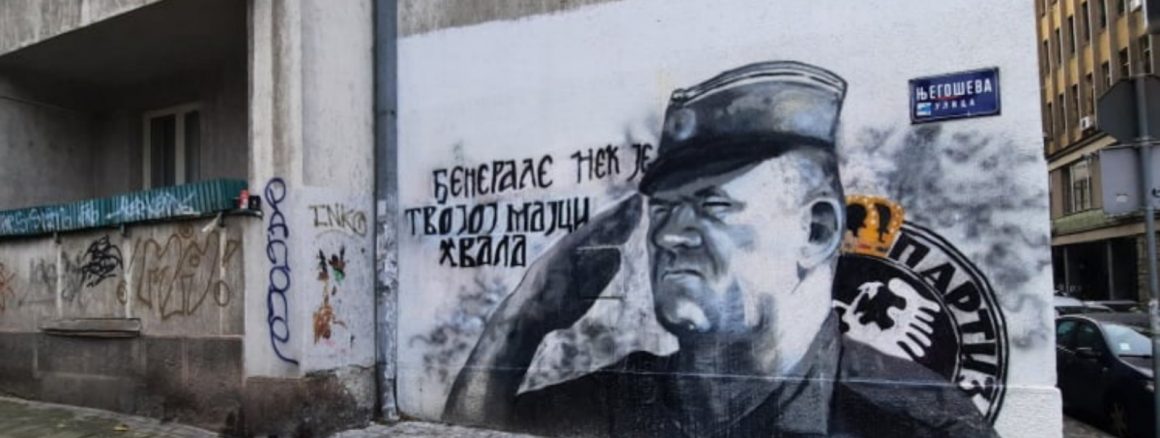
How did the defenders of Serbia’s shameful past get the right to paint murals of war criminals?How did we get to the point of considering activists as rioters and arresting them?
In commemoration of the International Day against Fascism on November 9, the Youth Initiative for Human Rights in Serbia announced that it would paint over a Belgrade mural dedicated to General Ratko Mladic, whom the International Court of Justice in The Hague found guilty of genocide in Srebrenica and crimes against humanity. The mural appeared in Vracar (an area in Belgrade) last July, on the corner of Njegoseva Street and Aleksa Nenadovic Street. It stood on the building despite the decision of the municipal authorities, which, based on the request of the tenants, ordered it to be removed. In those few months, the citizens drew on and painted over it, but it would always be restored to its original state.
In the meantime, the Youth Initiative for Human Rights canceled this gathering, because the police, under the pretext that there could be a conflict between supporters and opponents of the mural, did not give them permission to hold it. Despite that, anti-war and anti-fascist activists, journalists, cameramen, but also defenders of the character and work of Ratko Mladic, appeared at the scene of the canceled event. Among them were activists Aida Corovic (Belgrade Circle, Women in Black, Center for Anti-War Action and Organization, Urban In …) and Jelena Jacimovic (illustrator and designer) who at one point threw eggs at the mural. After that, unknown young men in civilian clothes rushed at them. However, it is not known whether they were supporters of the mural or police officers in civilian clothes because they did not present themselves. With a lot of pushing, squeezing and pressing, the two activists were taken to the Vracar police station. They were released a few hours later, and Corović said that the police behaved decently there.
From that moment on, in Belgrade, in Serbian and regional media, and on social networks, tensions between people have not stopped. On the one side there are those who think that convicted war criminals should be only in prison and not on murals. On the other, there are those who leave flowers in front of Ratko Mladic’s mural , “cleaning it of activist eggs” and from the paint that Djordjo Zujović, an official of the Social Democratic Party of Serbia, threw on it.
After that, there was a series of announcements, actions, and reactions of anti-fascist organizations, but also pro-government tabloid media, which, as usual, dangerously manipulate the facts. One of them blamed their favorite target – LGBT organizations – for trying to remove the mural. Protests were organized: one because of the arrest of activists, another because of the refusal of the authorities to remove the mural. In addition to everything that was happening, members of right-wing groups guarded the mural for days, and organized rallies in support of Ratko Mladic.
After the events in Njegoseva street, Aida Corović gave an interview. She pointed out that Serbia is her country and that she is ashamed that a war criminal adorns the wall of a building in her Belgrade. She said that the state must not take the side of war criminals. She warned that the citizens of Serbia have two choices: either to be a society of hatred, or to become responsible for their actions, and thus the future.
State reinterpretations
The Minister of Internal Affairs of Serbia, Aleksandar Vulin, also spoke about the “mural case”. He said that “Belgrade is a city of anti-fascists and victors” and that on the International Day against Fascism “no one in Belgrade will clash in the streets and spoil the lives of our citizens”, and that “no one will make Serbian enemies happy with bloody heads.”
The President of Serbia, Aleksandar Vucic, also reacted, saying that the activists were making a circus in the streets. The president claimed that police officers were protecting public order and peace, not a mural which could have been removed by the activists much sooner. They only did it now to show Serbia in a bad light and prevent it from getting an important “point abroad”. If the police had not reacted, everyone would have asked why the police did not react, Vucic said; and then asked why activists against the mural did not tear down the plaque dedicated to Acif Efendi in Novi Pazar on the same principle. Acif Efendi was an Albanian politician and manager of Novi Pazar during World War II who was executed by Partisans for cooperation with the Germans.
Due to all these events, the European Parliament also reacted. In their statement, they opined that it is unacceptable for a mural of a convicted war criminal to be protected by the police in a EU membership candidate country. They added that the event is a sign of what the Serbian government thinks about reconciliation, the rule of law, democracy and regional cooperation. The parliamentarians, of course, forget that Vucic’s attitude towards the Hague Tribunal and its decisions varied depending on the position he held. The President of Serbia reacted to their statement, saying that the parliamentarians did not react to the fact that a mural of war criminal Slobodan Praljak was standing in one EU member state (Croatia).
The defeat of all values
Ratko Mladic’s mural and everything that happened around him as a person divides and creates dilemmas for the Serbian society that has not reconciliated with its past. Fortunately, there are also voices of common sense.
Activist Jelena Jacimovic, who was arrested along with Aida Corovic, believes that the wrong ideals in our society are a systemic mistake, primarily of education, upbringing and patriarchy. In an interview for autonomija.info, Jacimovic said that “generations are being created and uncared for, and they are being told that their value lies only in the army or labor force.” She added that “A woman is only valid when she gives birth and when it is the eighth of March.” She thinks that what is valued is “not learning while in school, not thinking critically in college and not making your own conclusions in life”, and that it is logical for a person in such circumstances, when they have nothing else, to yield to public opinion and sink into anger.”
Retired law professor Vesna Rakic Vodinelic reminded on the TV network N1 that “fascism is no longer a marginal phenomenon here” and that “the situation in the country is radicalizing people because right-wing groups are growing, and they are more extreme because they are now more organized.” She pointed out that this did not begin yesterday, but quite a while back. As a trigger for additional aggravation, the professor considers the passage of migrants through Serbia. It caused the creation of some groups that took police powers and authority upon themselves. “We can consider them parapolice groups that stifle democracy,” said Vesna Rakic Vodinelic.
The best answer to what citizens can do and how they can try to prevent the Serbian people from turning “big right”, was given by playwright Minja Bogavac. Reacting to the event, Bogavac said that she was embarrassed because she was not with Aida Corovic that day. In the conversation, however, she tells RDN that there is no optimism at the moment: she thinks that the citizens will not do anything in the end. Neither on the occasion of this, as she calls it, disgusting case, nor on the occasion of 10 others, equally disgusting, which shake our society with equal intensity:
“In such situations, nothing ever happens. The topic is just cluttered with a bunch of other topics. The social chaos in which we live is so great that we do not know where to start tidying up, ” says Bogavac, before asking herself: “Maybe we should not tidy up, maybe we should be left to attack each other in front of that wall. Maybe we should just be left to rot there, as individuals and as a society. ”
“I’m terribly sad about everything,” continues the playwright, who has shown exceptional social responsibility so far, “For the first time in my life, it seems to me that it’s not worth fighting for. It is clear that the genocide in Srebrenica was not a random accident. It was a well-thought-out and planned policy for which a part of the people in Serbia would still vote today, which they still glorify and support, they paint it on the walls that they then defend with their bodies. If we have not been able to face the past in 30 years, should we have a future at all? Should we try at all or is it time to give up on what we once considered our country and our society? The fight has never seemed more futile to me. Fascism is everywhere. It is growing up. It is being nurtured. The state is directing it, and its top figures are more and more openly putting their signatures on the scribbles on the walls. To my great regret, I accept the complete defeat of all the values I have ever believed in “, Milena Bogavac concludes.
The streets of Belgrade in the 1990s
Snjezana Milivojevic, a full-time professor at the Faculty of Political Sciences in Belgrade, believes that the civil resistance, although seemingly not considerable, is still visible, which is encouraging. Regarding the whole case, she says:
“At this moment, I am least interested in that juggling, the story of whether something is being covered up or the topics are changing. I am interested in the essence – that a conflict appeared on the streets of Belgrade, which indicates a scar that deeply tears the fabric of this society, a conflict around which there are very opposing views in society. And it is unfortunate that the views are opposing on this topic. And so many years after the war, as soon as you scratch the surface, every problem of this society turns into a problem of an unresolved relationship with the past and the fact that the wars of the 1990s, unfortunately, came to the streets of Belgrade a quarter of a century later. It is now apparent that this society has been torn apart on that basis. It is inexplicable and strange to me that these pro-fascist, militant, pro-war, radical groups that are defenders of the criminal past, were given the right to paint a mural and take to the streets. In the first decade after the war or in the short decade when Serbia was still democratized, it never occurred to anyone that this would happen. I see this now as a big step backwards. It is a restoration of reading history in a way that supports the current authorities,” Milivojevic tells RDN.
Milivojević also points out that the fact that the civilian public, the Serbian society, still opposes all this is encouraging, although it seems that the resistance is not massive. She says that she would have liked for the citizens on the streets to make more of an effort to show that this cannot be done in Belgrade, or Serbia for that matter.
“The fact is, however, that these militant right-wingers and pro-fascist groups must now watch and guard the mural day and night. It would be comical if there were no serious crimes behind that image, that symbol. Now, therefore, the most angry right-wingers must organize themselves to protect the images in order to oppose the eggs. I am not trivializing the event, because, both on the occasion of this case and on the occasion of Captain Dragan’s petition, it is clear that these radical and pro-fascist groups are set on their way. They have the support of the government, but society opposes them. Unfortunately, the government is on their side, and not on the side of the society, and that is one of the historical side roads on which Serbia was in the 1990s as well. Back then, the same people participated in the government as they do today. However, there are parts of society that understand that we paid too much for that lesson, and that the same thing will not be possible this time around.”, concludes Snjezana Milivojevic.
The latest case of Ratko Mladic’s mural in Belgrade, as well as many previous outbursts of fascism in the Serbian society that is taking form through regime media, tabloids, stadiums, pop events, quasi-patriotic events show that Serbian society is not up to democracy.
Quo vadis, Serbia?
Author: Snežana Miletić
Photo: Aulone Kadriu
Editor of the Antimigrant portal acquitted of Charges of Inciting Intolerance Against Migrants
November 23, 2021
Fatmir Alispahić, founder and editor of the Antimigrant portal, was acquitted of charges of inciting national, racial, and religious hatred, strife, and intolerance.
In the rationale of the verdict of the Court of Bosnia and Herzegovina, Judge Goran Radević explained that Alispahić was acquitted, among other things, because the Prosecutor’s Office of Bosnia and Herzegovina in the evidentiary procedure failed to point out specific statements that provoke national, racial, and religious hatred.
The Prosecutor’s Office of Bosnia and Herzegovina pressed charges in September this year, accusing Alispahić of publishing texts and videos through the website Antimigrant.ba and social networks in 2019 and 2020 that incite hatered towards migrants, including between peoples within Bosnia and Herzegovia.
Alispahić rejected the proposed plea bargain, which included a one-year suspended prison sentence and a fine of 1,000 BAM (around 500e).
He wanted to go on with the trial, basing his defence on the agument that the Antimigrant.ba portal was a platform used to inform the public about the migrant crisis in Bosnia and Herzegovina. During the trial, he testified on his own behalf, saying that in 2018, he was the first to point out the inhumane conditions in which migrants live.
In the form of evidence, the Prosecution presented the author’s texts as well as other media posts published on the Antimigrant.ba portal. In one of those texts, he stated that “ISIL migrants are being transported to Bosniak majority areas to complete the genocide against Bosniaks.”
The contents published in other media are often reposted under provocative headlines on the portal, including the story about hosting migrants in Zavidovići headlined/titled: “There is no humanity in betraying the homeland!!! A Bosniak from Zavidovići hosted migrant bandits!”
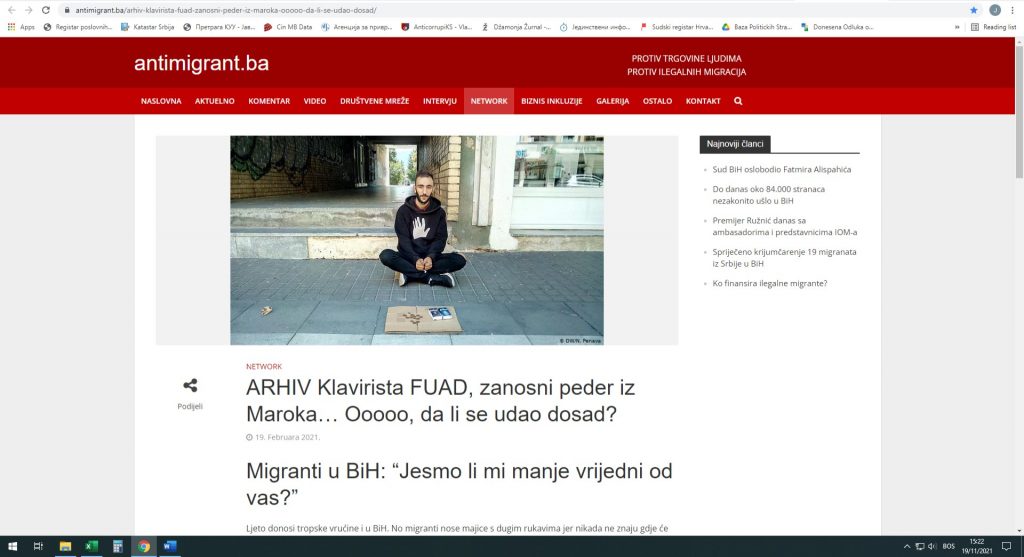
Early this year, portal Antimigrant.ba reposted one of the articles of Deutsche Welle (DW) about three highly educated migrants whom their reporter met on the streets of Sarajevo. One of the migrants mentioned in the text was Fuad, a piano teacher from Marocco, who was not able to find a job in his country because he was gay. Antimigrant.ba published the text in its entirety, furnishing it with an insulting headline “Pianist Fuad, an enchanting fag from Morocco… Ooooo, has he married yet?”.
Humanitarian activists and journalists who fight for the rights of migrants and refugees are often targeted by the antimigrant.ba portal.
Neither the accused nor the prosecutor were present during the sentencing. (As this is the first-instance verdict, there is a possibility of an appeal).
Authors: Ibro Čavčić, Jasna Fetahović
Photo: Gorodenkoff/ Shutterstock
Call to media: putting an end to sensational reporting on the murder of the minor in Fier
November 19, 2021
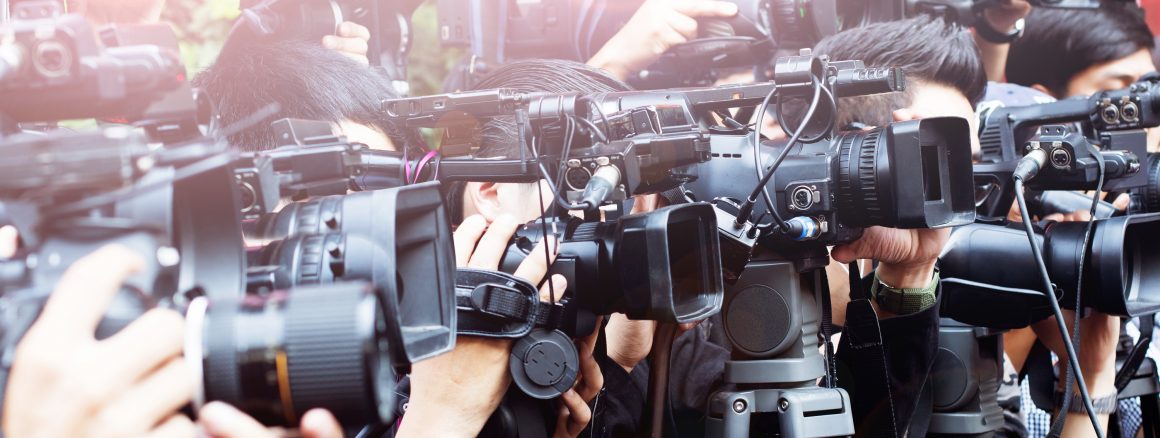
Reporting Diversity Network 2.0, concerned about the way the media are reporting the case of the murder of a minor from Fier, draws the attention of those behind the sensational headlines and reports, in order to take measures in stopping harmful reporting practices. Not only the nature of the crime, but the way it was reported in the media in particular, have deeply shocked the Albanian public.
The reporting of details with sensationalism and the inappropriate treatment of the affected family, as well as the proceedings of the case itself, are in violation of the Code of Ethics of Albanian Media, especially in relation to the intrusion into private life, the reporting of accidents and disasters, and the protection of children. The unethical gathering of information from the minor’s relatives has been noticed, accompanied by violations of privacy, excessive and unnecessary interference in the lives of family members, as well as large-scale and widespread violation against the audience.
The media coverage of crime and violence has been completely sensationalized. Lack of self-restraint by media outlets and journalists has been obvious. With their reporting, these outlets and journalists have not only psychologically and emotionally harmed the family affected by the tragedy, but affected the entire public.
Journalists are obliged to respect the suffering and feelings of family members, as well as to show prudence with photos, images, and videos of the crime scene and its aftermath, which in this case have exceeded all limits. Inadequate reporting of such crimes not only hurts the public, but above all completely ignores the suffering of individuals affected by the crime. Furthermore, such media coverage even exploits this suffering, and consequently leads to the deterioration of the mental state of the affected family and community.
We remind news editors and journalists that human values stand above all and, as such, should take precedence over the need to inform, especially when the information provided is not a necessity of public interest. The Code of Ethics clearly states: “Legitimate public interest does not justify sensationalism and, in the spirit of this Code, it should never be confused with information that is “interesting to the public.””