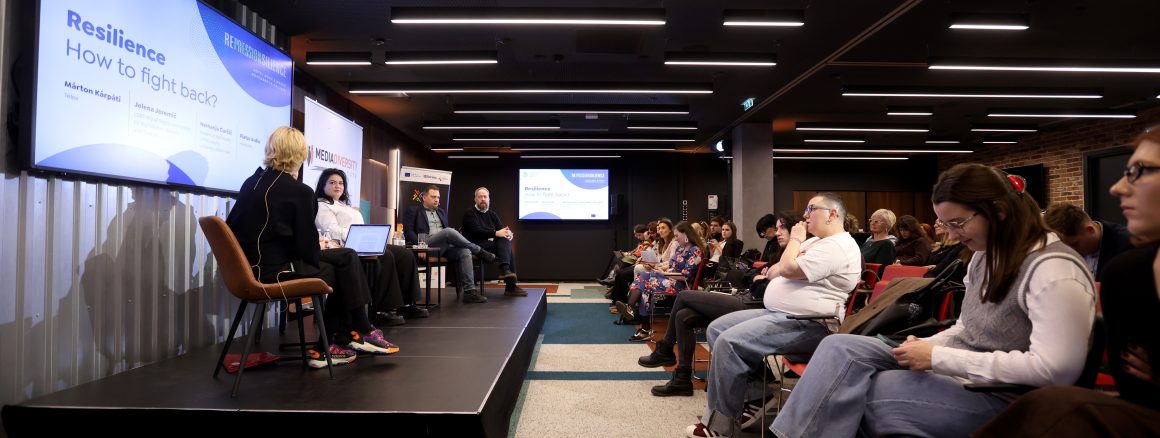
REpressionSILIENCE: The only way to fight back is together
November 24, 2026
Civil society organisations, journalists, scholars and activists from across the region gathered in Belgrade last week to discuss how civic activism and independent media have been targeted, and how they can respond and build resilience to those challenges.
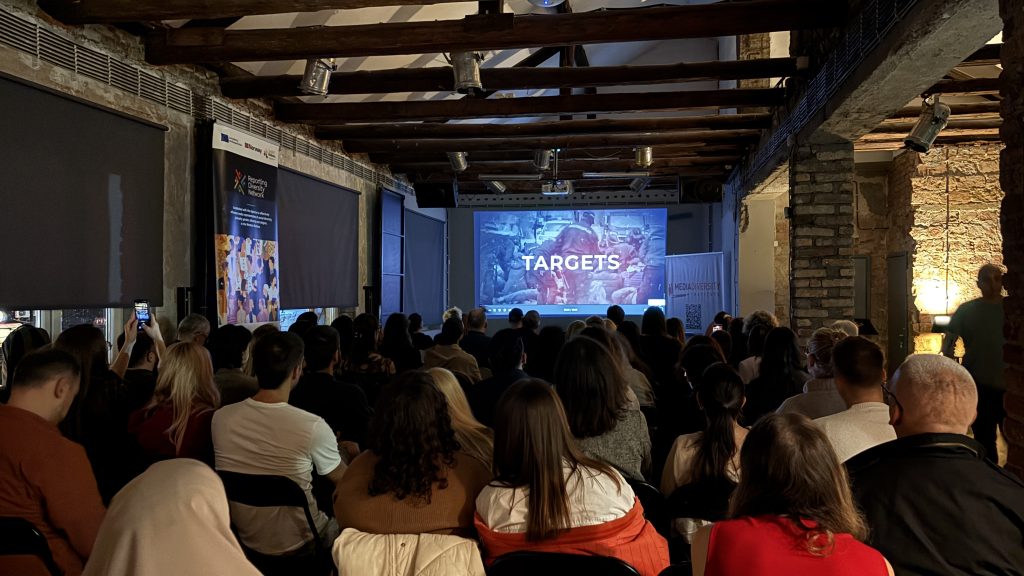
The conference opened on November 19th with a screening of Targeted (Mete), a documentary by Jovana Polić and Sanja Lončar about the narratives used to target students in Serbia over the past two years. The idea for the film came after the Reporting Diversity Network (RDN) noted a sharp increase in political targeting in the media. Mostregime-aligned media in Serbia were exploiting established harmful narratives on gender, ethnicity, sexuality and other identity characteristics to target students and citizens deemed political opponents. The same oppressive mechanisms often used against women and minorities were turned against almost everyone who took an active part in the resistance.
The movie will be available on RDN’s YouTube channel after its TV debut on Nova S on Saturday (November 28th) at 8.30 pm.
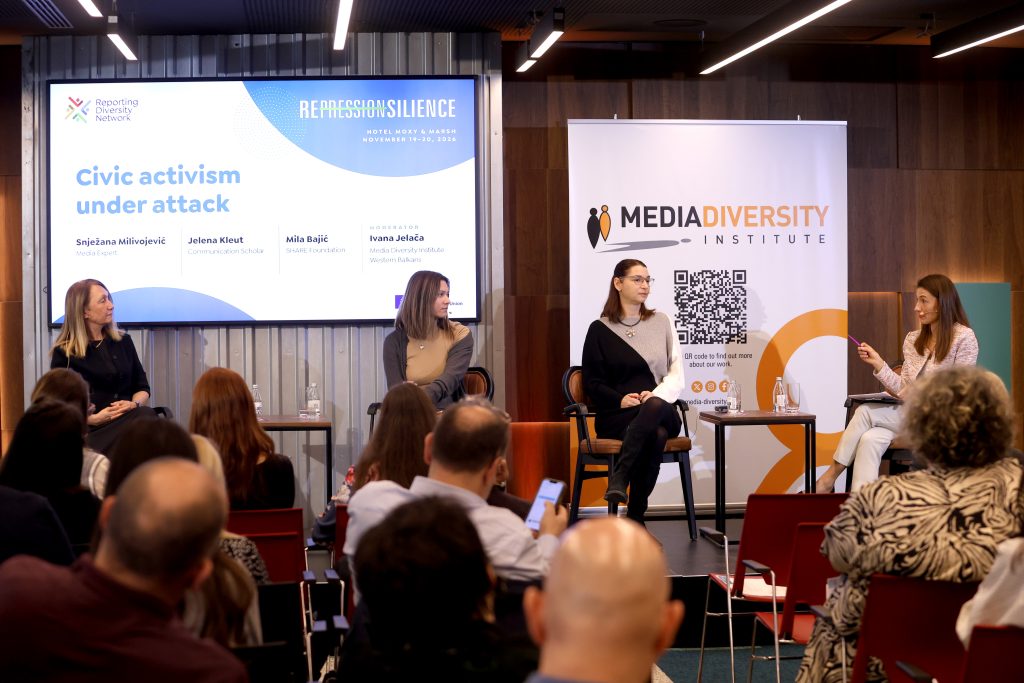
The next day, we started with data. Media expert Snježana Milivojević presented preliminary findings from our upcoming research on the media targeting of students in Serbia. But students were not the only ones targeted, and the media were not the only source. We also discussed the mechanisms used to repress civic activism and strategies for resilience, as well as the growing pressure on professional media outlets, even as media remains the main source of political targeting.
The day also saw the launch of the Media Diversity Index for the Western Balkans, with its main findings presented by Naomi Sakr of the University of Westminster. The Index drew attention to groups that are often overlooked, such as the elderly and the poor. If implemented regularly, the Index could become both a measure of inclusion and a powerful advocacy tool for working with institutions to improve the representation of diversity in the media.
We need watchdogs, whoever is in power
A recurring message was that civil society must remain a watchdog regardless of who governs. Speakers stressed that, even in Serbia, which recently had a government change, careful monitoring is still needed and that there is much work ahead.
Public service media and media regulation were highlighted as important pillars. Regulation matters, but it can bemisused, so those who defend it must stay three steps ahead.
Participants also noted that attacks on activists and media tend to spike around important events. Not every attack deserves an answer, but when we do respond, we should “go big”.
Networks and solidarity came up in almost every panel. Speakers argued that rebuilding public trust depends on transparency and honesty, and on reaching the whole of society, just like the Student in Every Village campaign in Serbia has done. Everyone has a role to play, and horizontal organising has already brought results. As the conference also brought together feminist activists from the region, we saw new alliances form right then and there.
The discussion also turned to the narratives that fuel division. Speakers called for resisting nationalistic and patriarchalnarratives, including those that glorify war criminals. Education is the most important way to open up these topics, and dealing with the past must be a priority.The conference closed with the idea that our societies must learn to live with their differences and accept that people canhold different opinions and still live together. Sometimes, participants acknowledged, that will require compromise and even sacrifice, just as it did in the student movement in Serbia.